
Jamaica
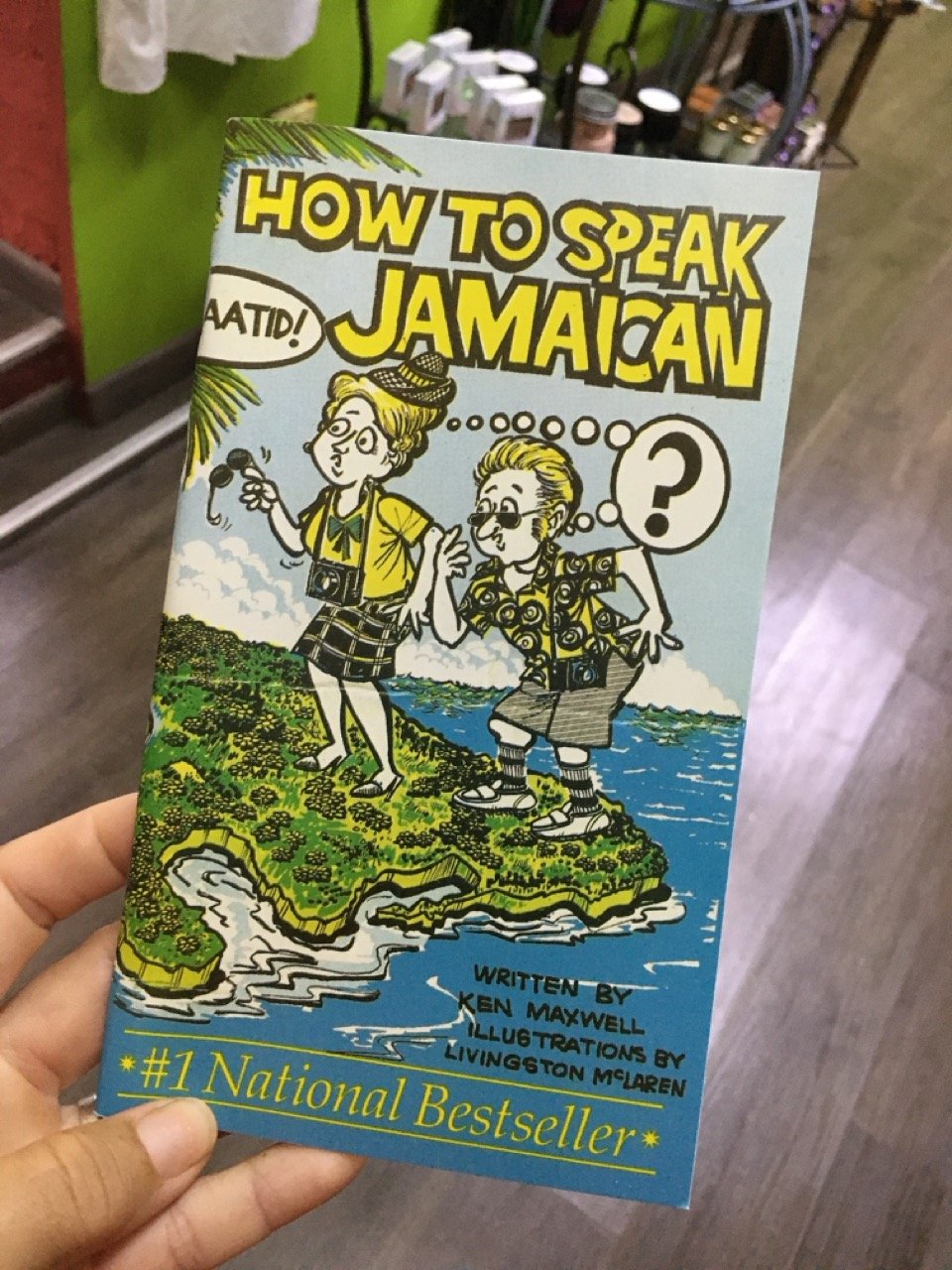
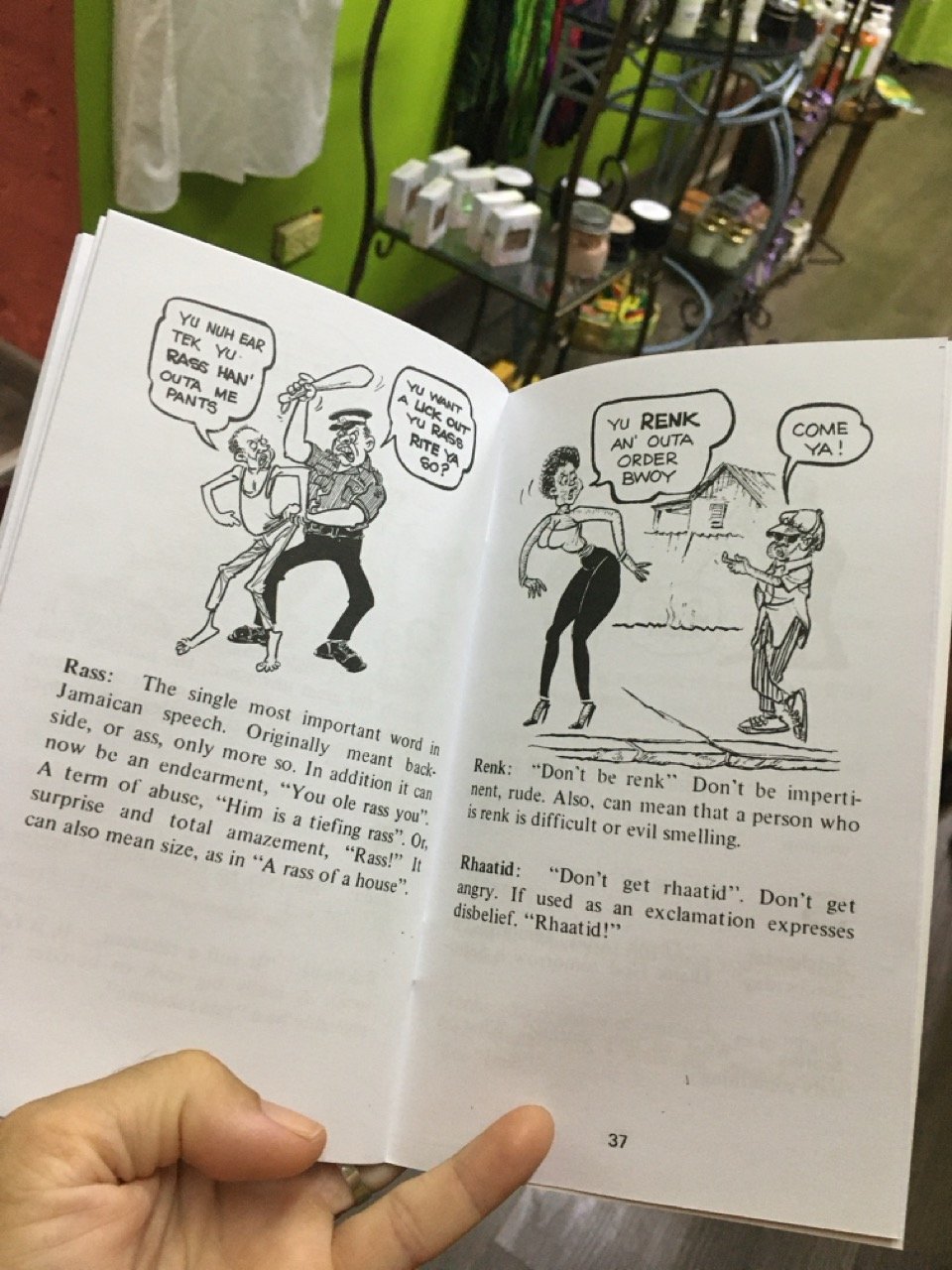
Ya man!
L’expression qu’on entend dès qu’on débarque en Jamaïque.
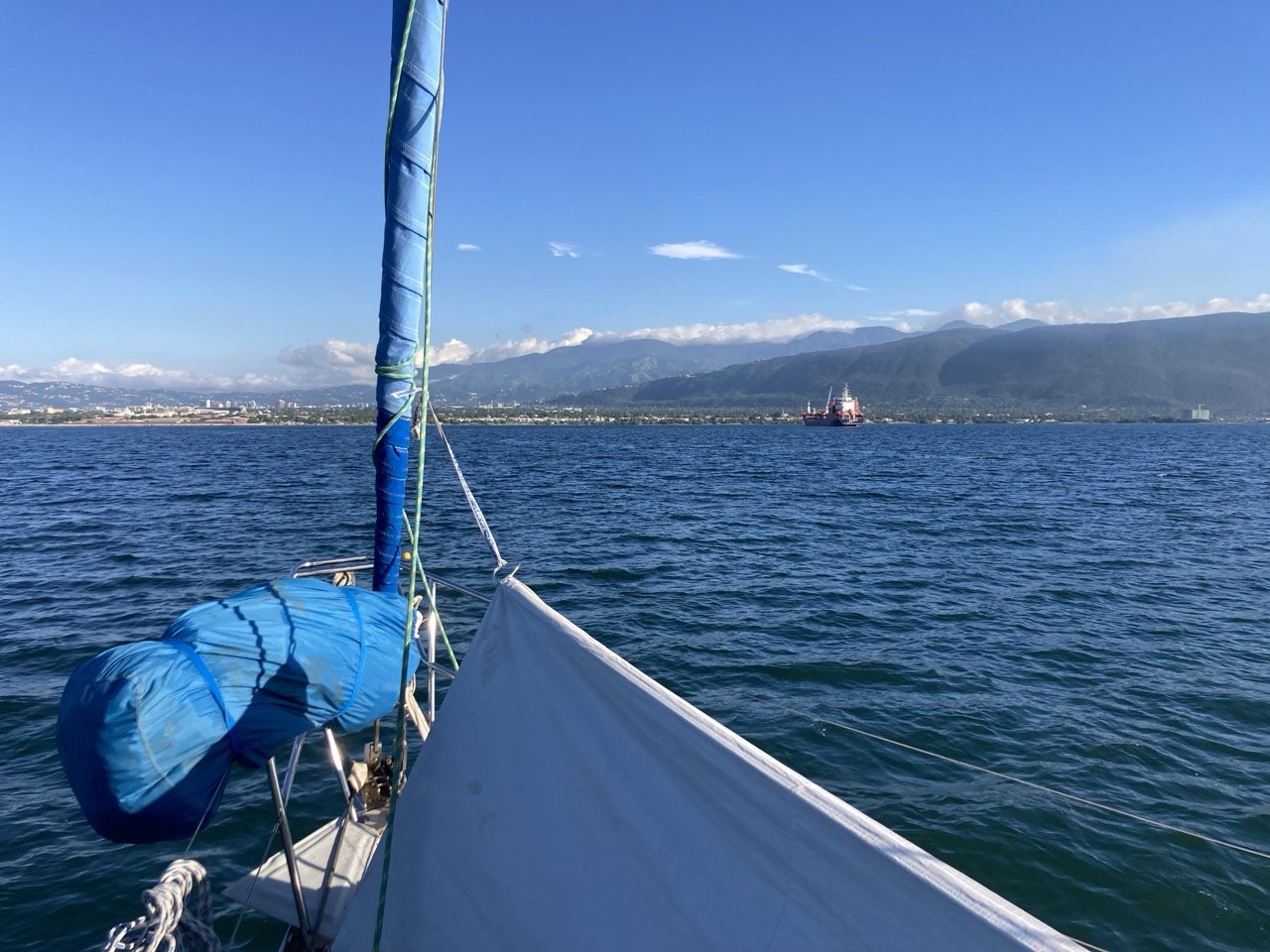
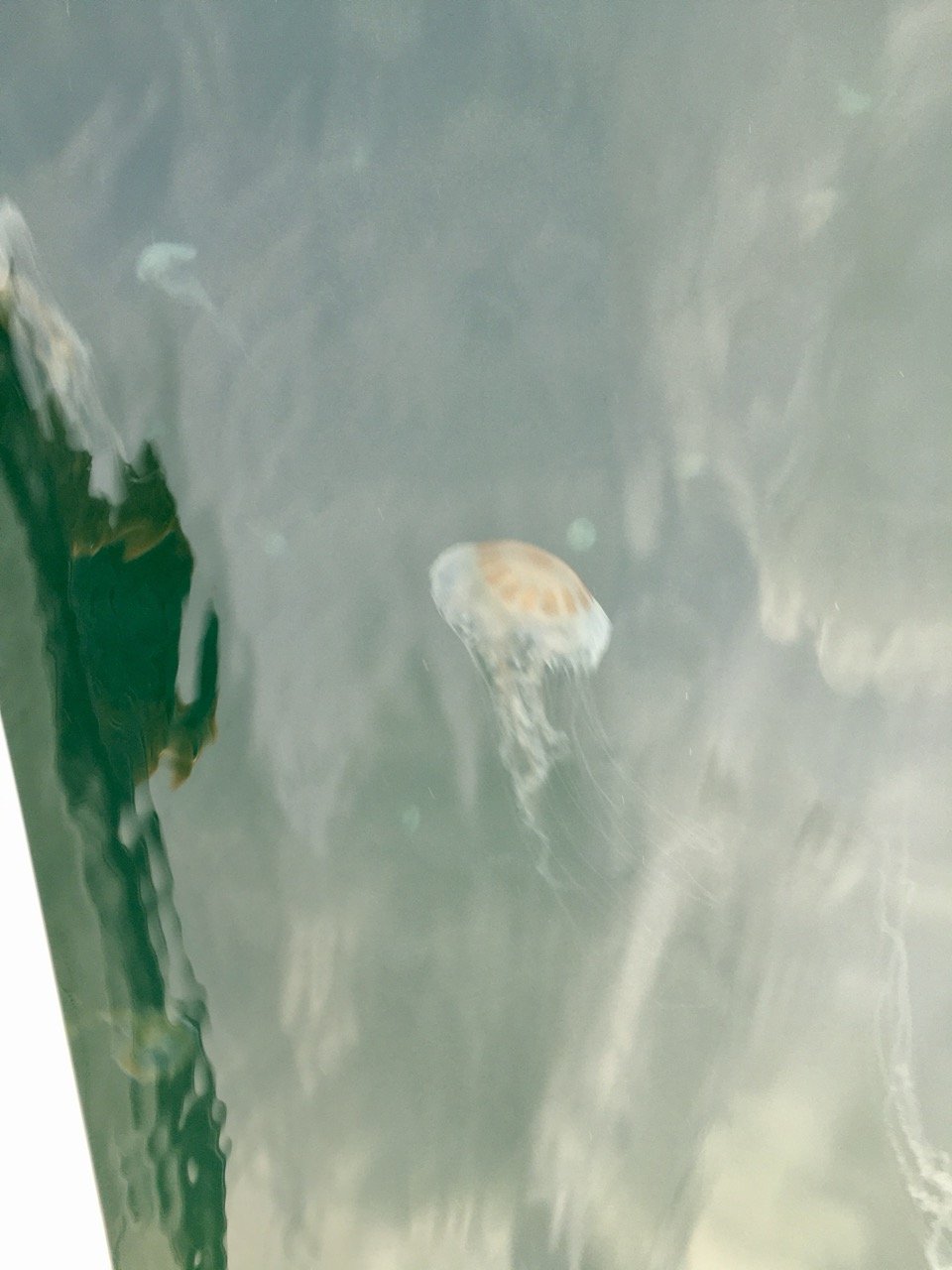
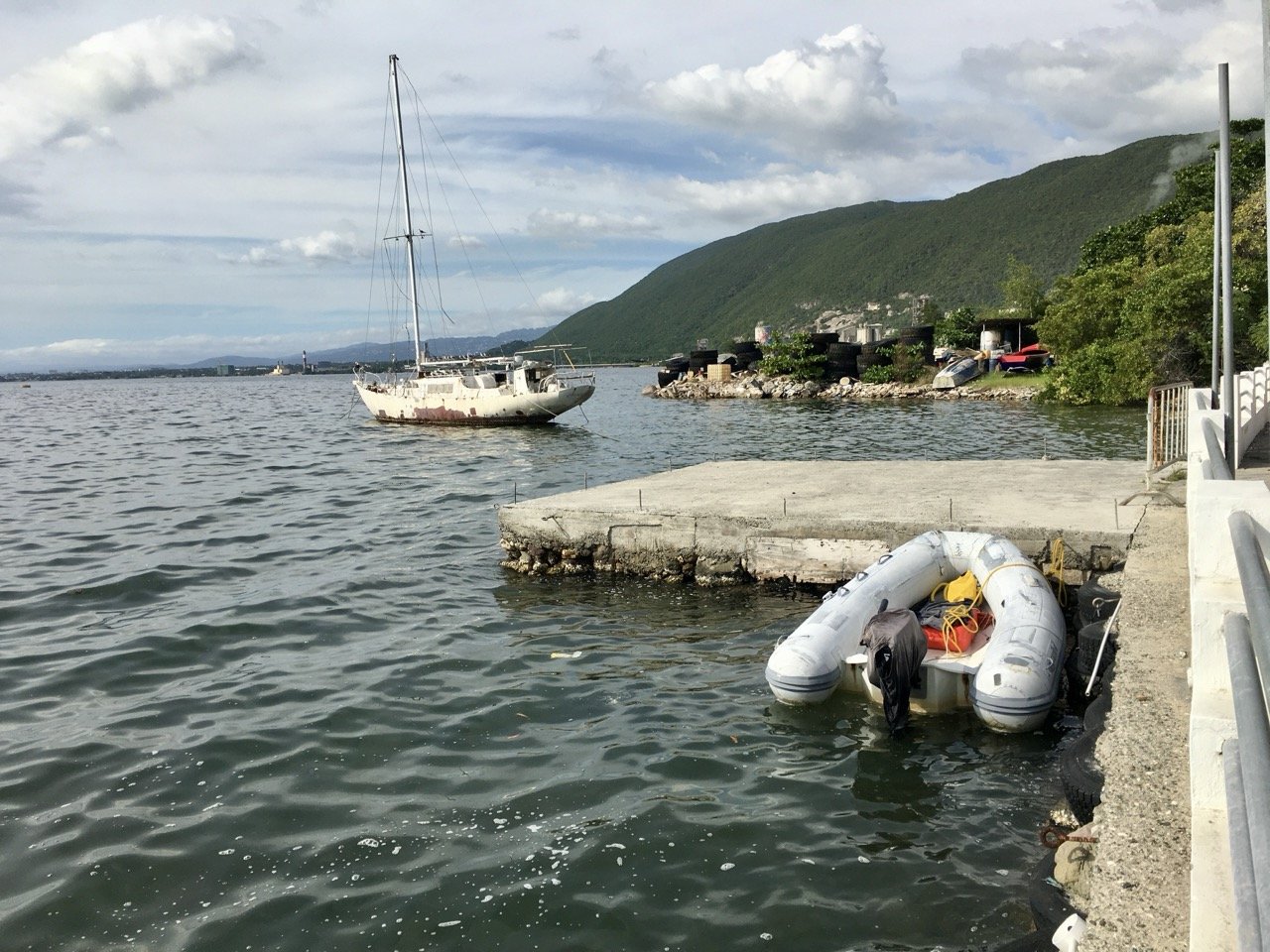
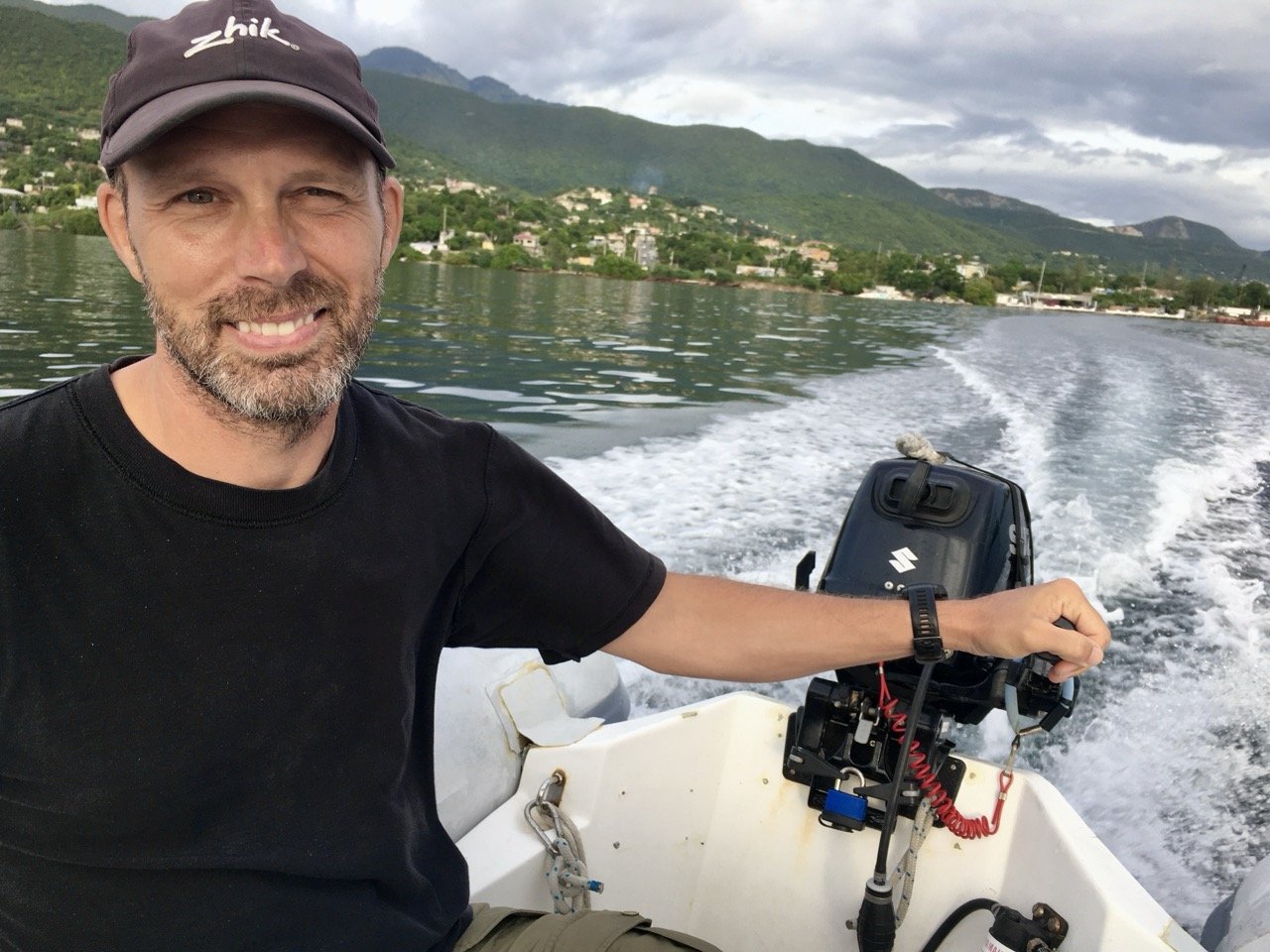
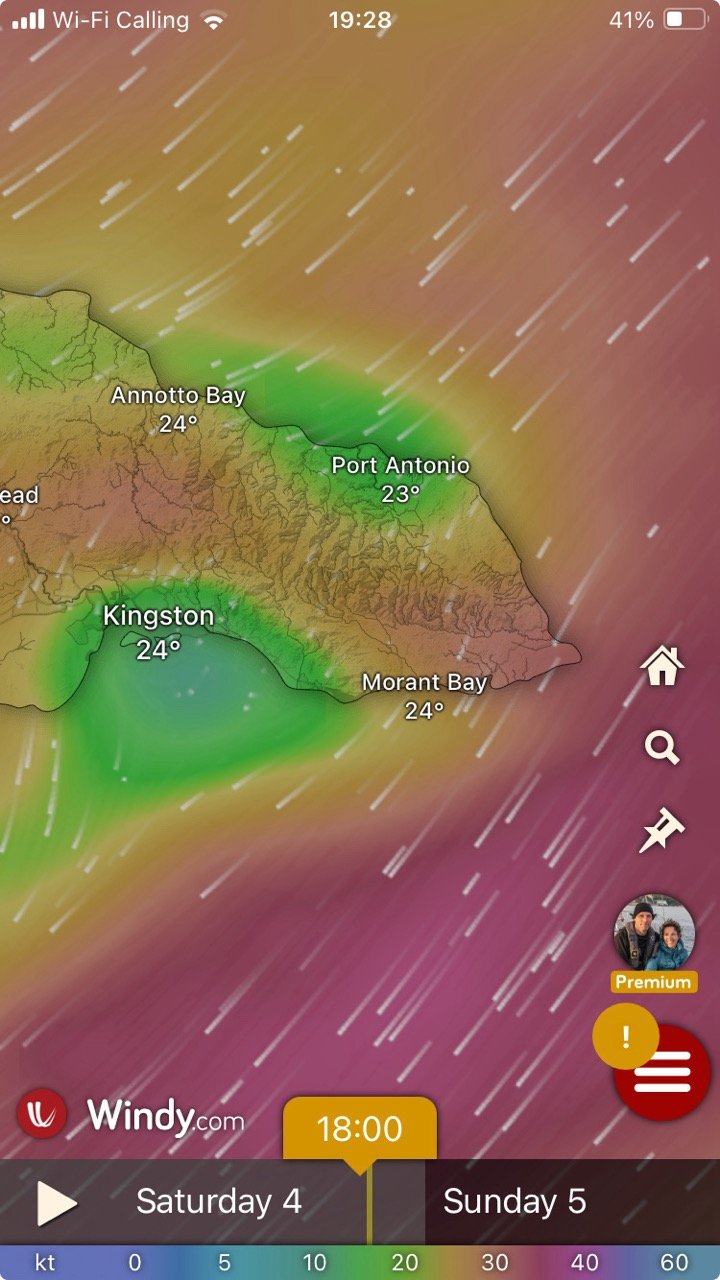
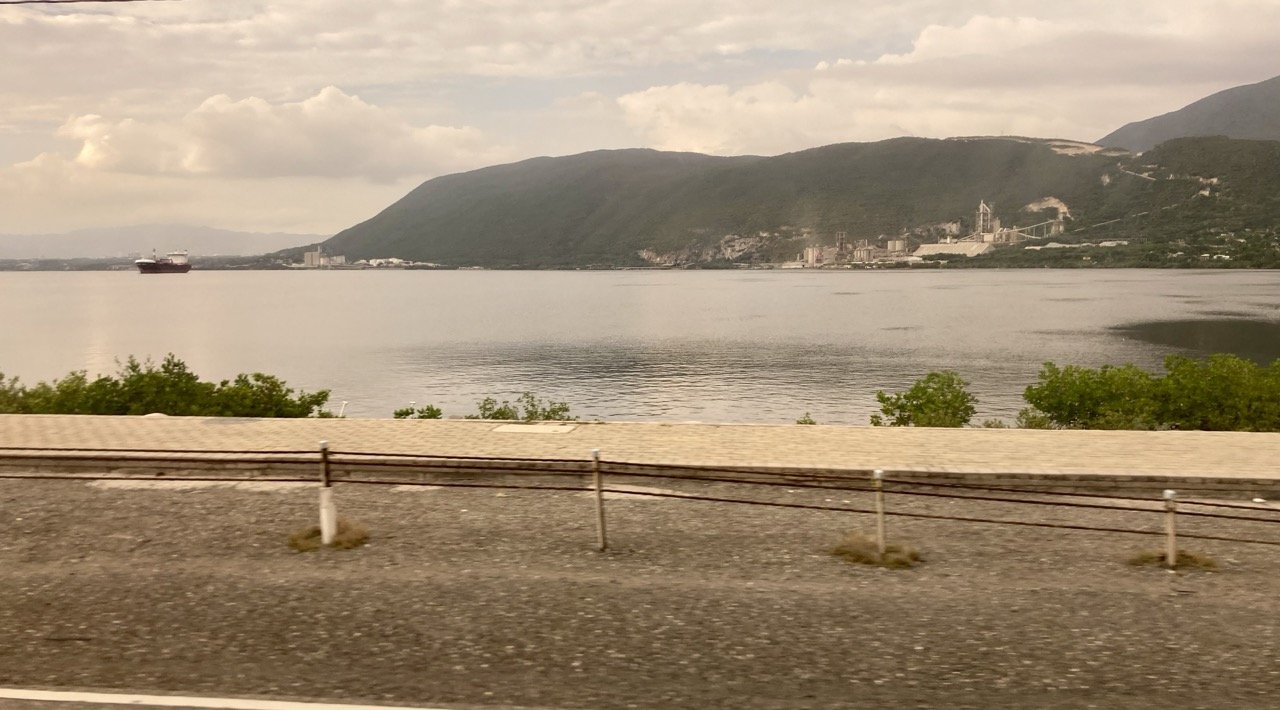
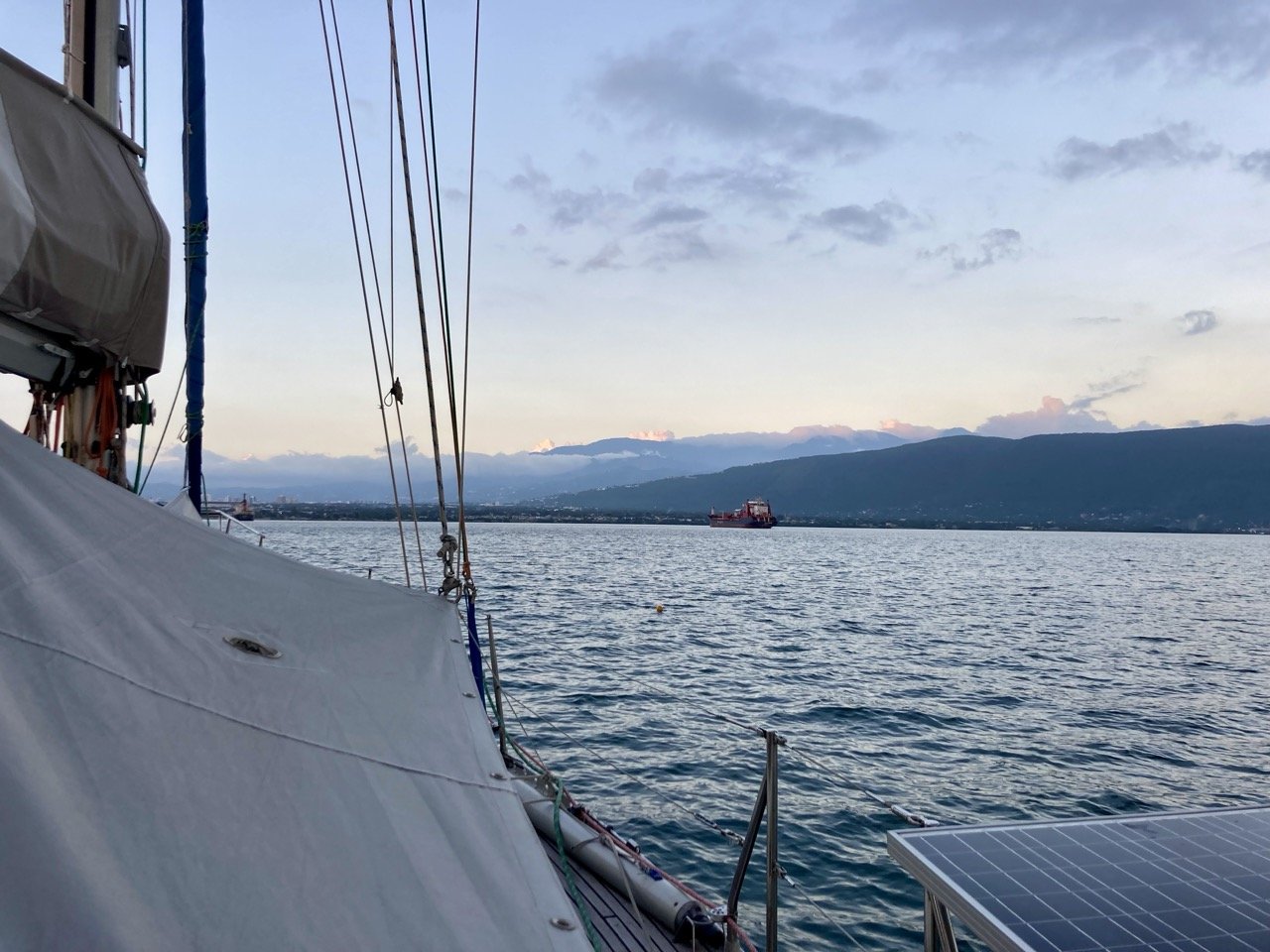
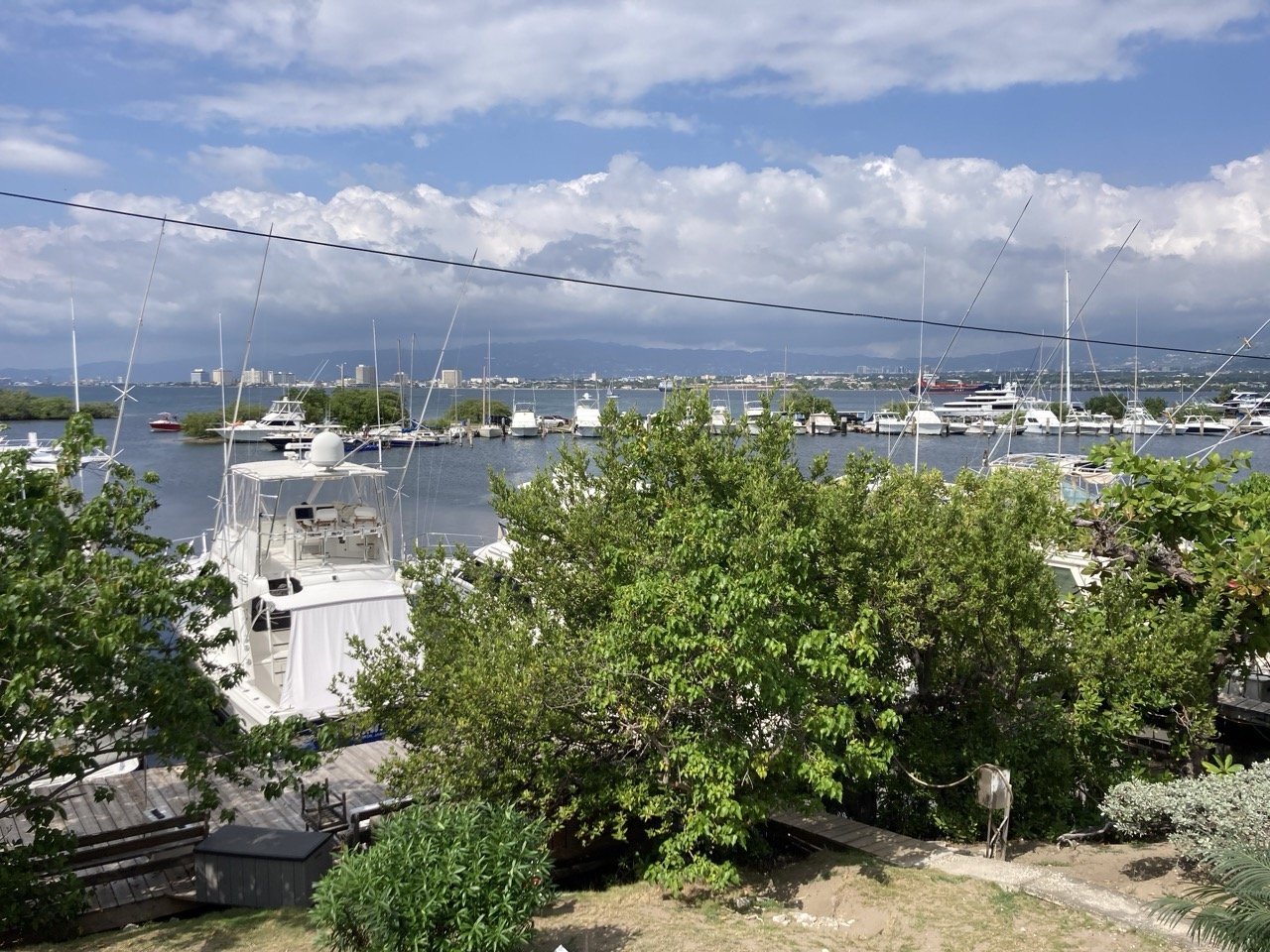
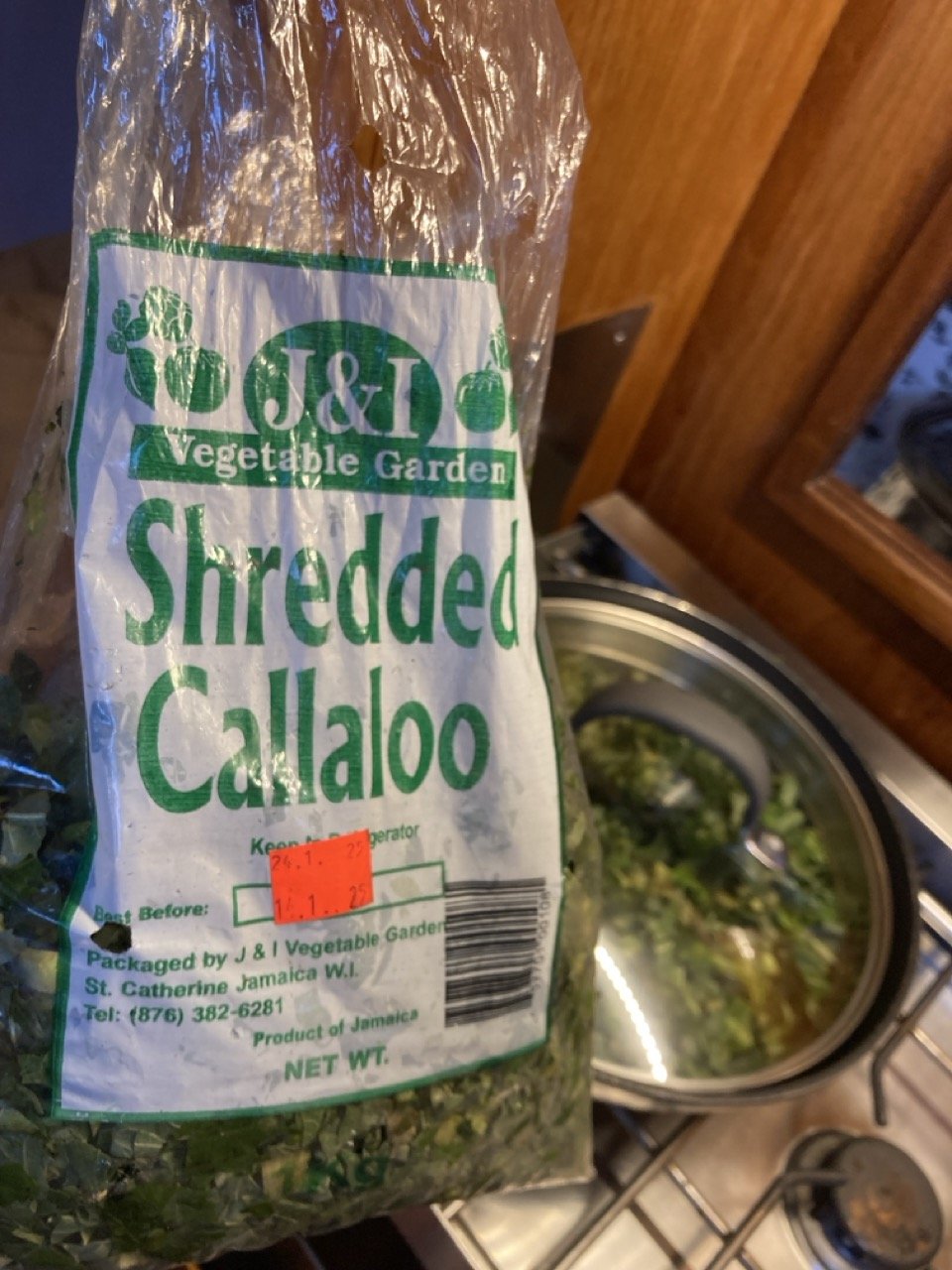
Notre première impression du pays, ou du moins de la ville de Kingston, c’est qu’on se sent un peu en dehors des sentiers battus en tant que touristes, particulièrement en arrivant en voilier. Dans l’immense baie de Kingston, qui est un des plus grands ports naturels des caribes, couvrant plus de 300 hectares, on est le seul bateau visiteur (si on exclue évidemment les 13 cargos!) Et ça, ça fait drôlement changement des petites Antilles, où on n’était jamais seuls dans un mouillage. D’un côté, ça fait du bien le changement. D’un autre, on comprend un peu pourquoi ce n’est pas un mouillage très populaire. La baie de Kingston est ceinturée par un immense port commercial, le centre-ville de Kingston, beaucoup d’industries (carrière de bauxite, cimenterie, raffinerie…), l’aéroport, une piste de karting, le village de Port Royal, un peu de mangroves, et elle est malheureusement surtout remplie de poubelles flottantes. C’est un peu dégeulasse la quantité de déchets qui flottent là-dedans. On s’est pris au moins 3 sacs de chips dans l’hélice du hors-bord pendant notre court séjour (et surtout nos très courtes rides de dinghy entre le bateau et le Yacht club, genre 2 minutes aller, 2 minutes retour!) Mais bon, le premier nous surprend, puis après on s’habitue et on connait la drille d’élimination du détritus envahissant d’hélice : relève le pied du moteur, enlève le sac, redescend le pied du moteur, et c’est réglé… jusqu’au prochain.
“Ya man!”
The expression you hear as soon as you arrive in Jamaica.
Our first impression of the country, or at least the city of Kingston, is that we feel a bit off the beaten path as tourists, especially arriving by sailboat. In the vast Kingston Bay, one of the largest natural ports in the Caribbean, covering more than 300 hectares, we are the only visiting boat (if we exclude the 13 cargo ships, of course!). And that’s quite a change from the Lesser Antilles, where we were never alone in an anchorage. On one hand, the change is nice. On the other hand, we understand why it’s not a very popular anchorage. Kingston Bay is surrounded by a huge commercial port, downtown Kingston, lots of industries (bauxite quarry, cement plant, refinery…), the airport, a go-kart track, the village of Port Royal, some mangroves, and unfortunately, it’s mostly filled with floating trash. The amount of debris floating in there is pretty disgusting. We got at least 3 chip bags stuck in the outboard propeller during our short stay (and especially during our very short dinghy rides between the boat and the Yacht Club, like 2 minutes there, 2 minutes back!). But hey, the first one surprises you, then you get used to it and know the drill to remove the invading debris from the propeller: lift the motor foot, remove the bag, lower the motor foot, and it’s fixed… until the next one.
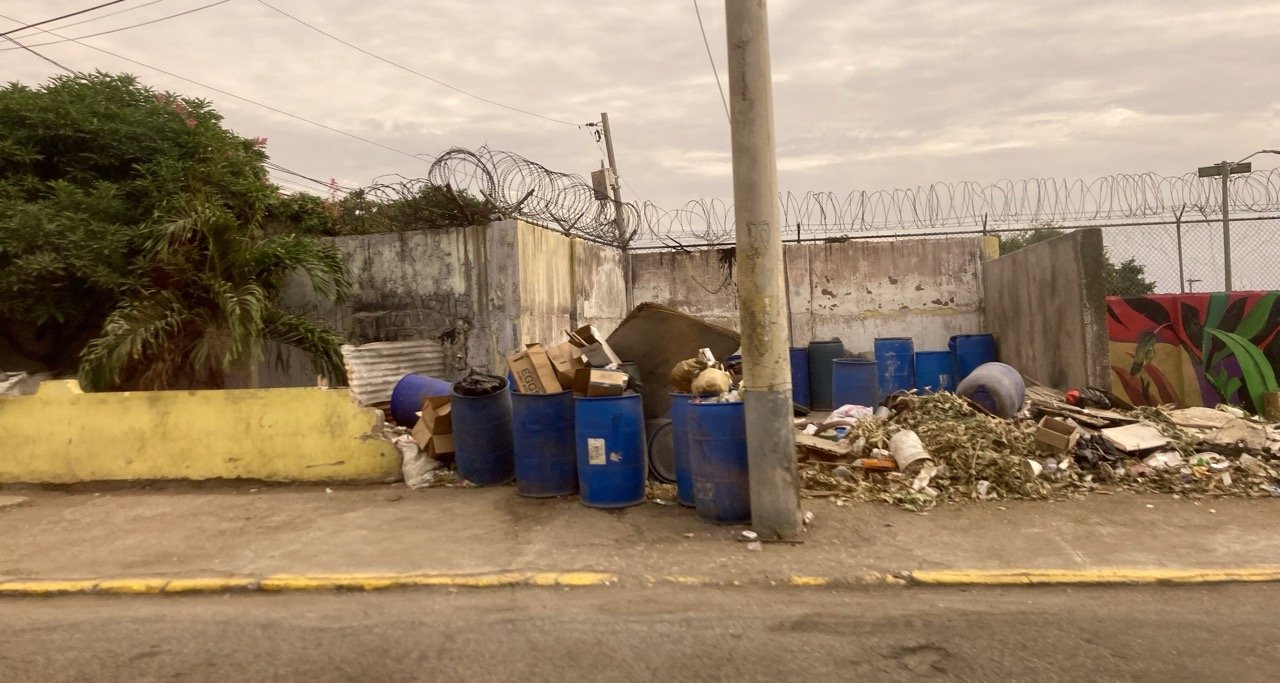
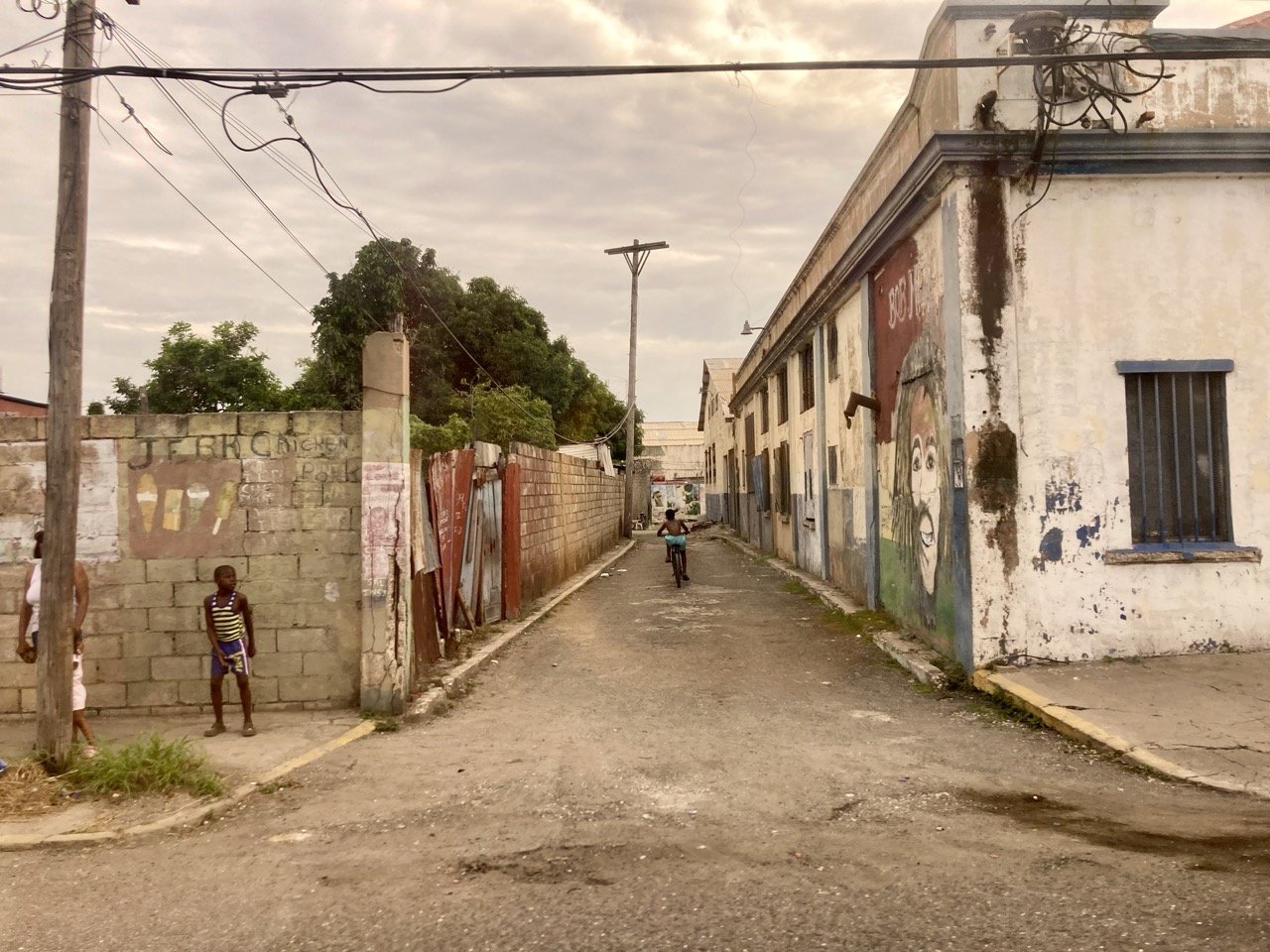
En revanche, on a trouvé les Jamaïcains vraiment très gentils et accueillants. Malgré que c’est un pays qui a une mauvaise presse à l’étranger (attention c’est dangereux la Jamaïque, qu’ils disent!) on s’est sentis très en sécurité. Bon, ok, on était ancré à côté du Royal Jamaica Yacht club, qui est clôturé et sécurisé 24/24… Mais quand même, lors de nos sorties en ville, à part se sentir observé (on était presque toujours les seuls blancs dans les environs) on ne s’est pas sentis en danger du tout.
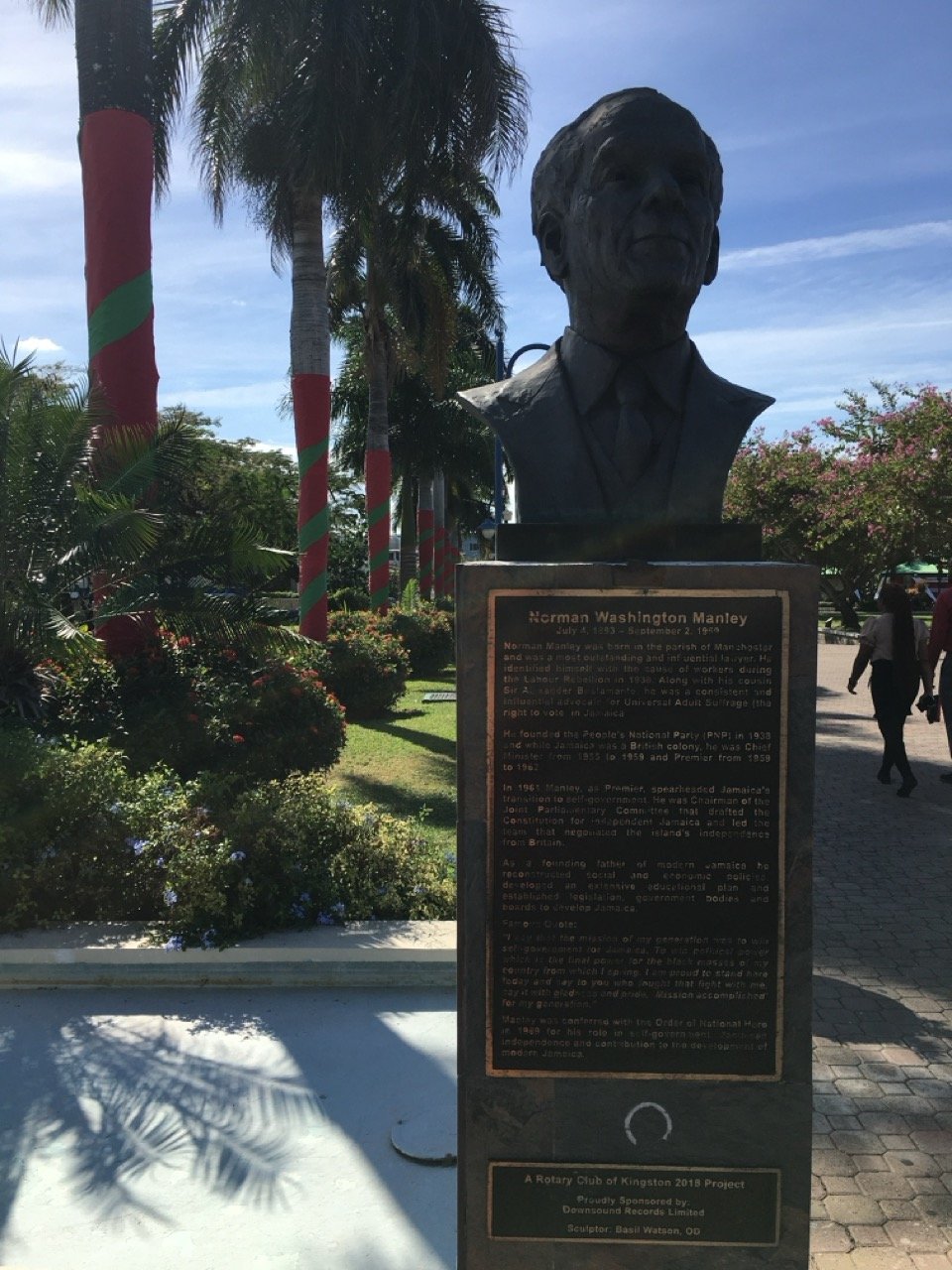
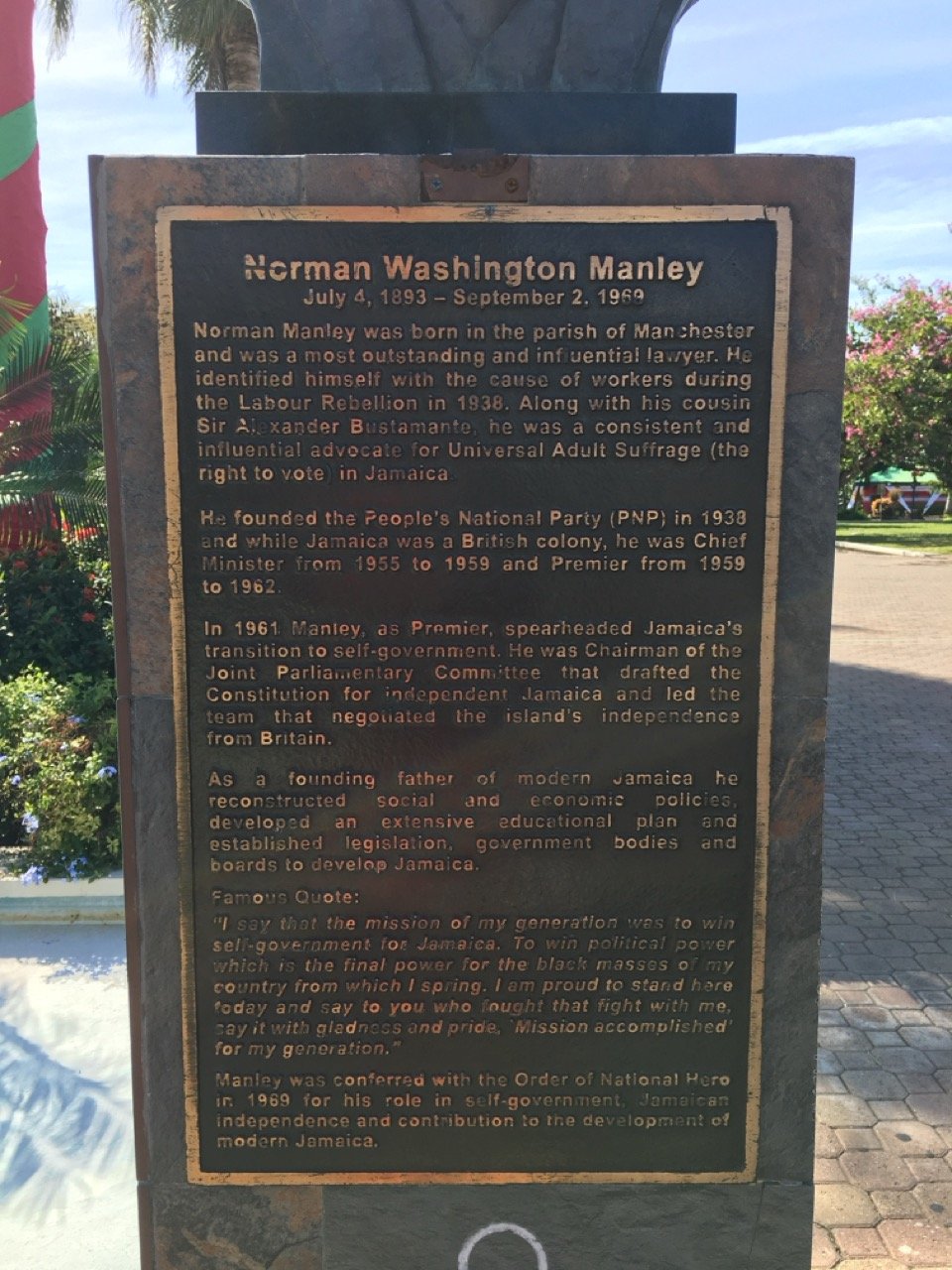
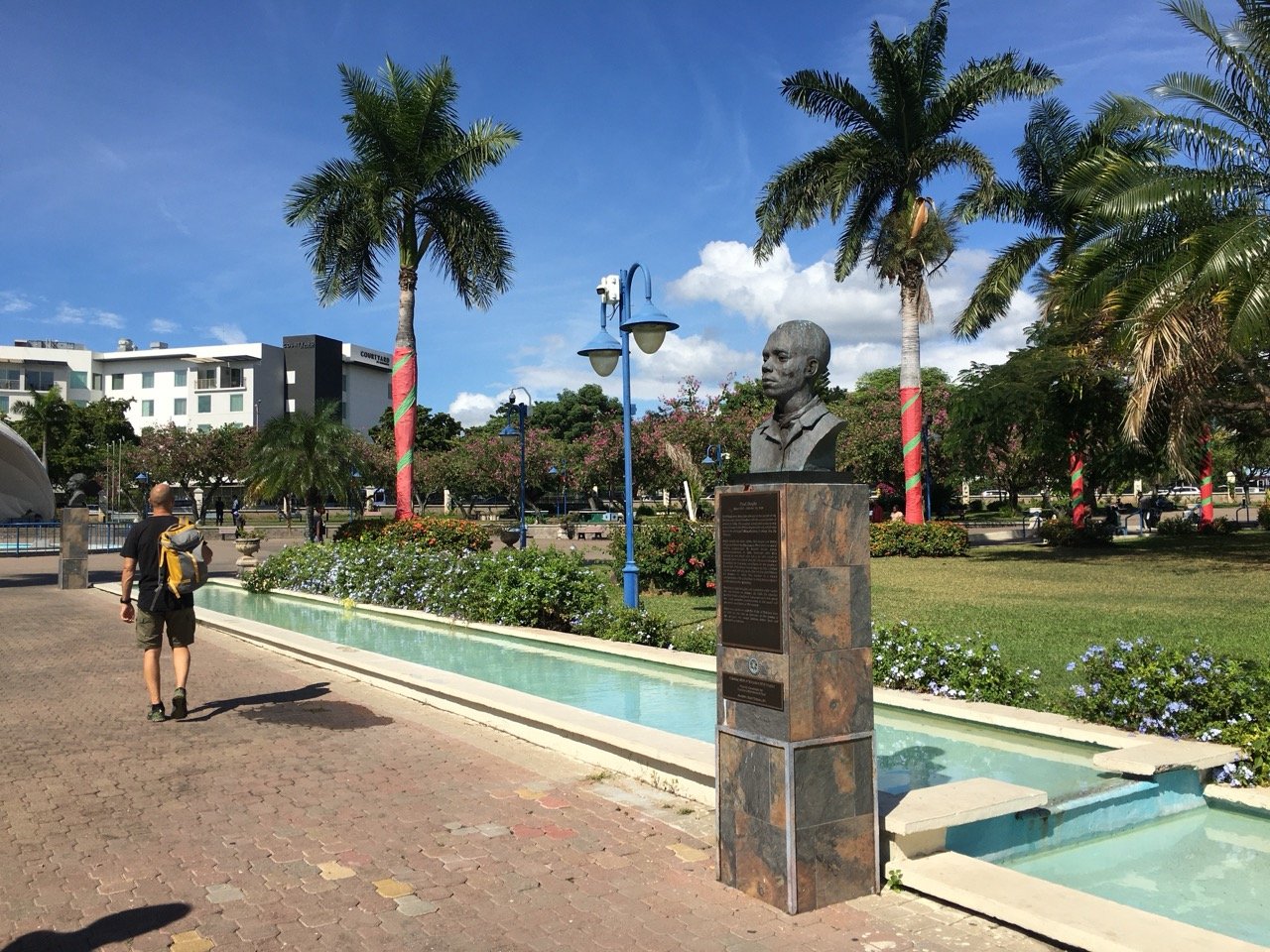
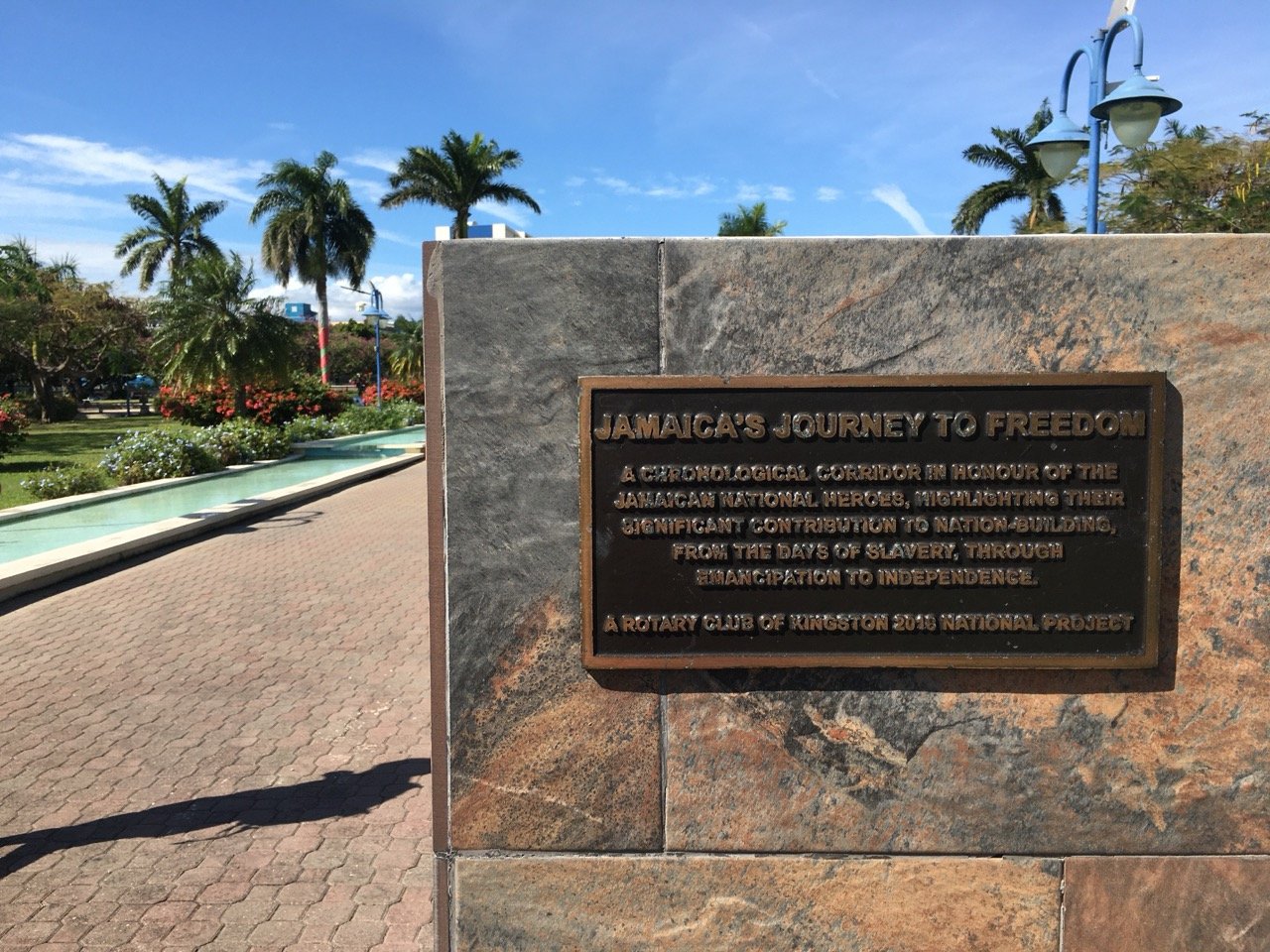
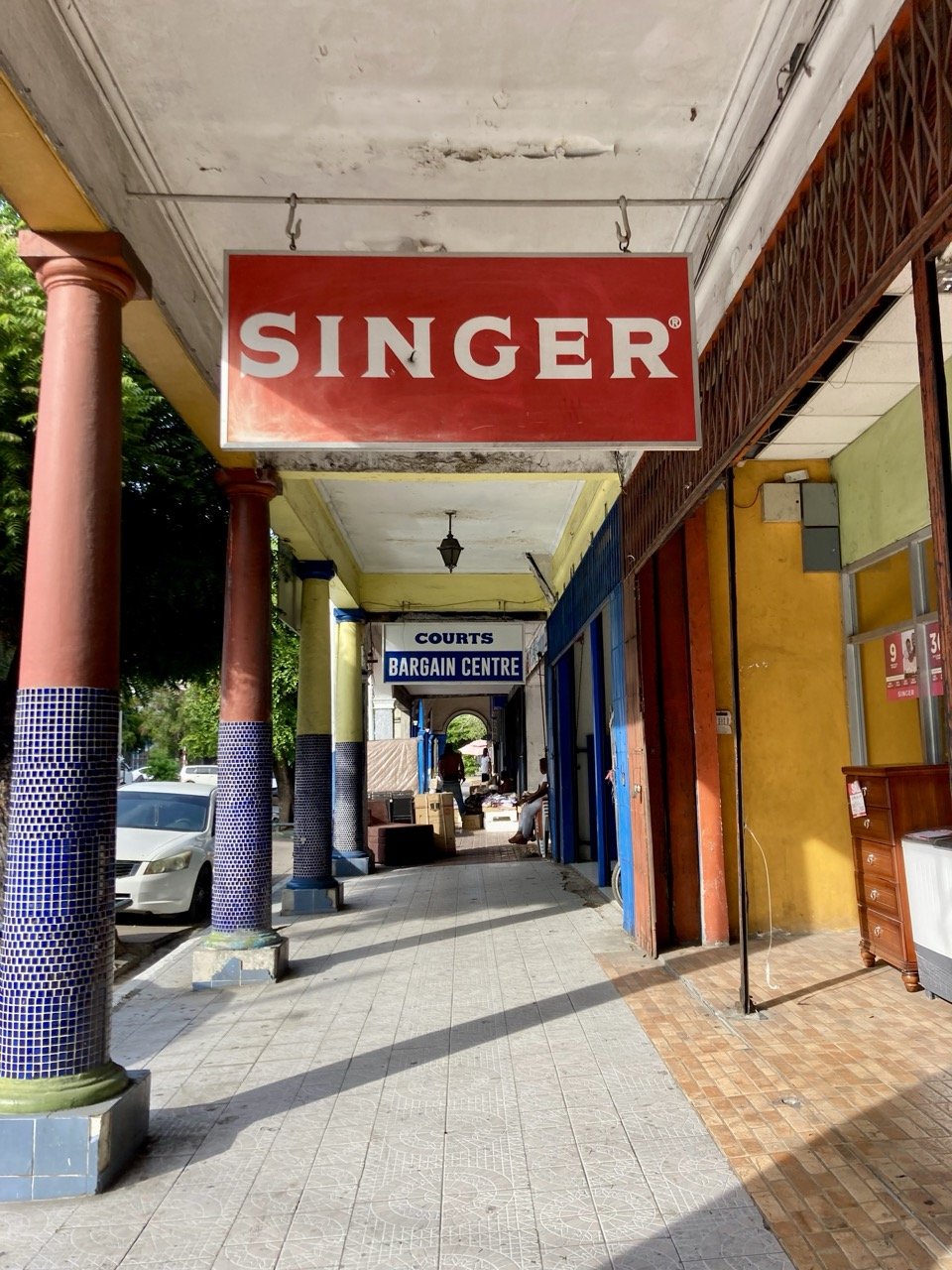
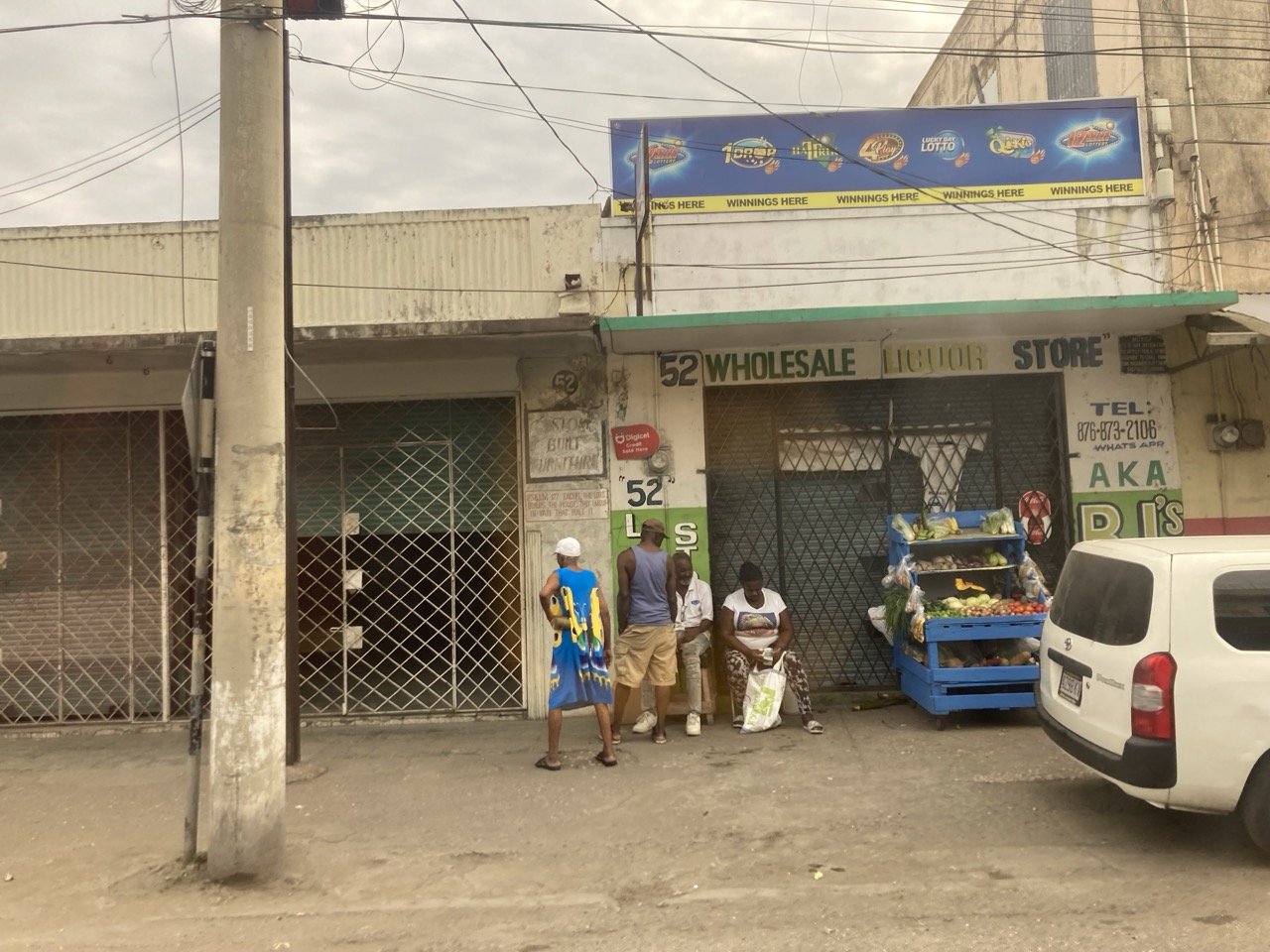
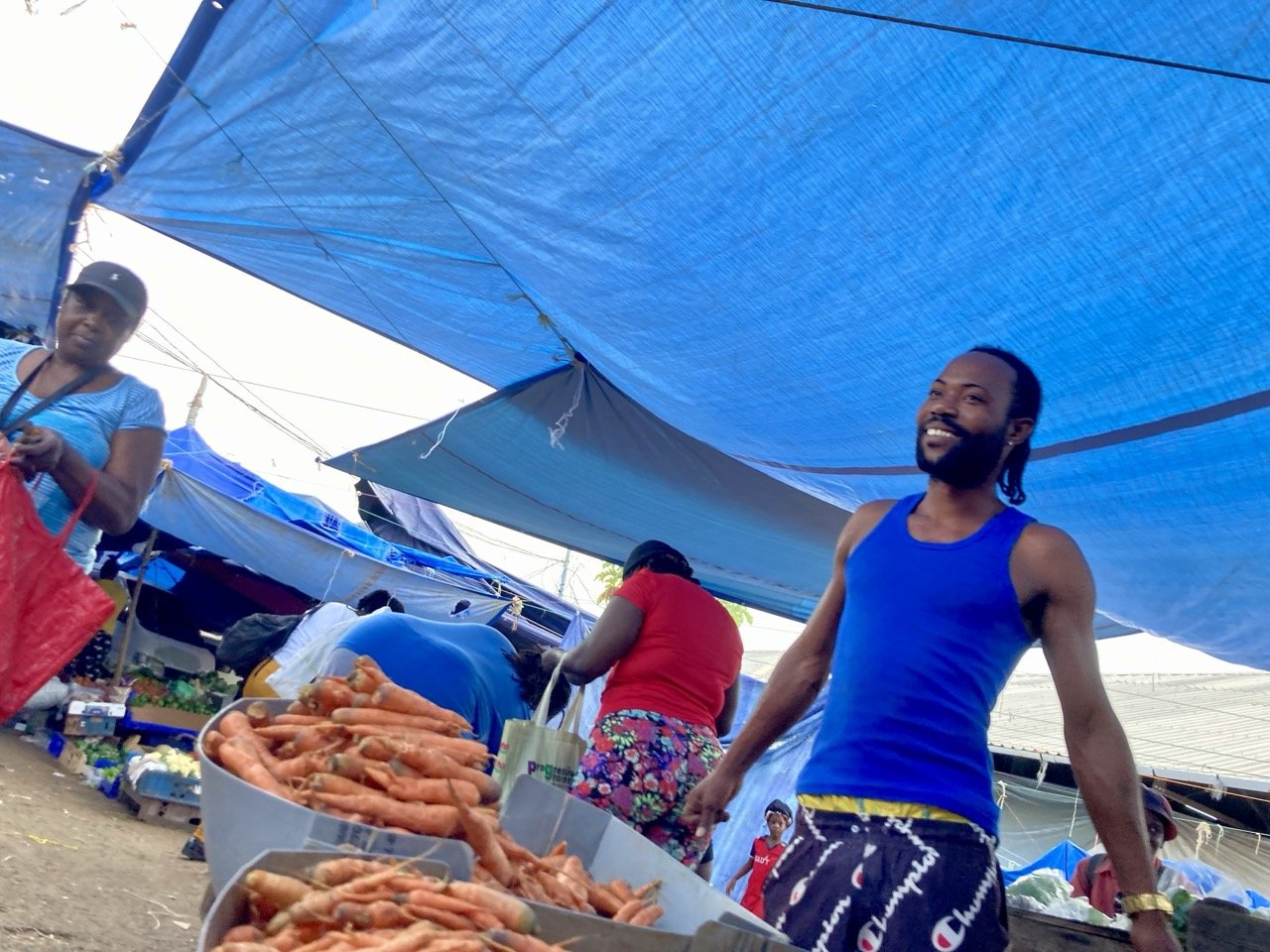
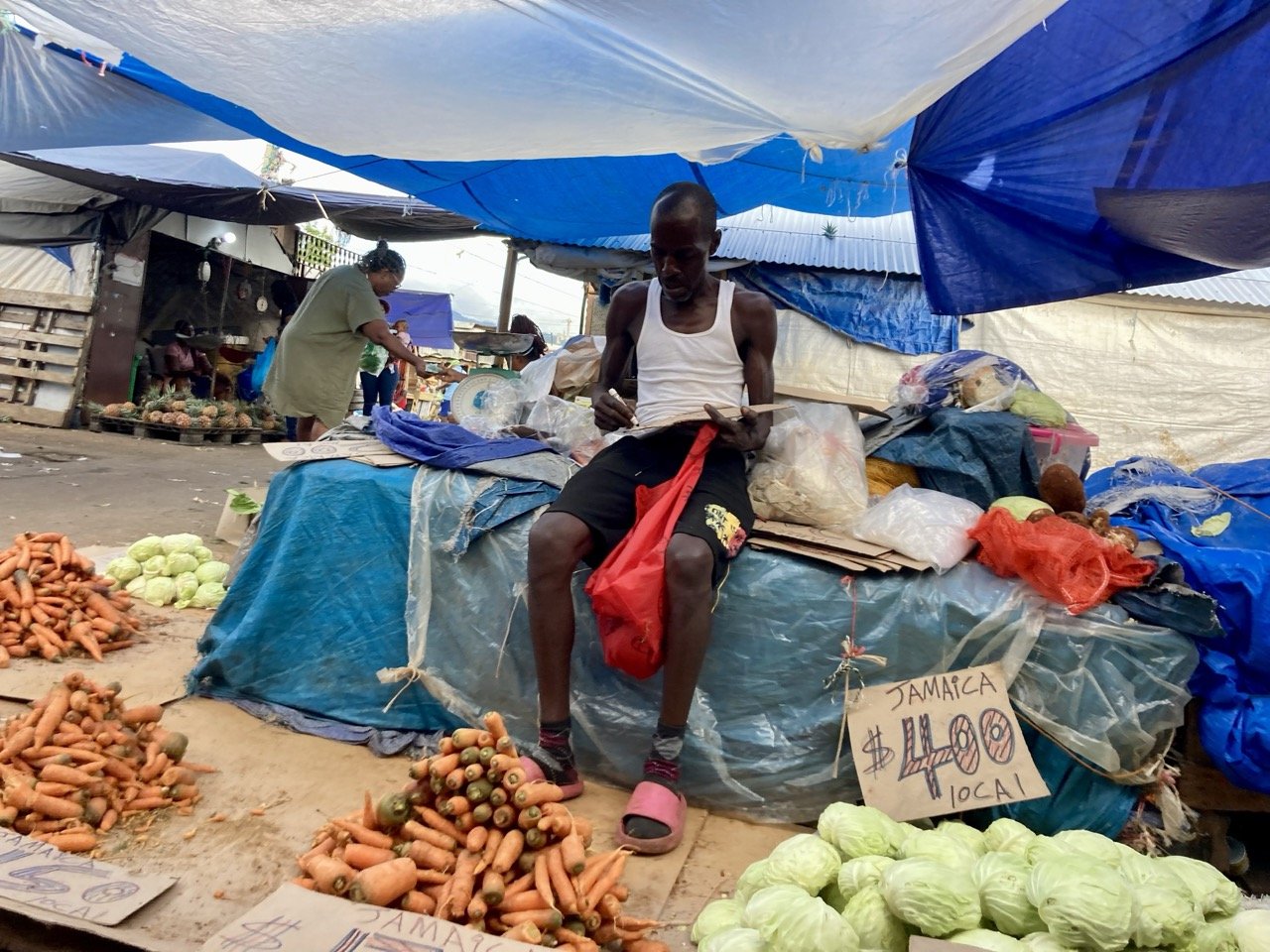
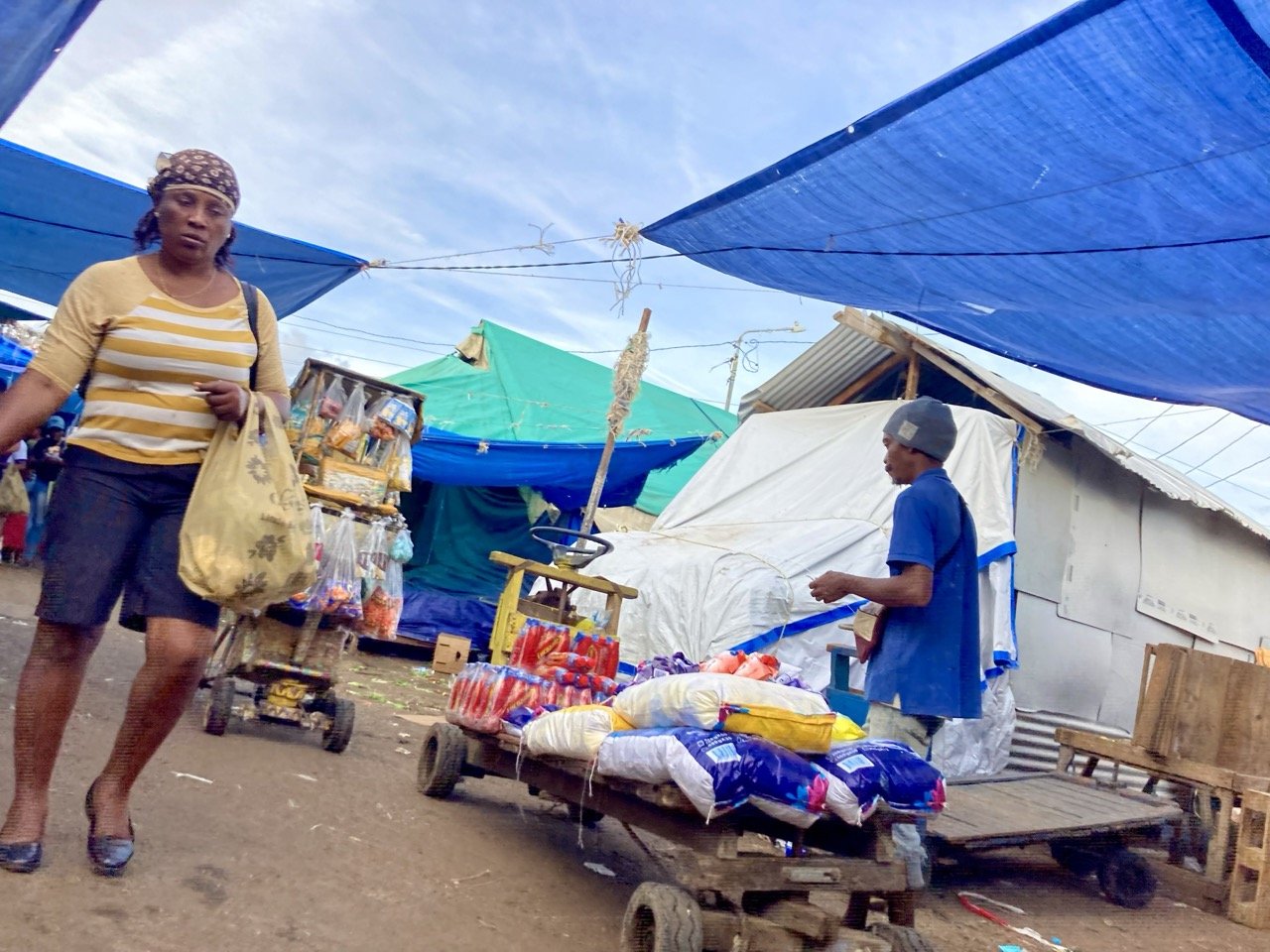
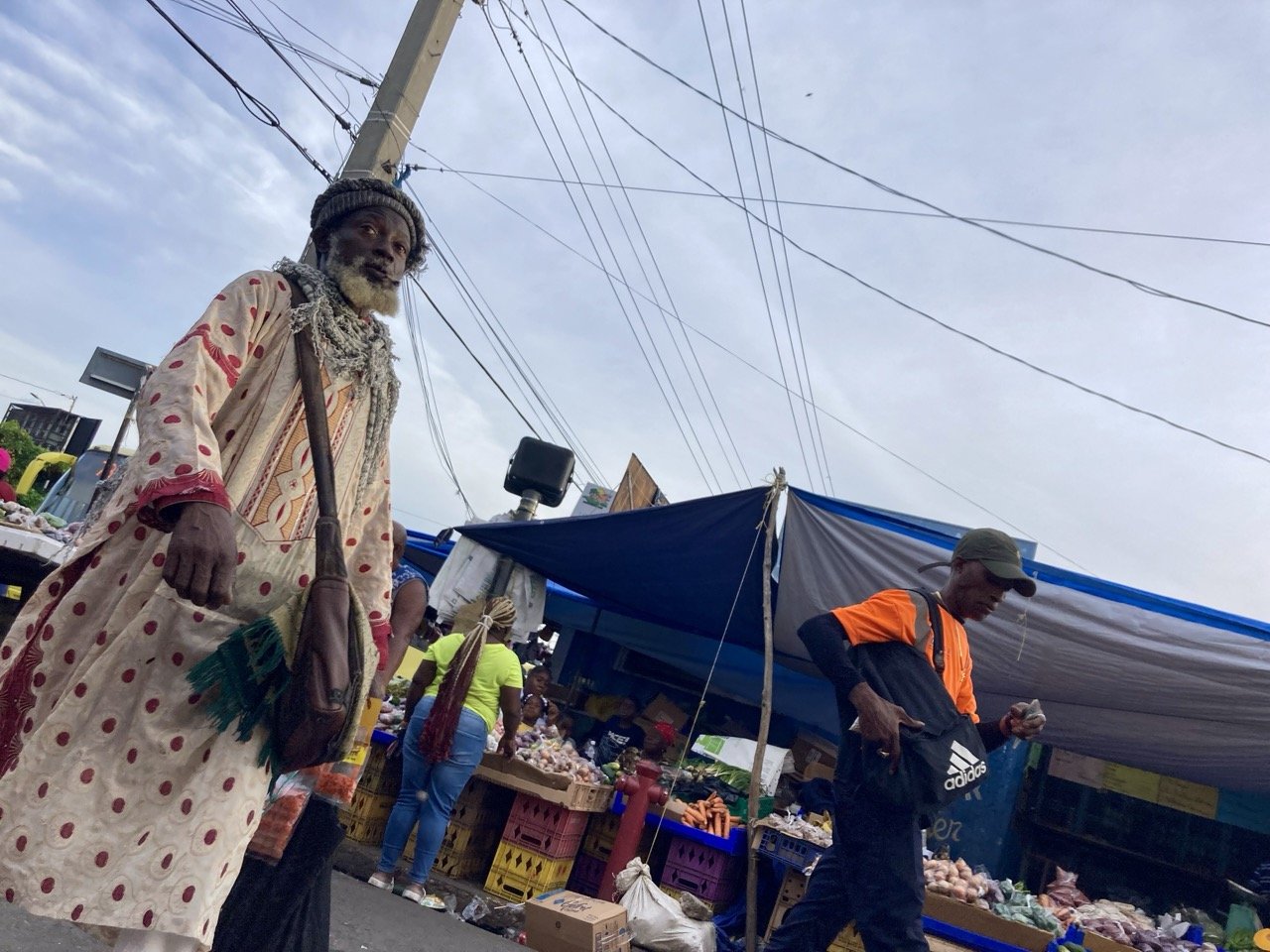
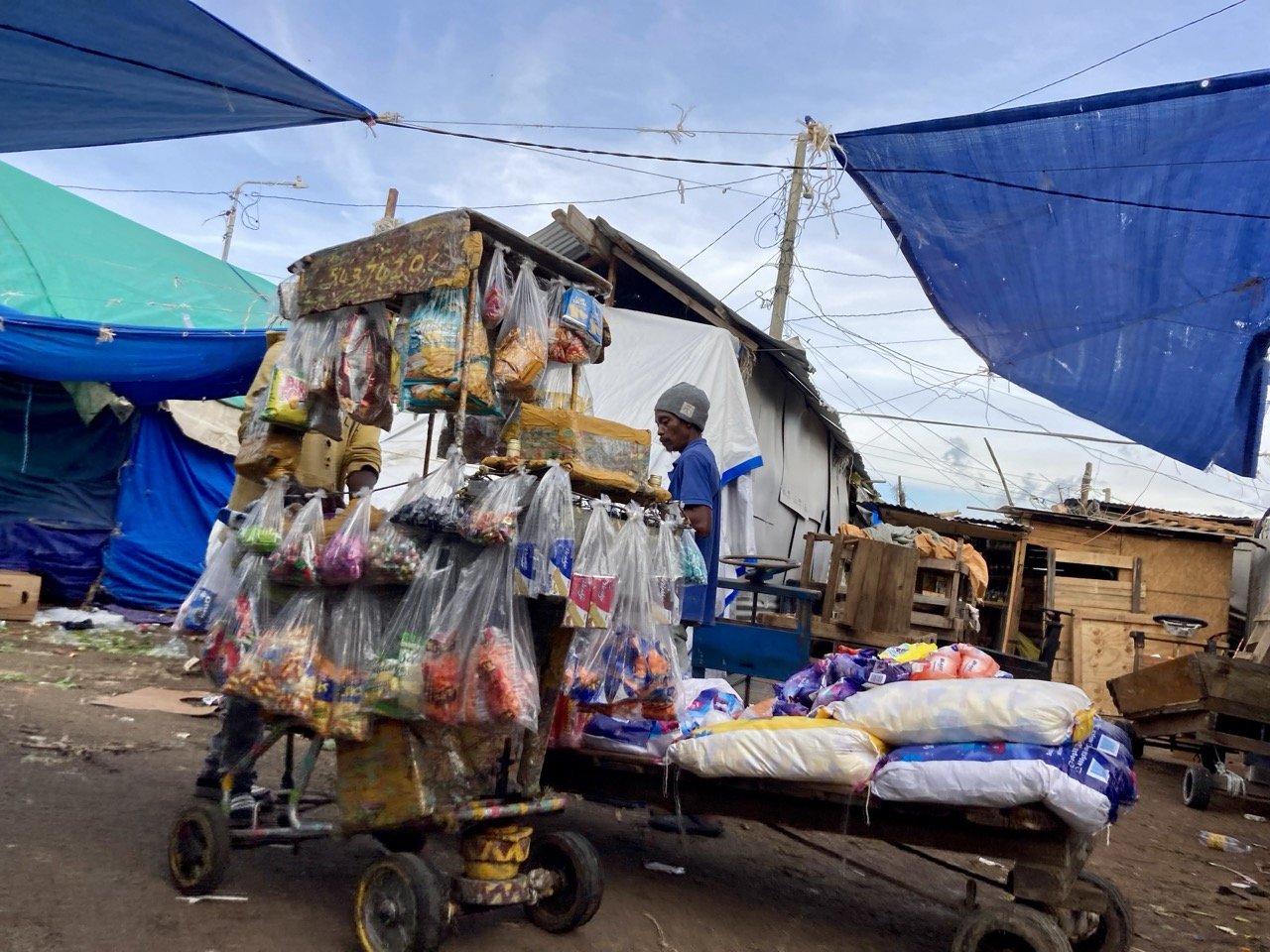
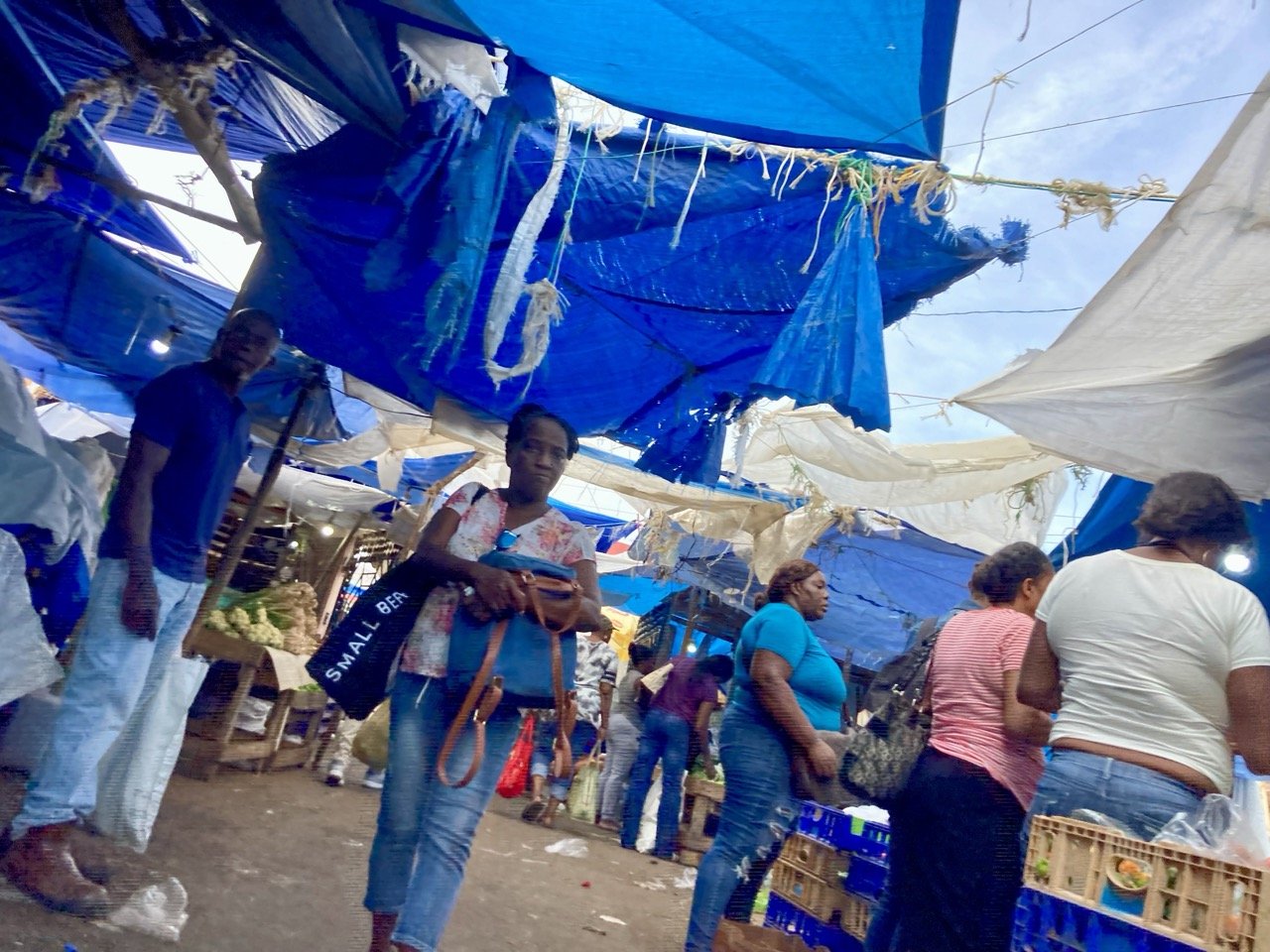
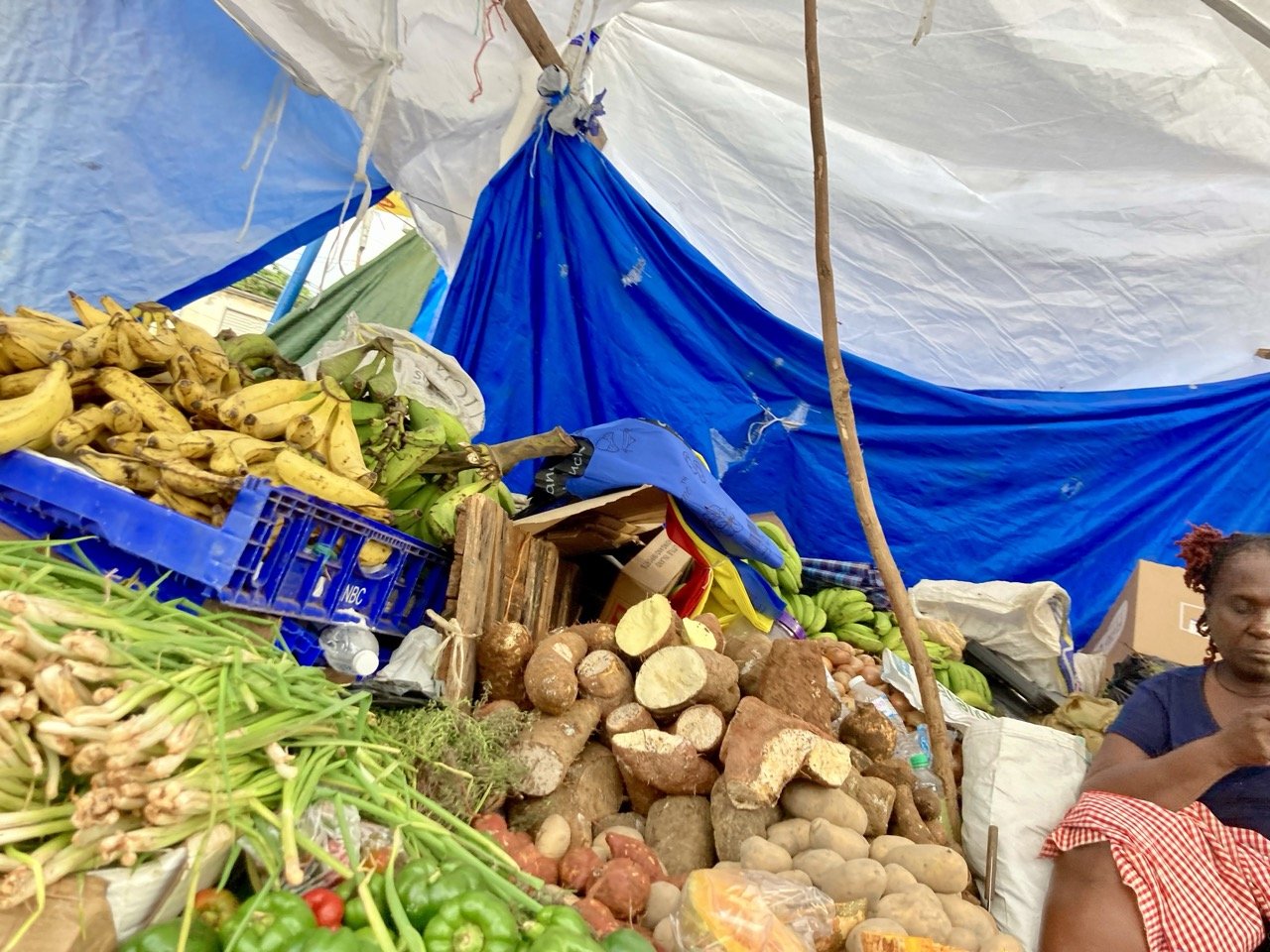
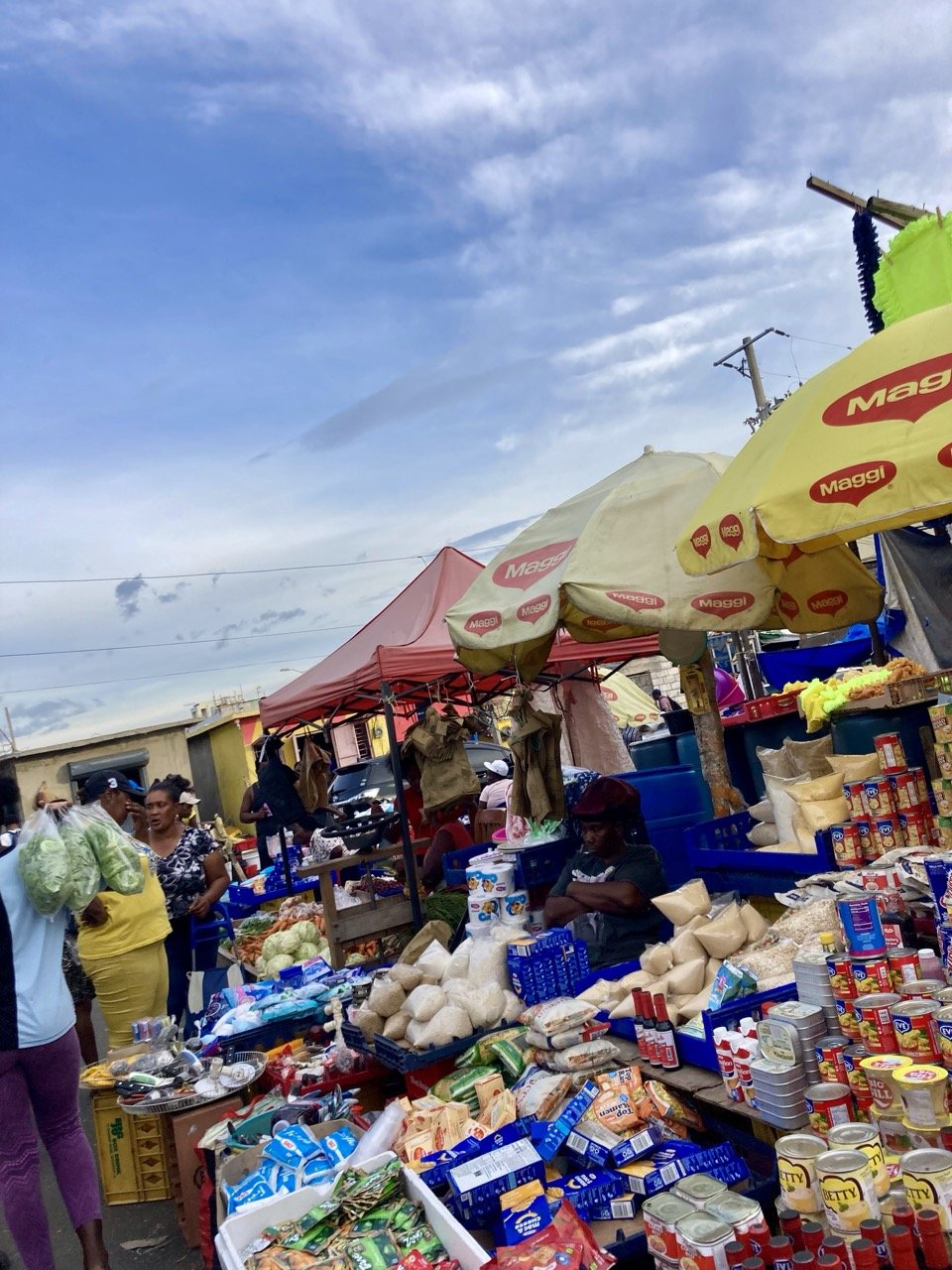
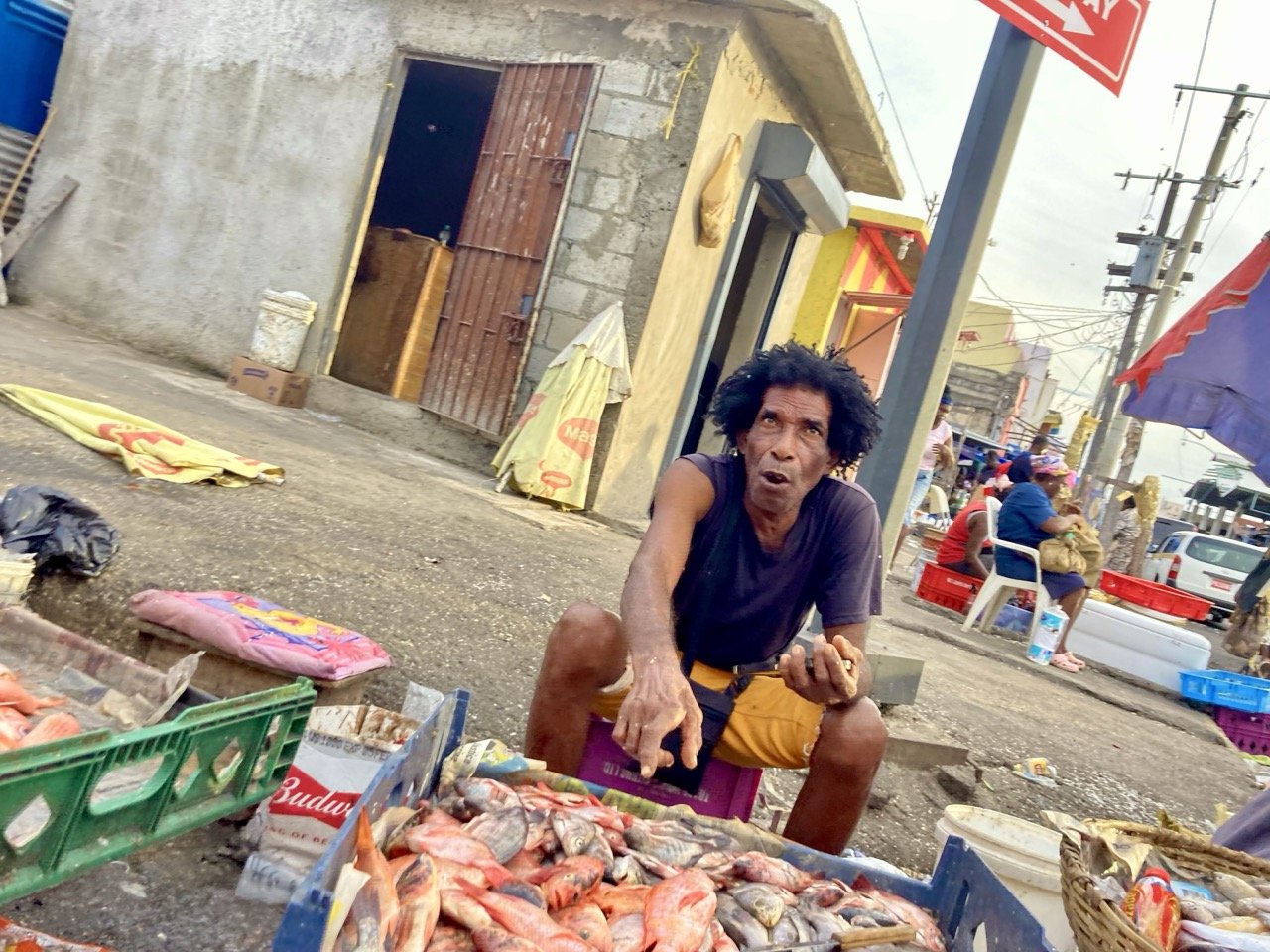
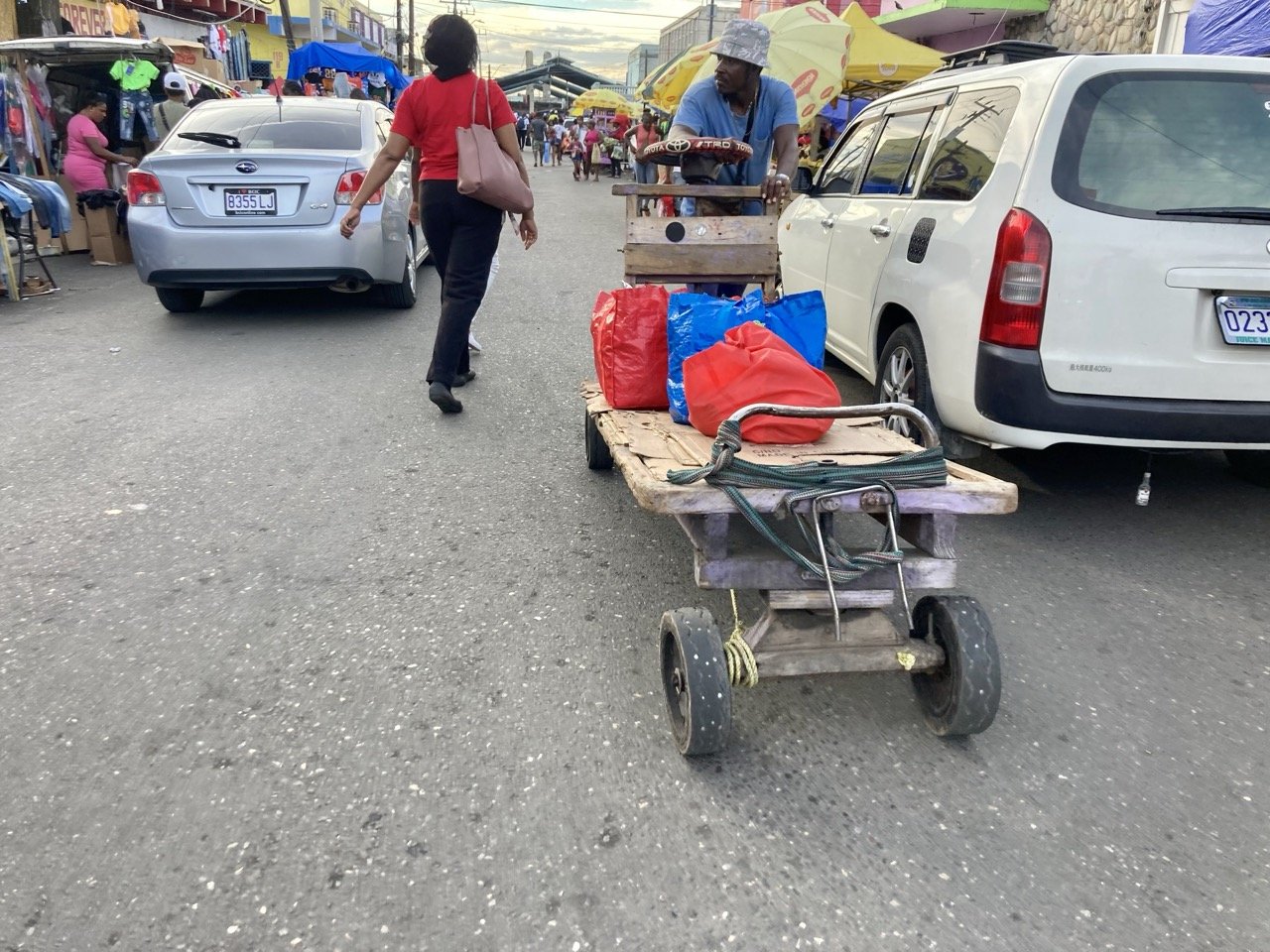
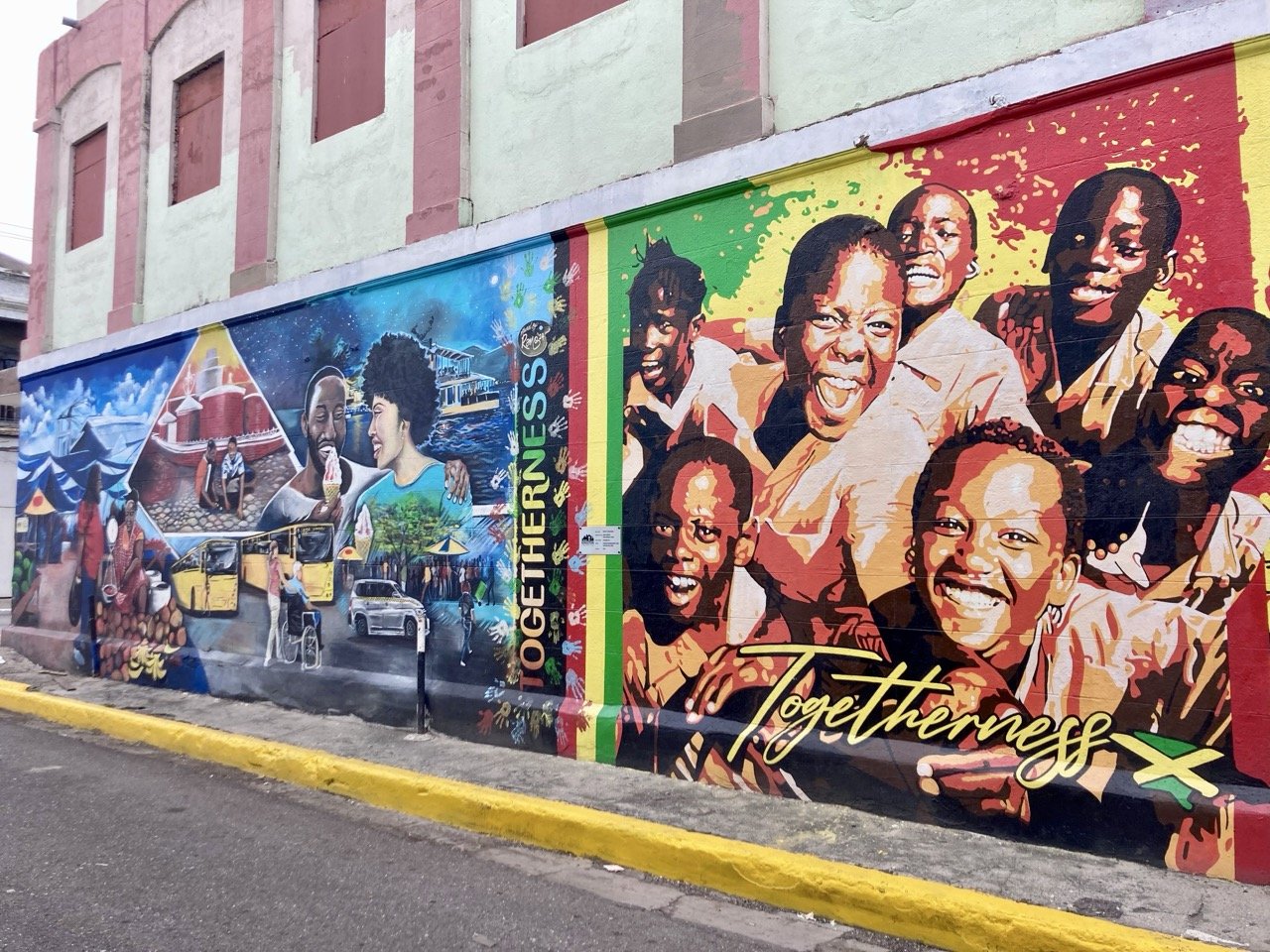
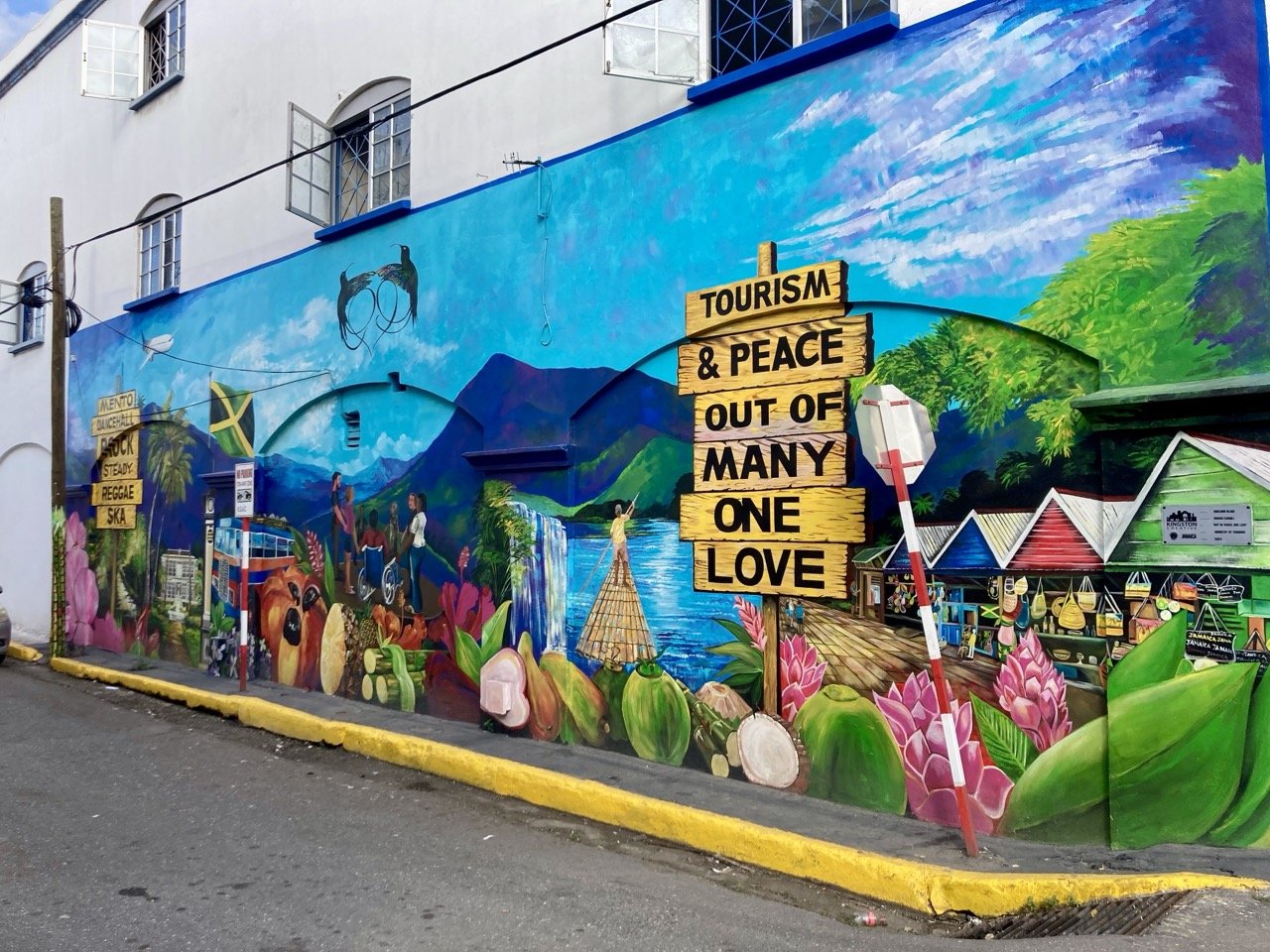
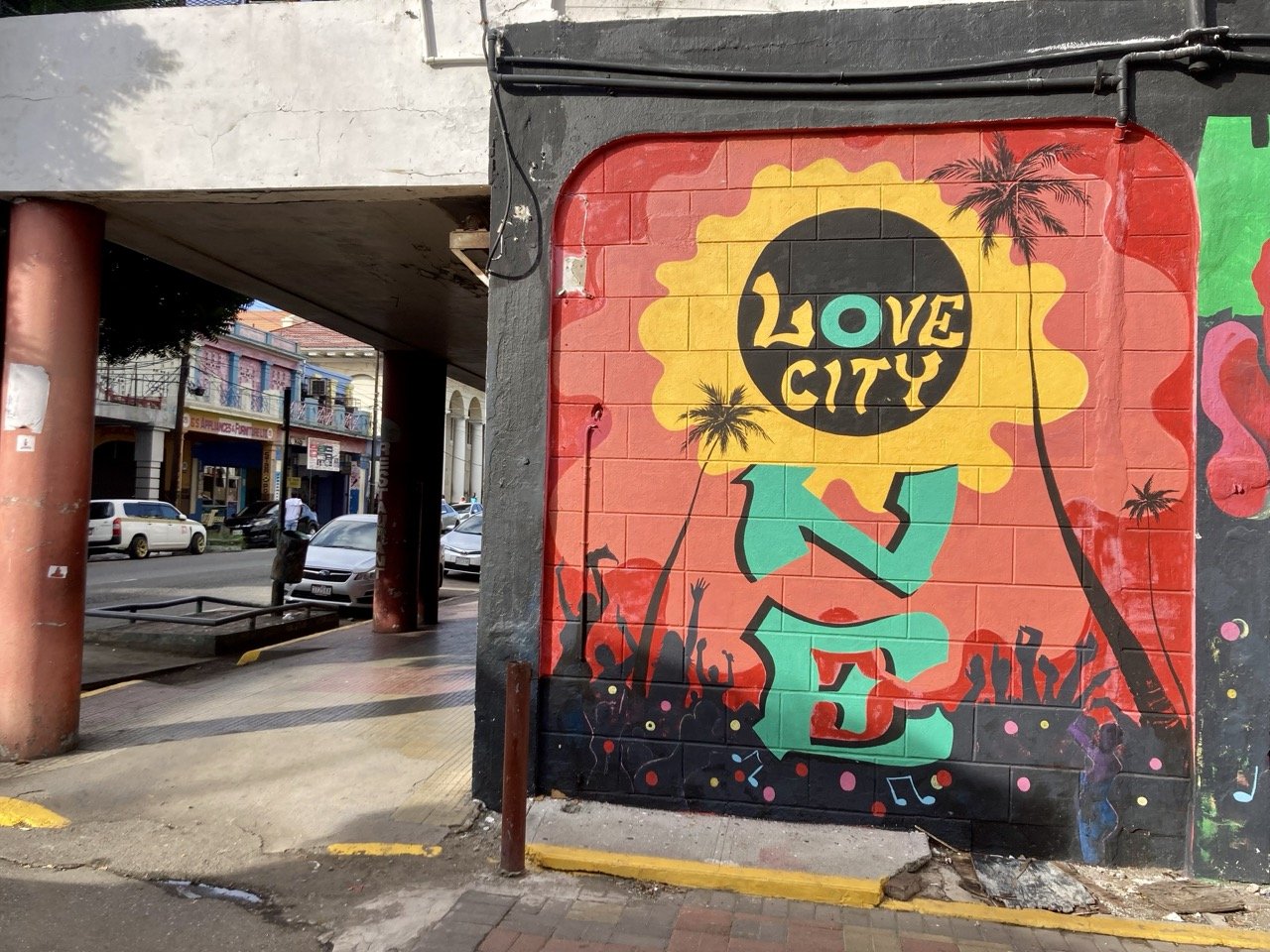
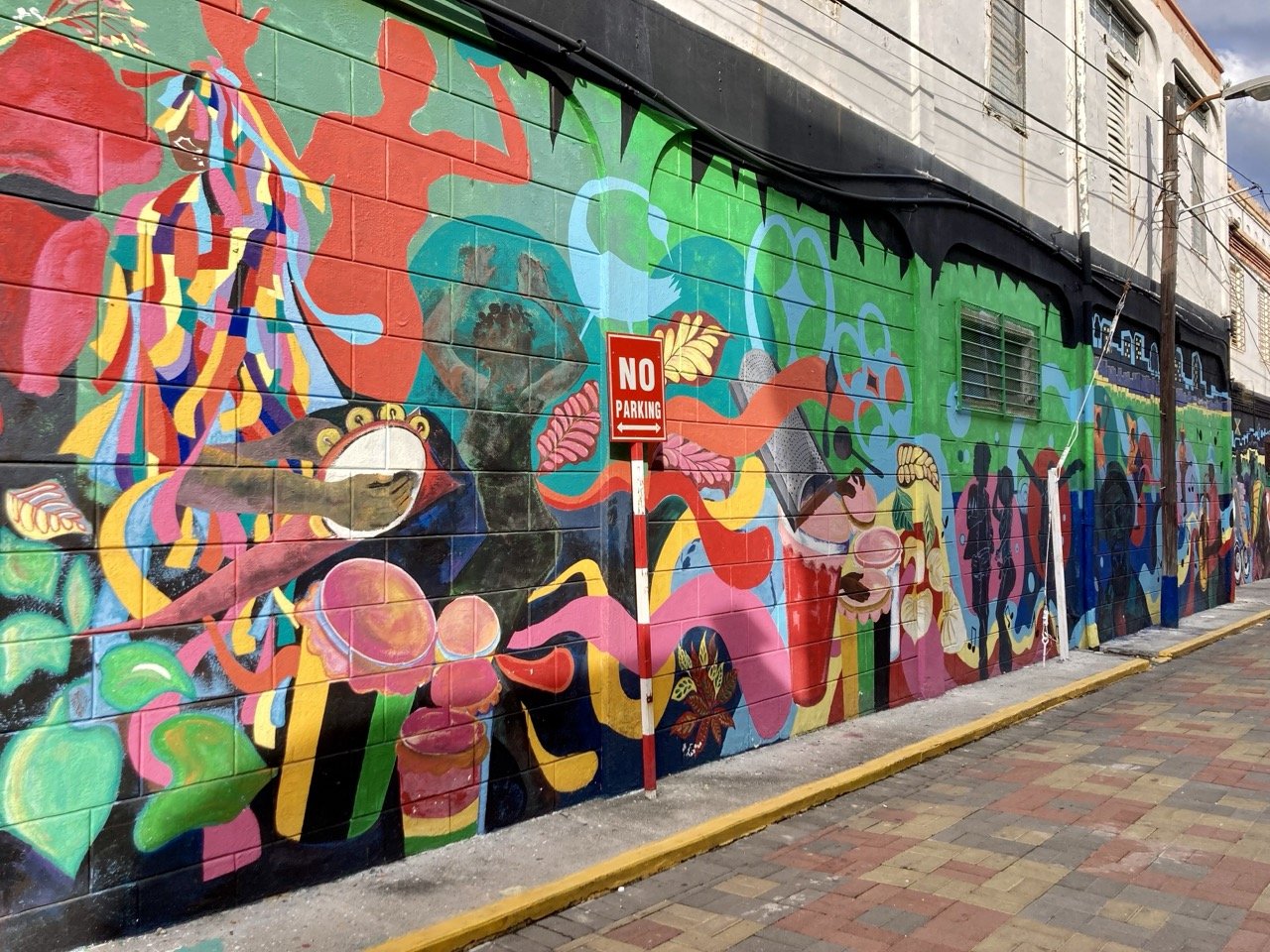
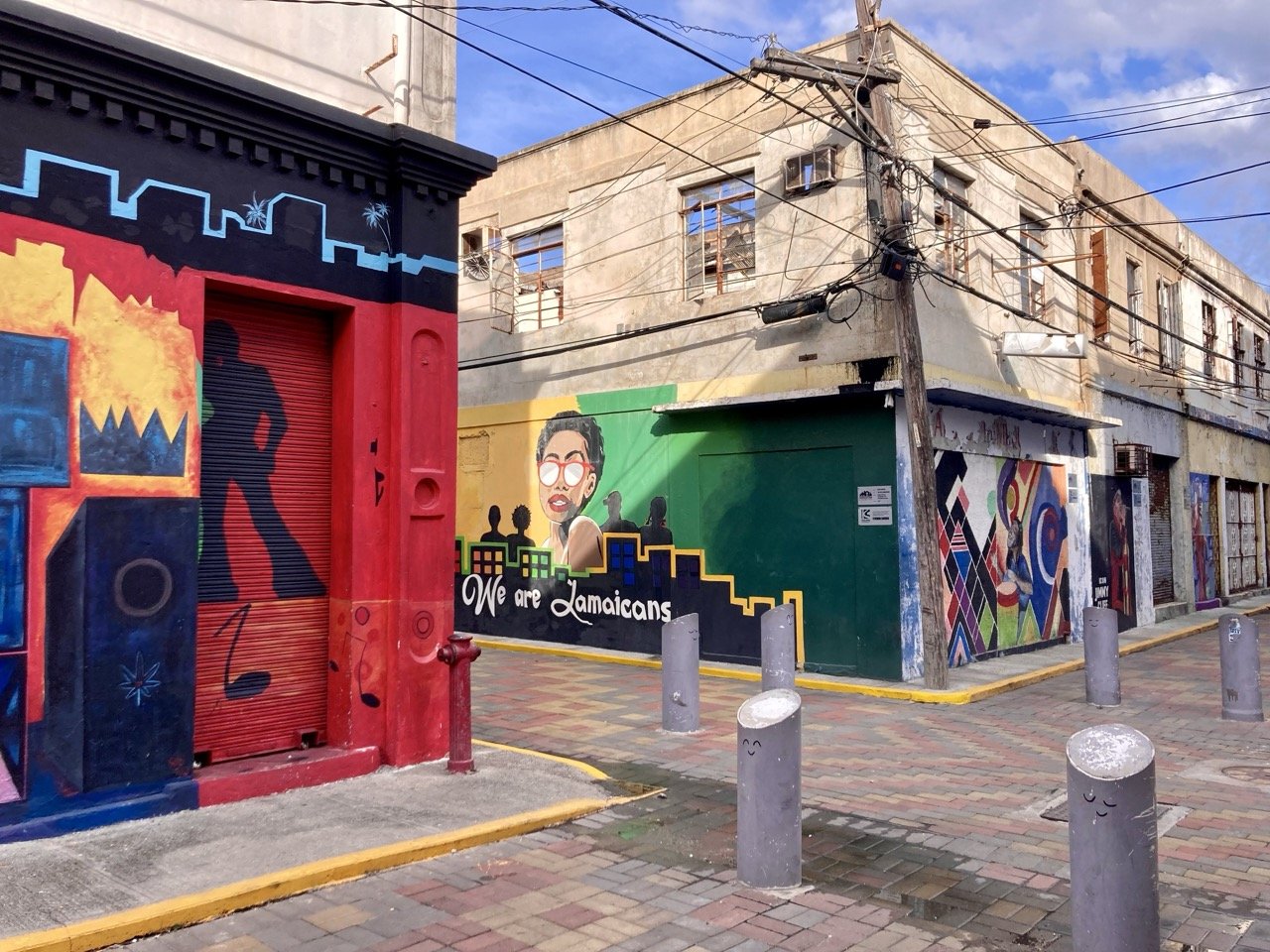
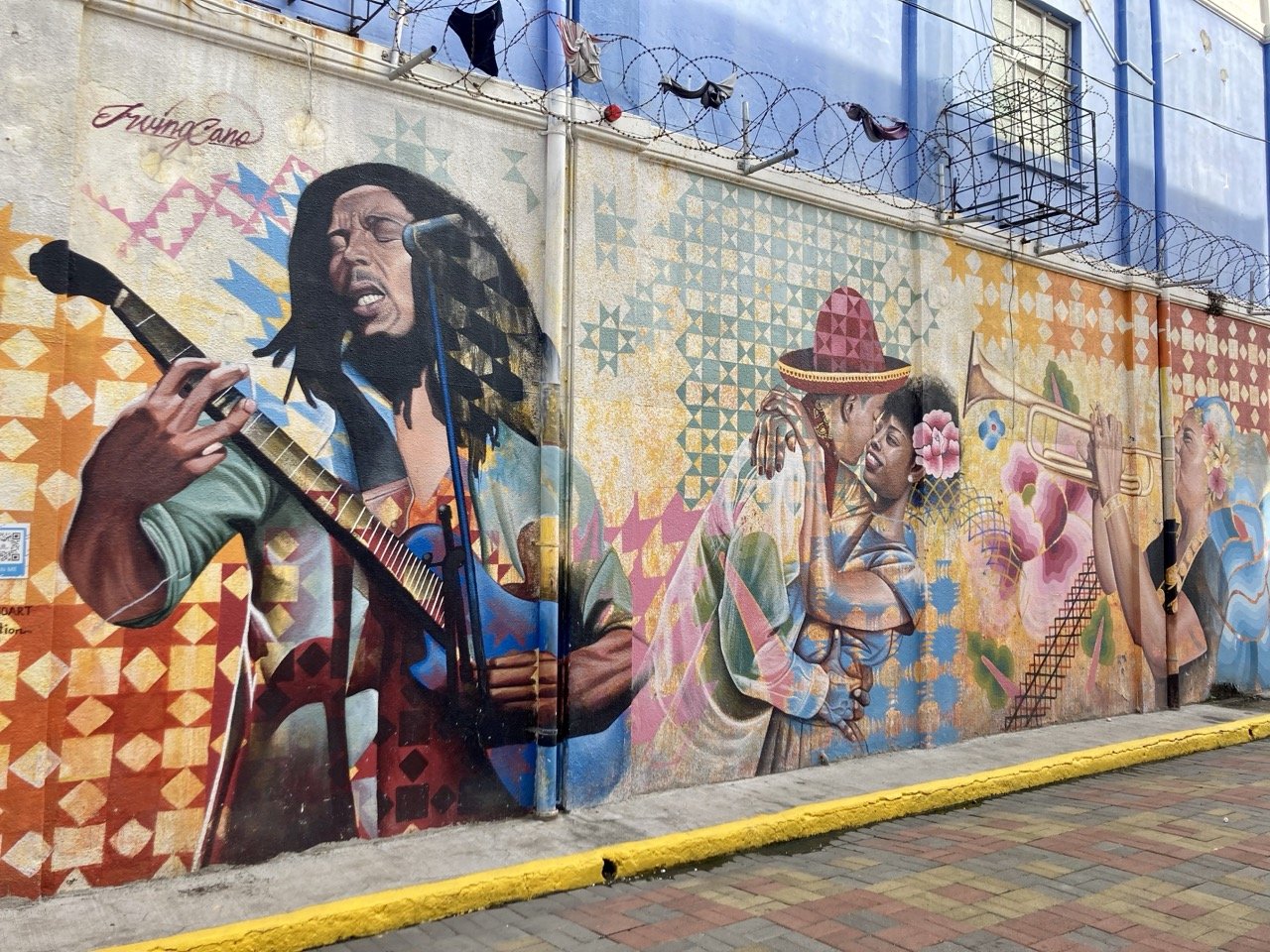
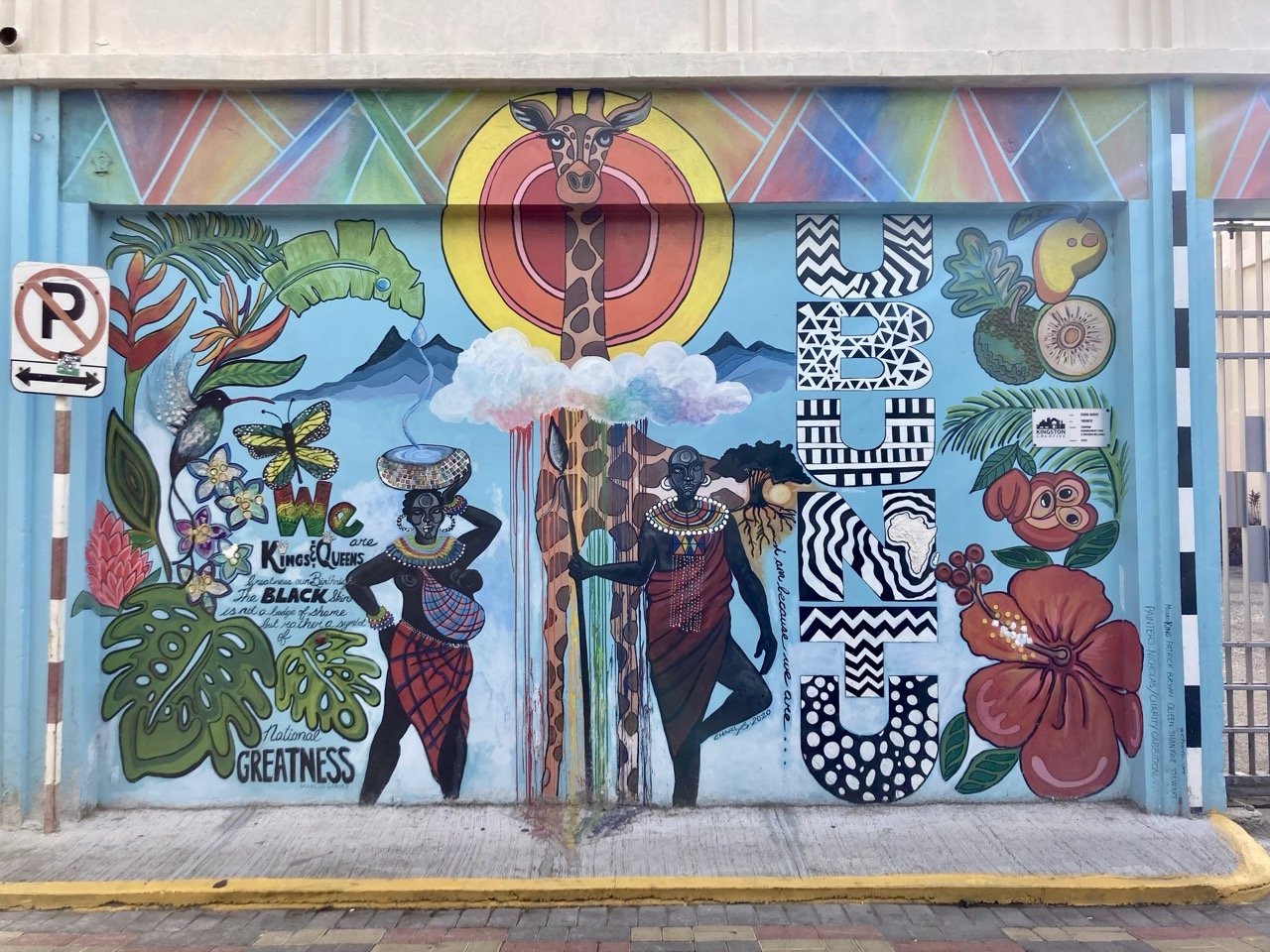
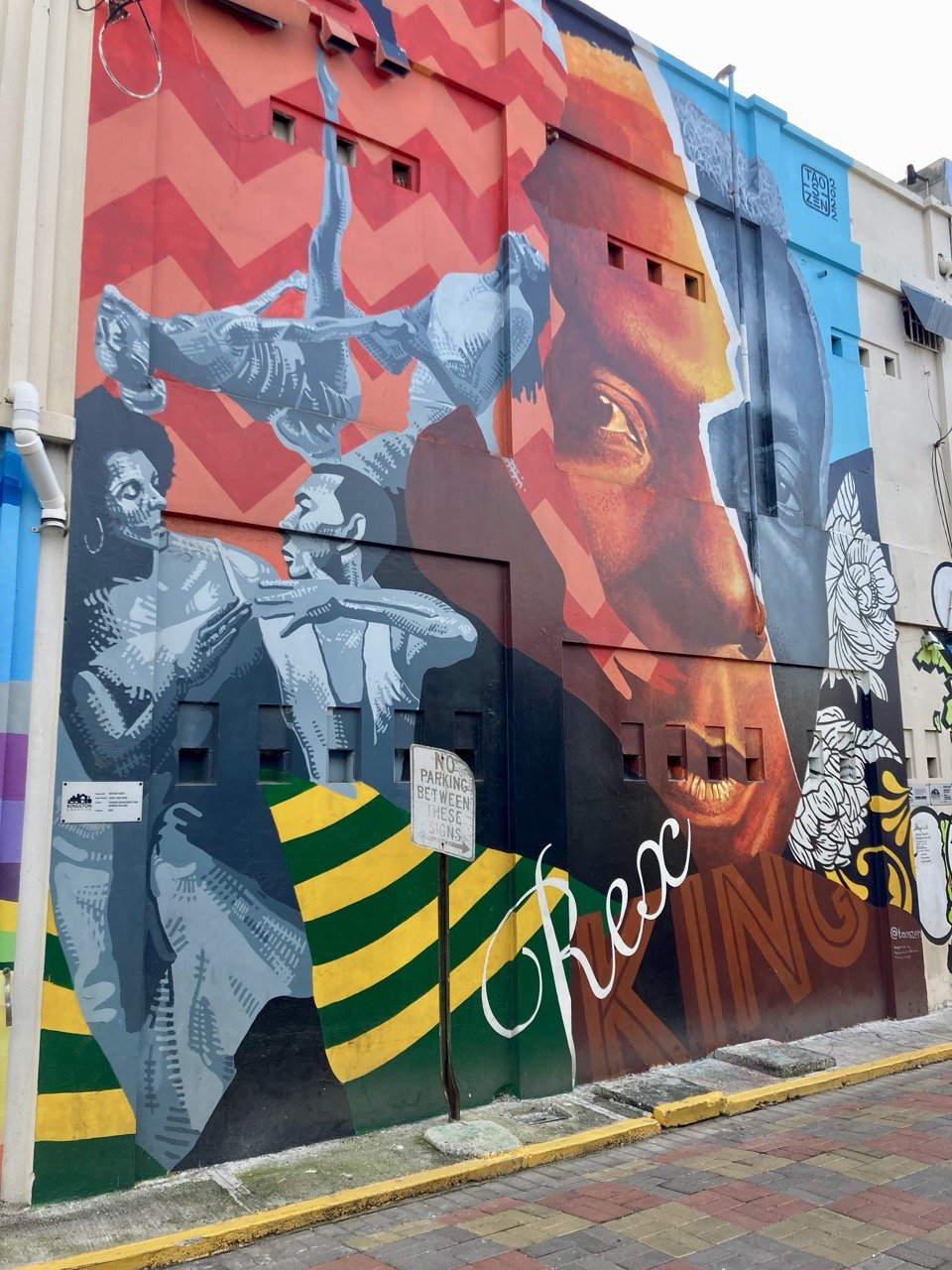
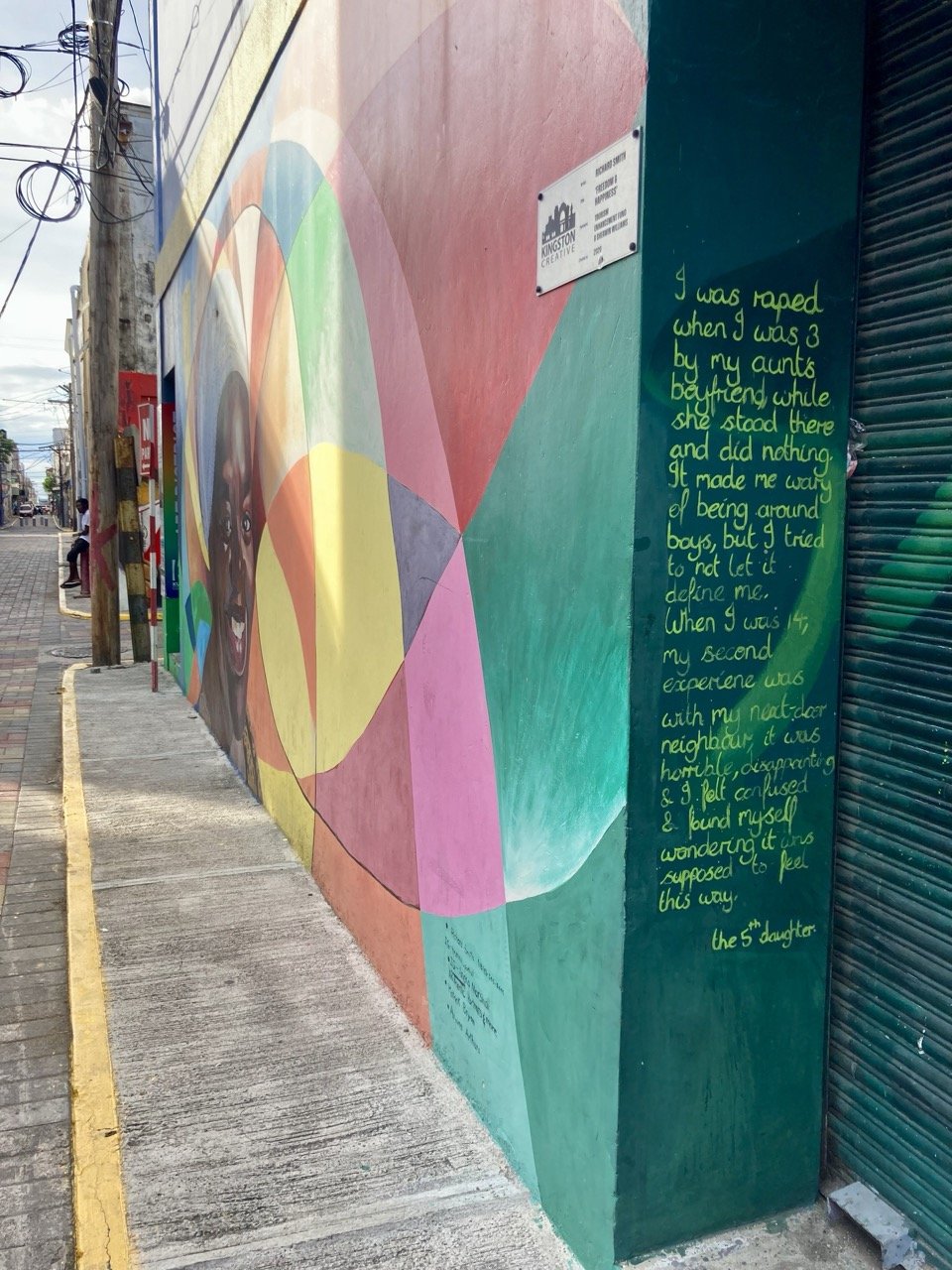
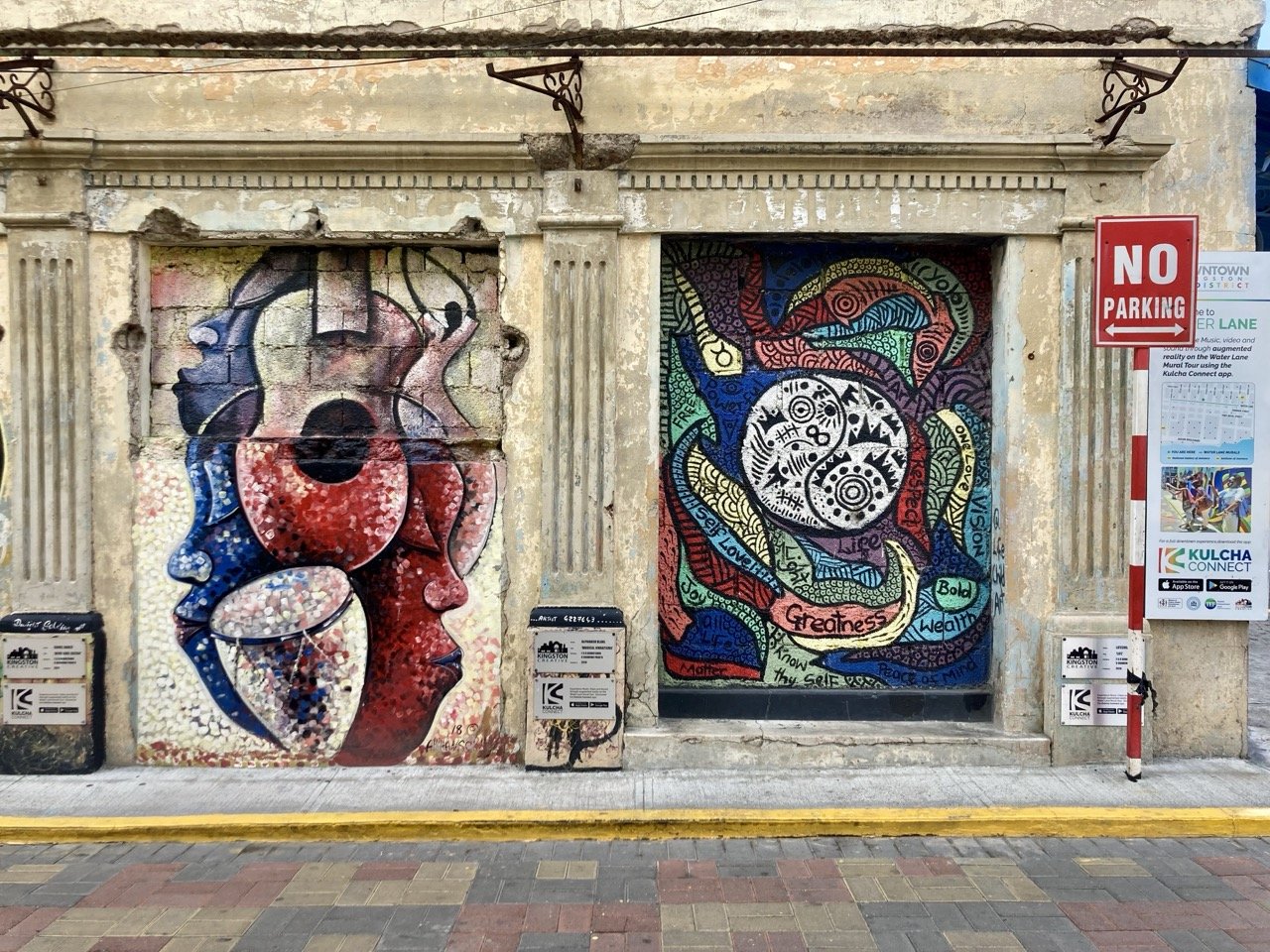
On a eu beaucoup de plaisir à marcher au centre-ville, surtout les multiples rues du “marché public” qui grouille de vie. Entre les odeurs, le trafic piétonnier et le bruit infernal des annonces du choux le moins cher, du poisson le moins cher, du concombre le moins cher, du plantain le moins cher… qui est crié haut et fort à travers des haut-parleurs qui pourraient bien servir à la discothèque du coin… Disons que ce n’est pas doux pour les tympans, et qu’on trouve de tout là-bas; des meubles, du linge, des produits ménagers, du la bouffe, du tissus, des Tupperware, des souliers, et même des montres Rolex 😉
On the other hand, we found the Jamaicans to be really nice and welcoming. Despite the country having a bad reputation abroad (be careful, Jamaica is dangerous, they say!), we felt very safe. Okay, we were anchored next to the Royal Jamaica Yacht Club, which is fenced and secured 24/7… But still, during our outings in the city, apart from feeling watched (we were almost always the only white people around), we didn’t feel in danger at all.
We really enjoyed walking downtown, especially the multiple streets of the “public market” bustling with life. Between the smells, the pedestrian traffic, and the infernal noise of announcements about the cheapest cabbage, the cheapest fish, the cheapest cucumber, the cheapest plantain… shouted loudly through speakers that could well serve the local disco… Let’s say it’s not easy on the eardrums, and you can find everything there: furniture, clothes, household products, food, fabric, Tupperware, shoes, and even Rolex watches 😉
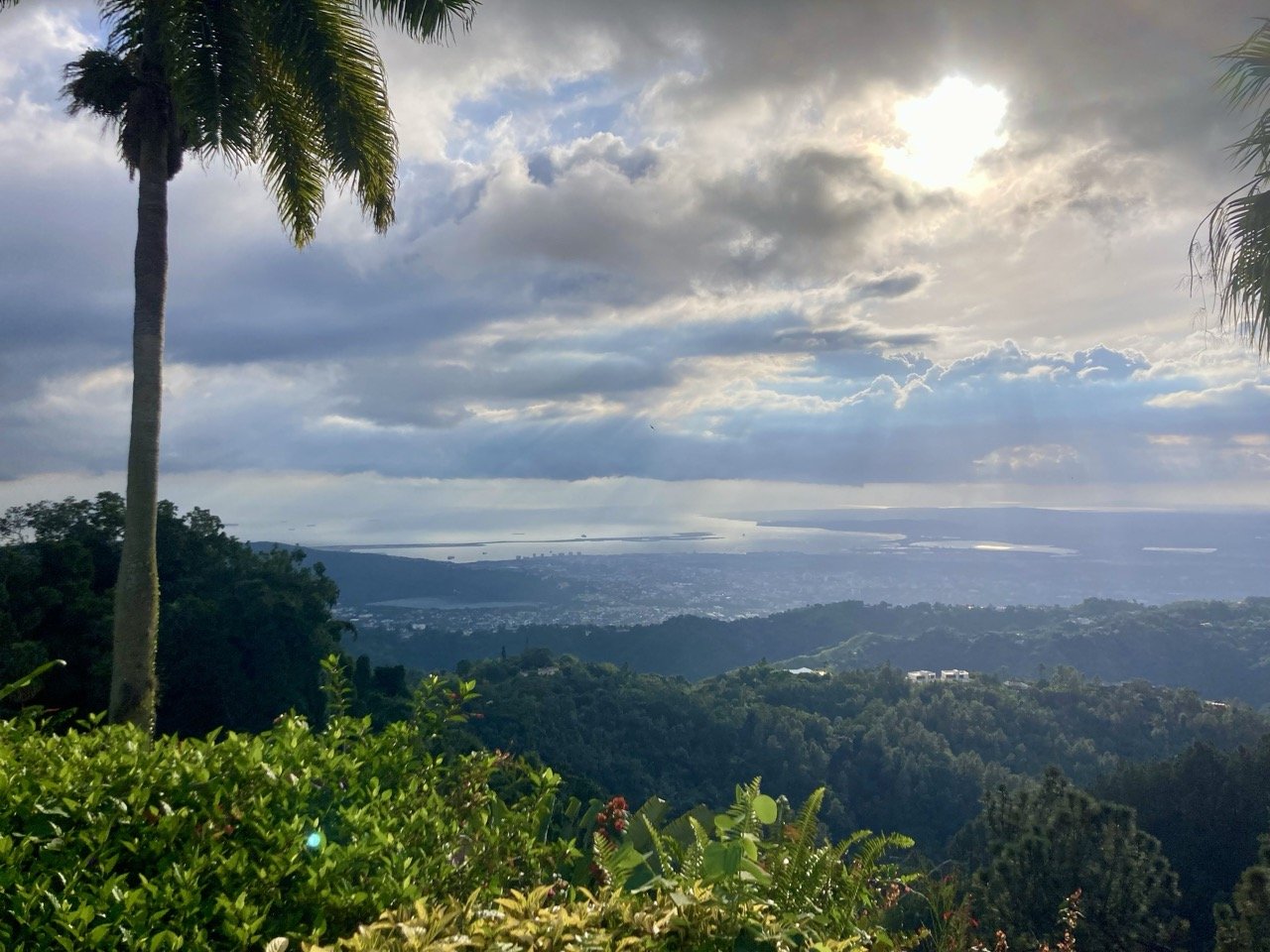
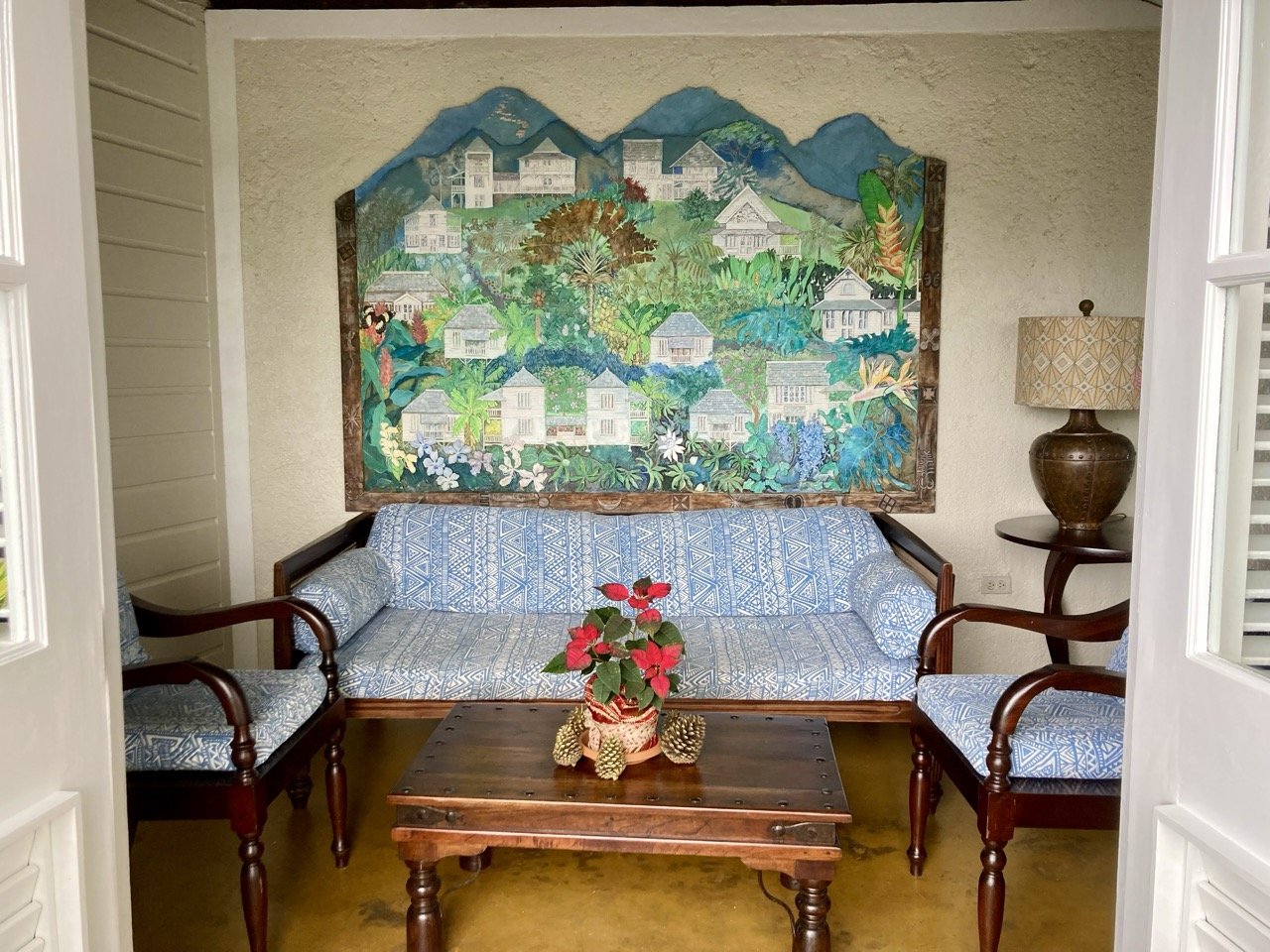
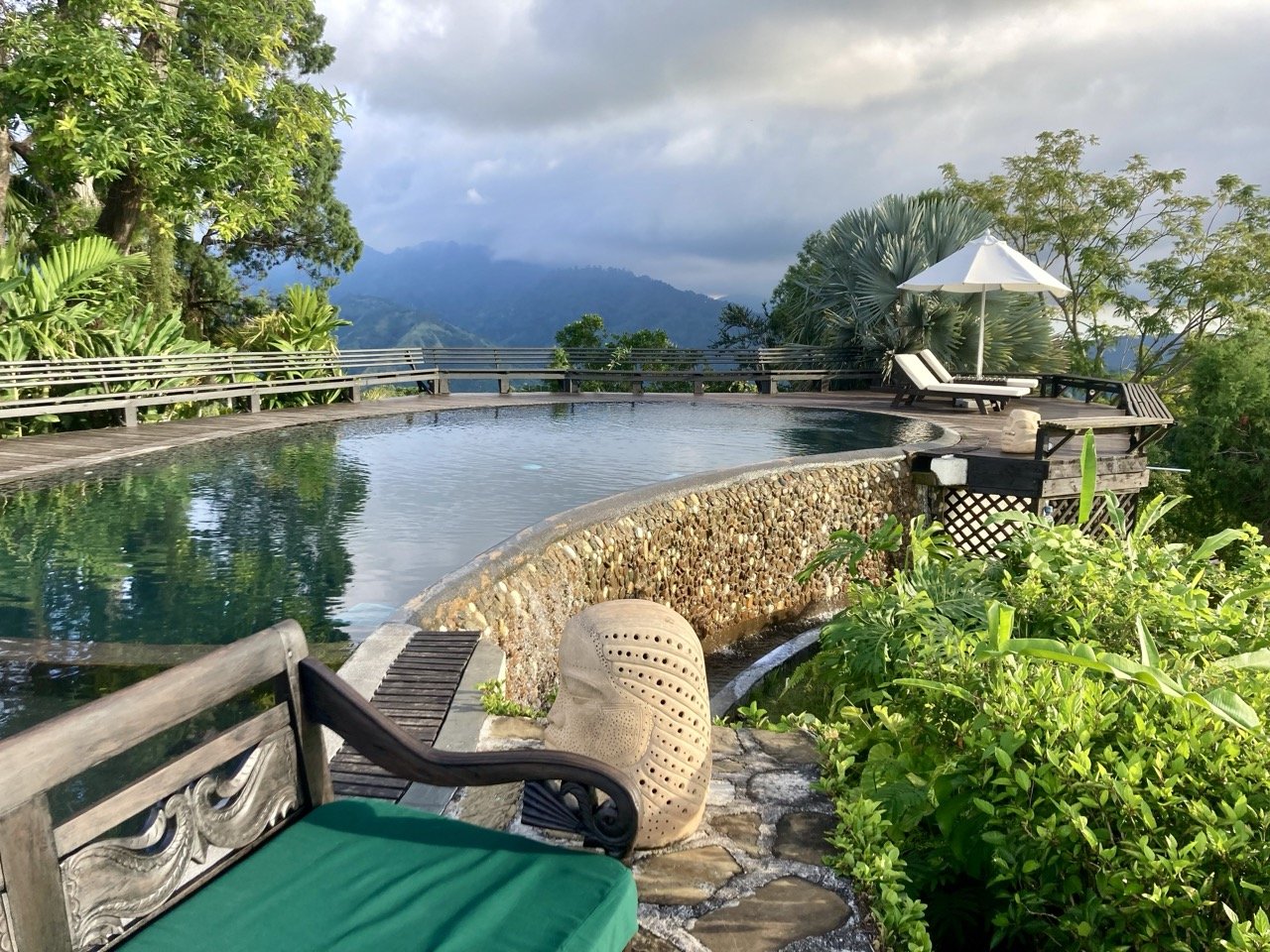
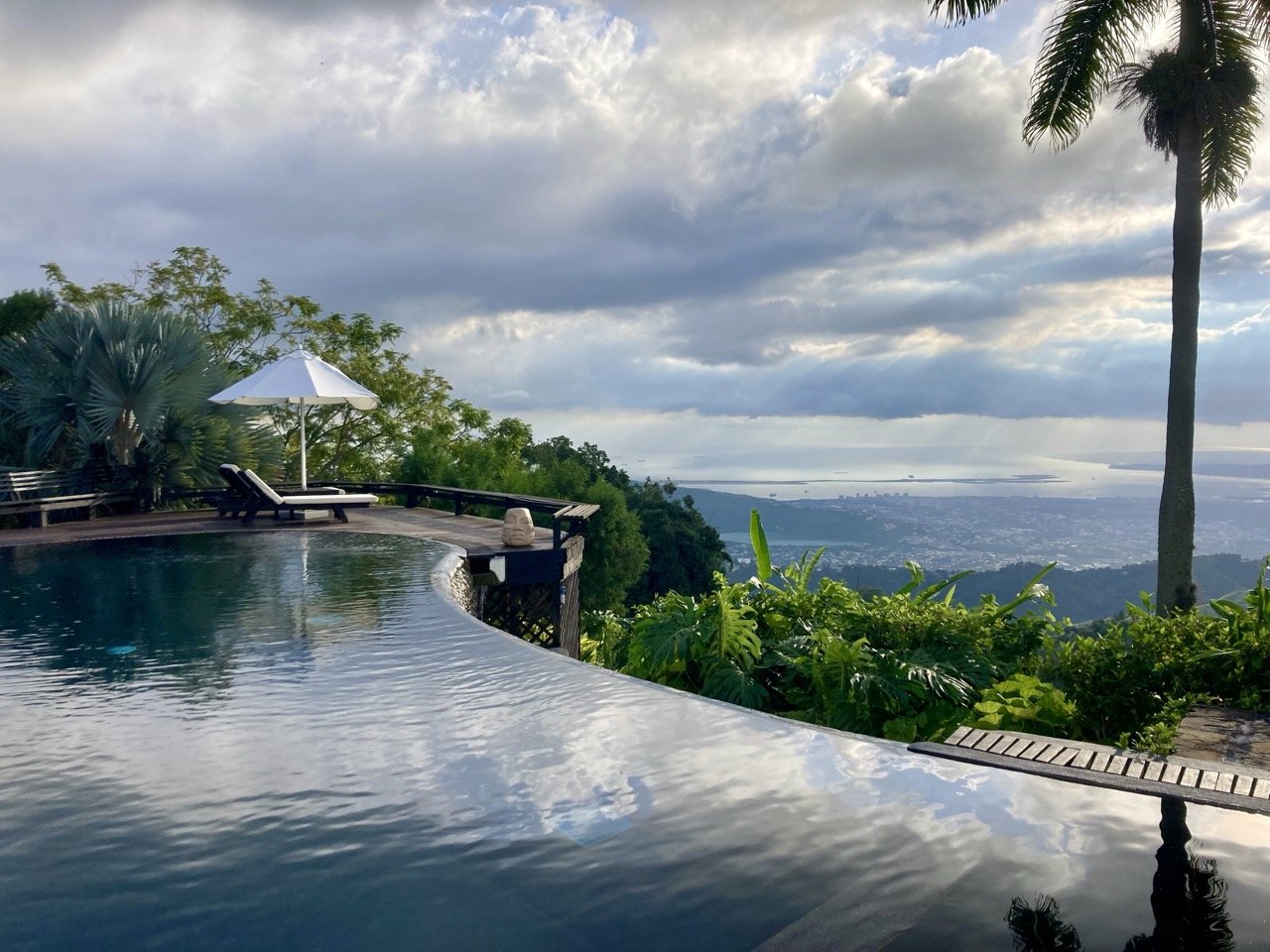
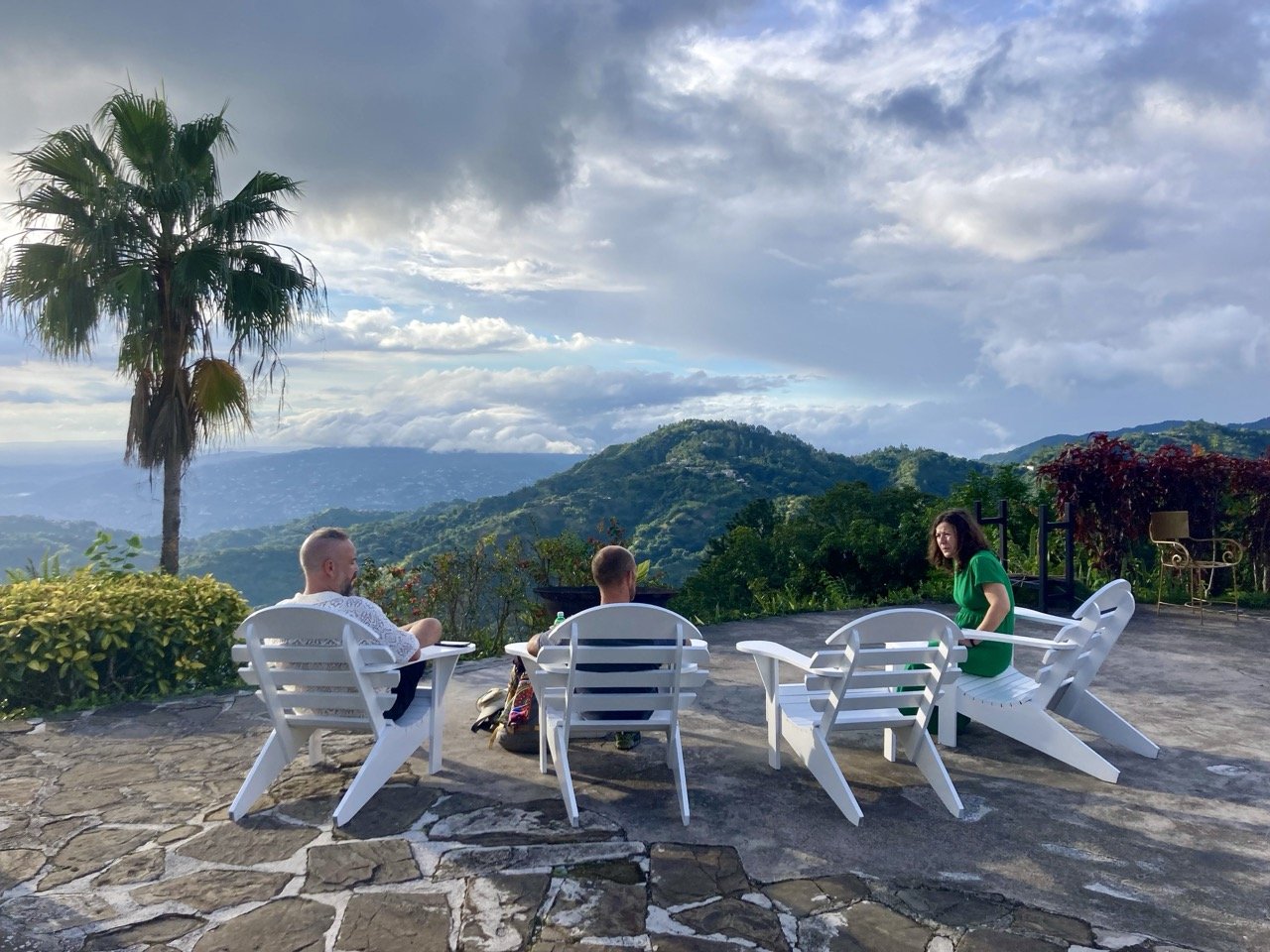
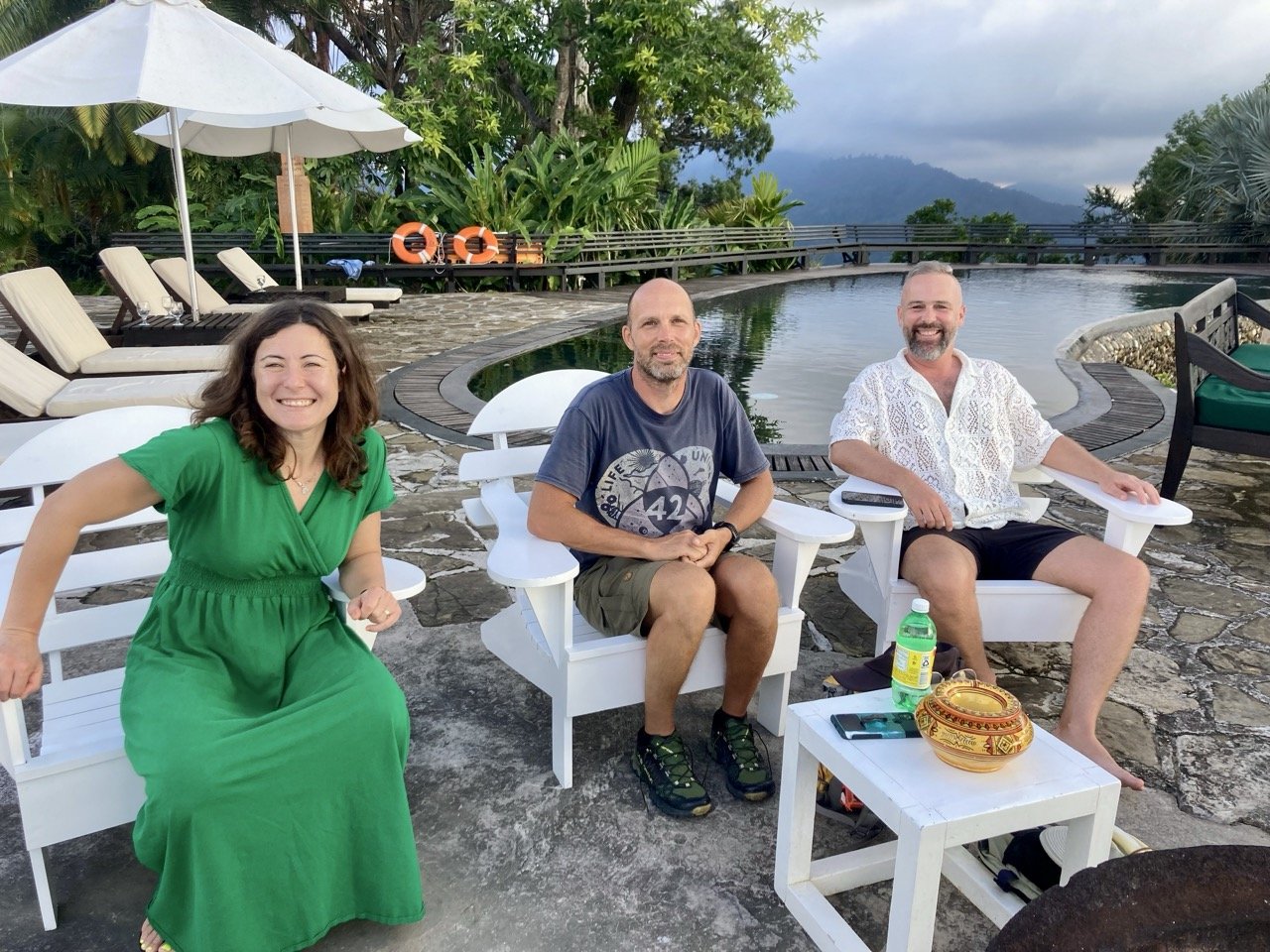
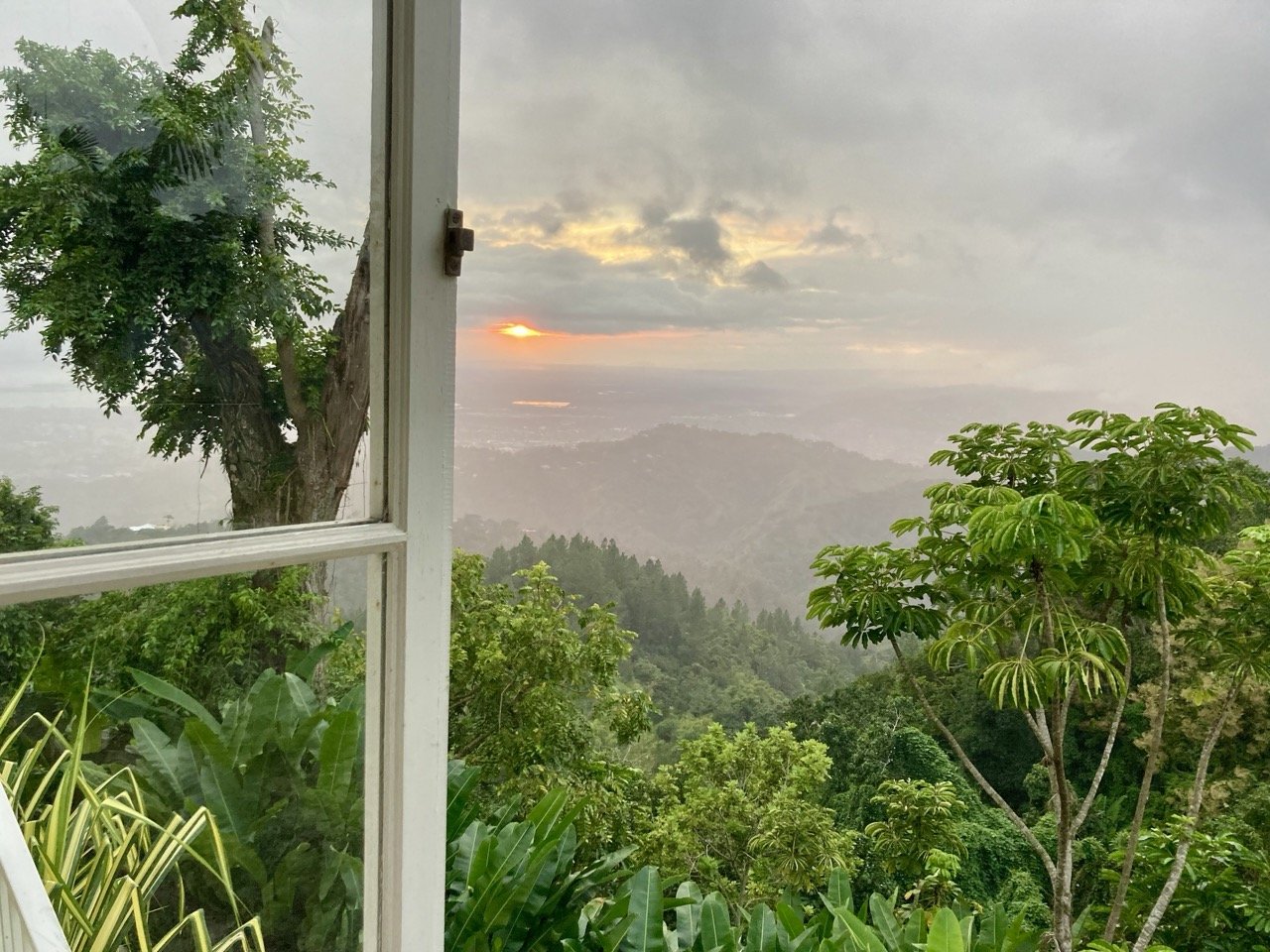
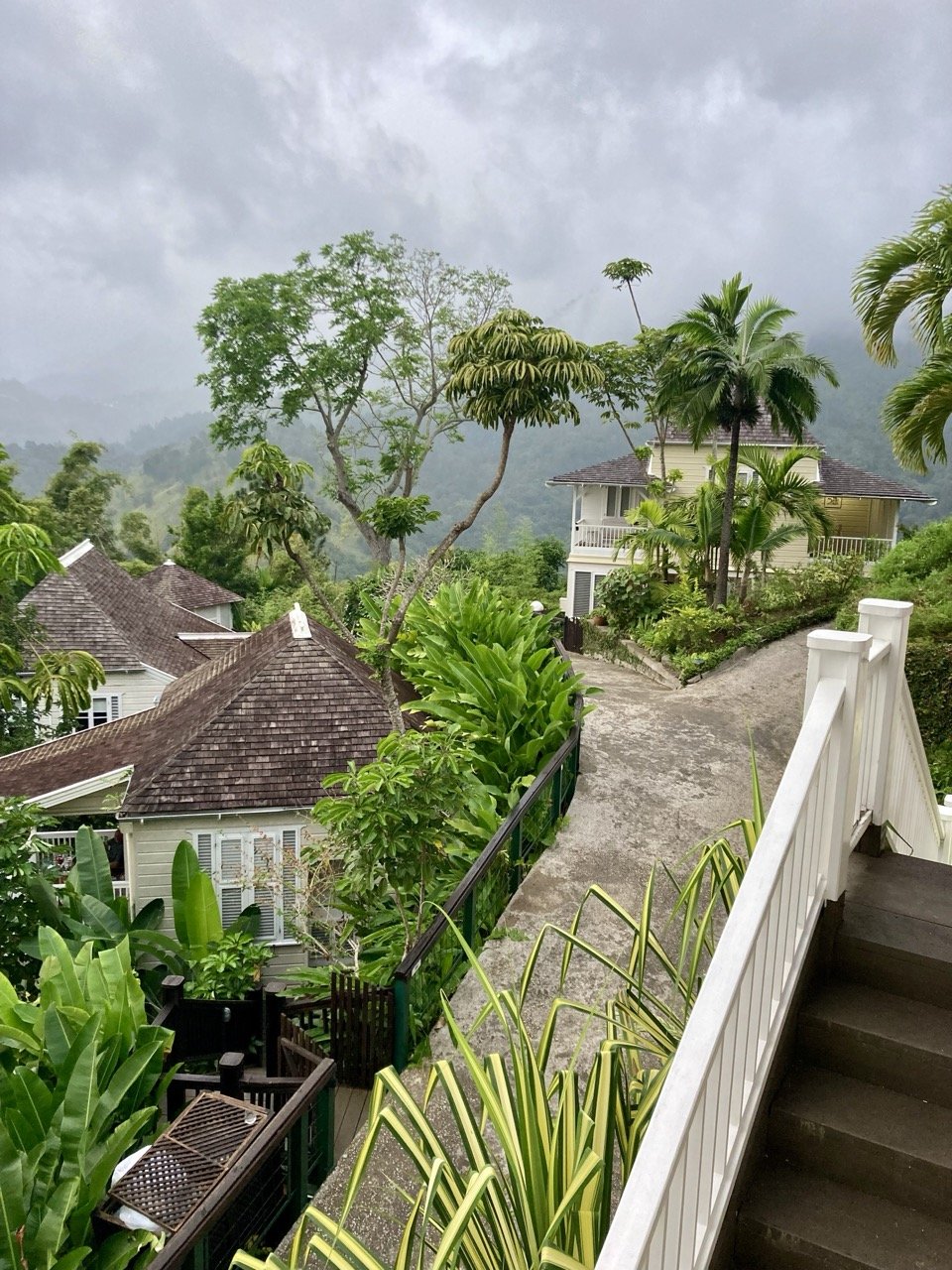
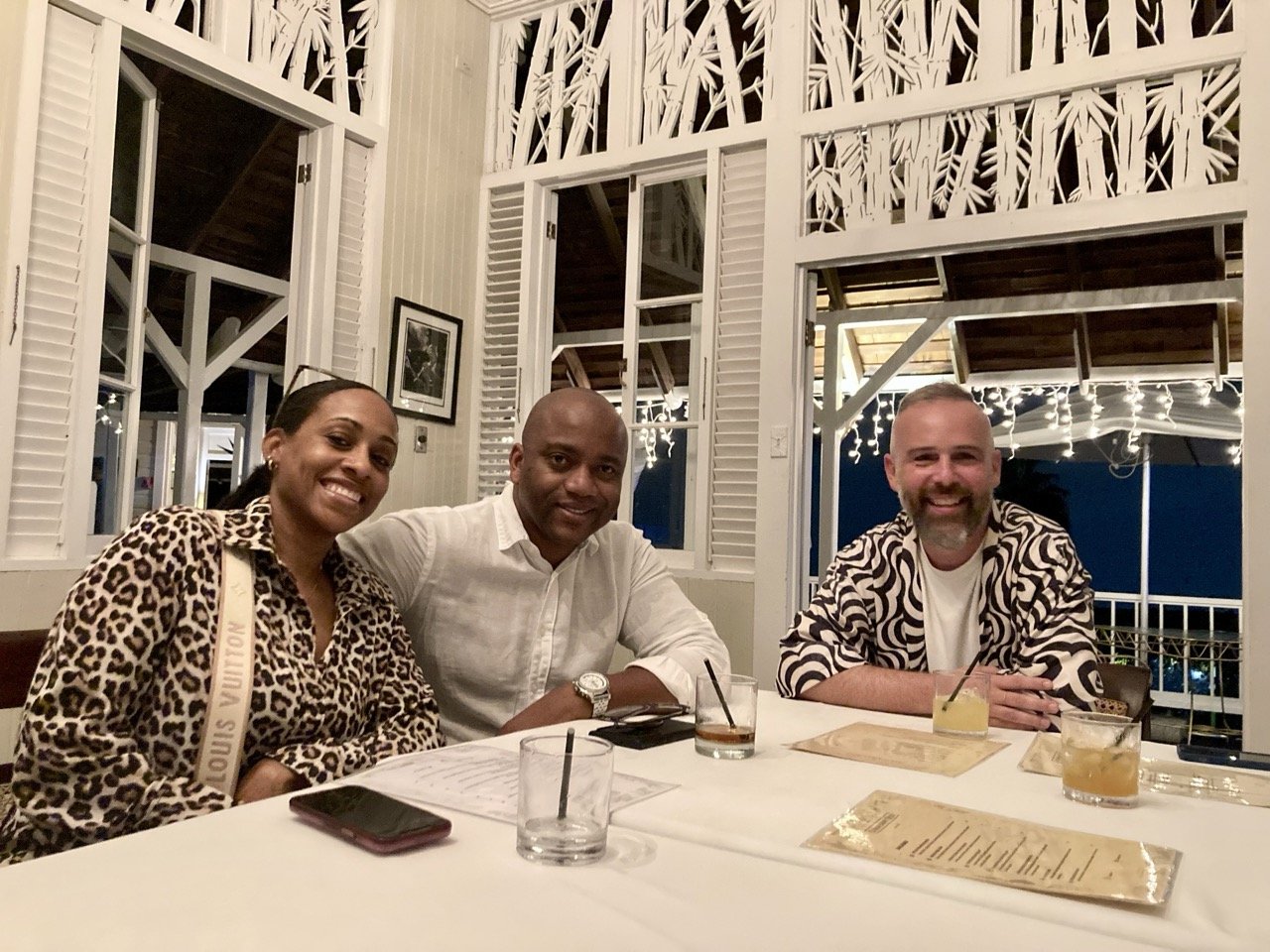
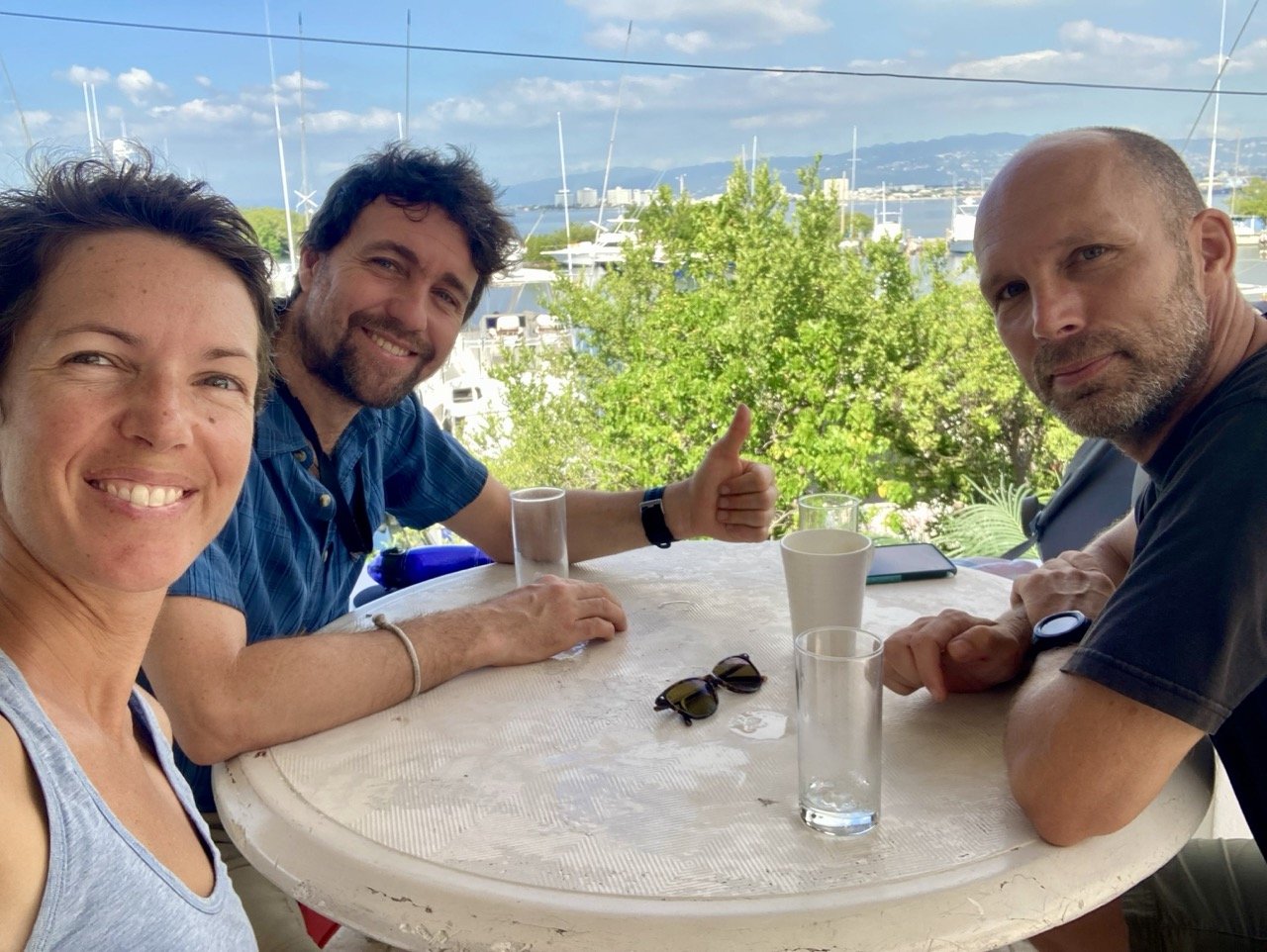
On a eu la chance de croiser des vieux amis qu’on n’avait pas vus depuis des années. Ils étaient en vacances en famille dans un super hôtel à flanc de montagne dans le nord-est de Kingston.
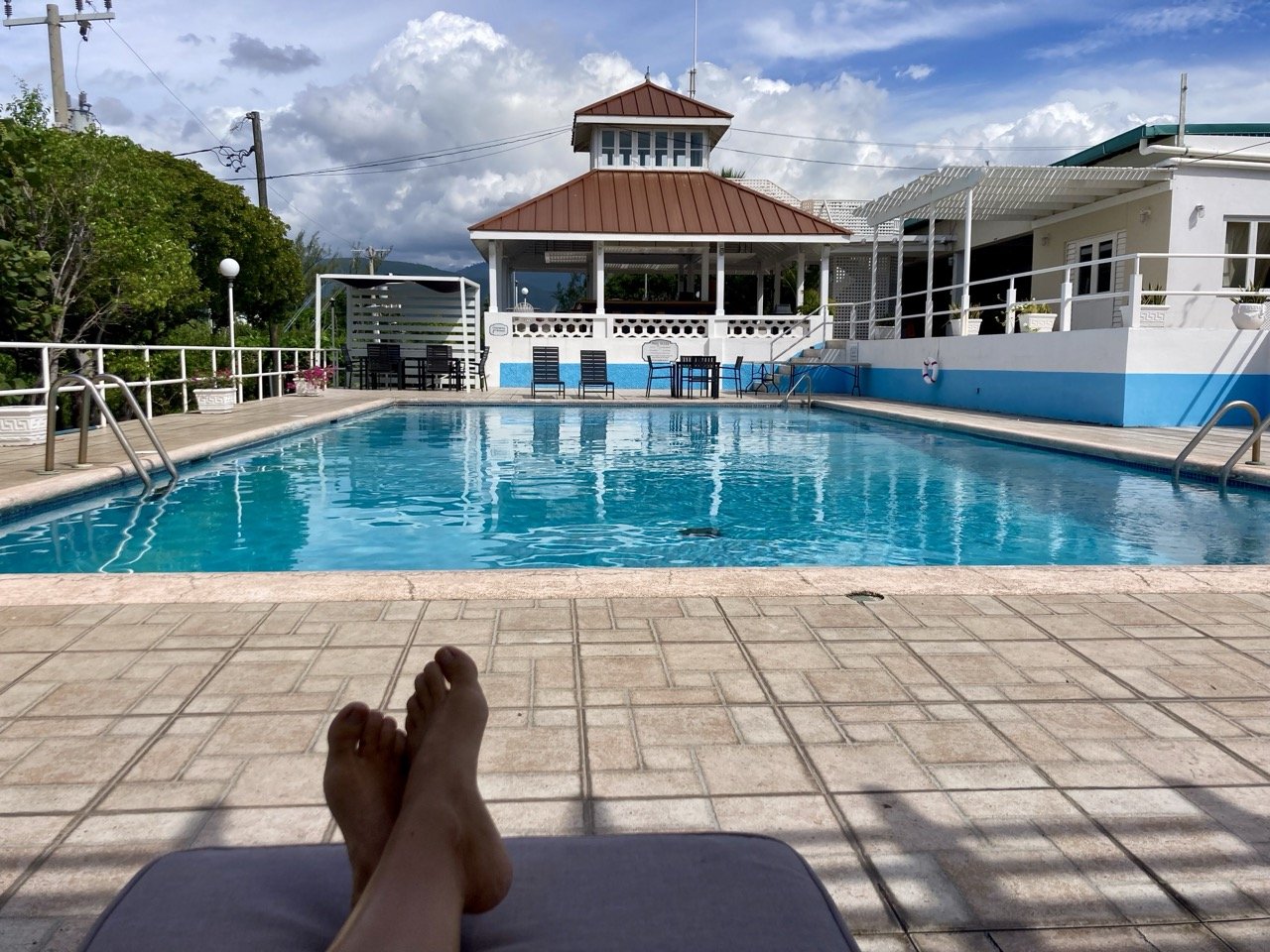
On a aussi beaucoup profité du Yacht club, qui nous donnait accès à la douche, la piscine, le quai pour le dinghy pour un gros 13.80$ par jour. Disons que la chaise cousinée à l’ombre à côté de la piscine est un peu devenue mon bureau de travail pour 2 semaines 🙂 La vie est belle!
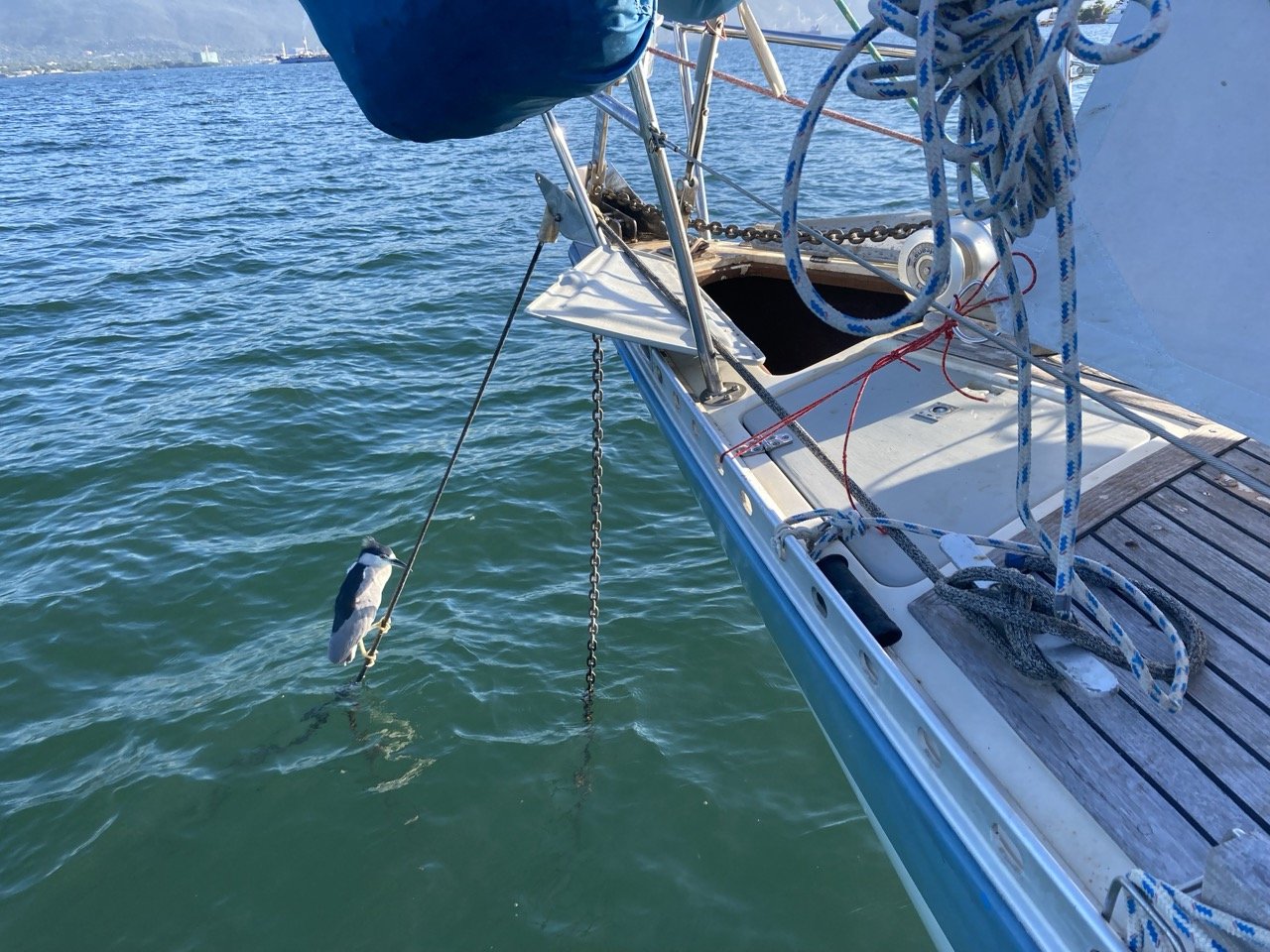
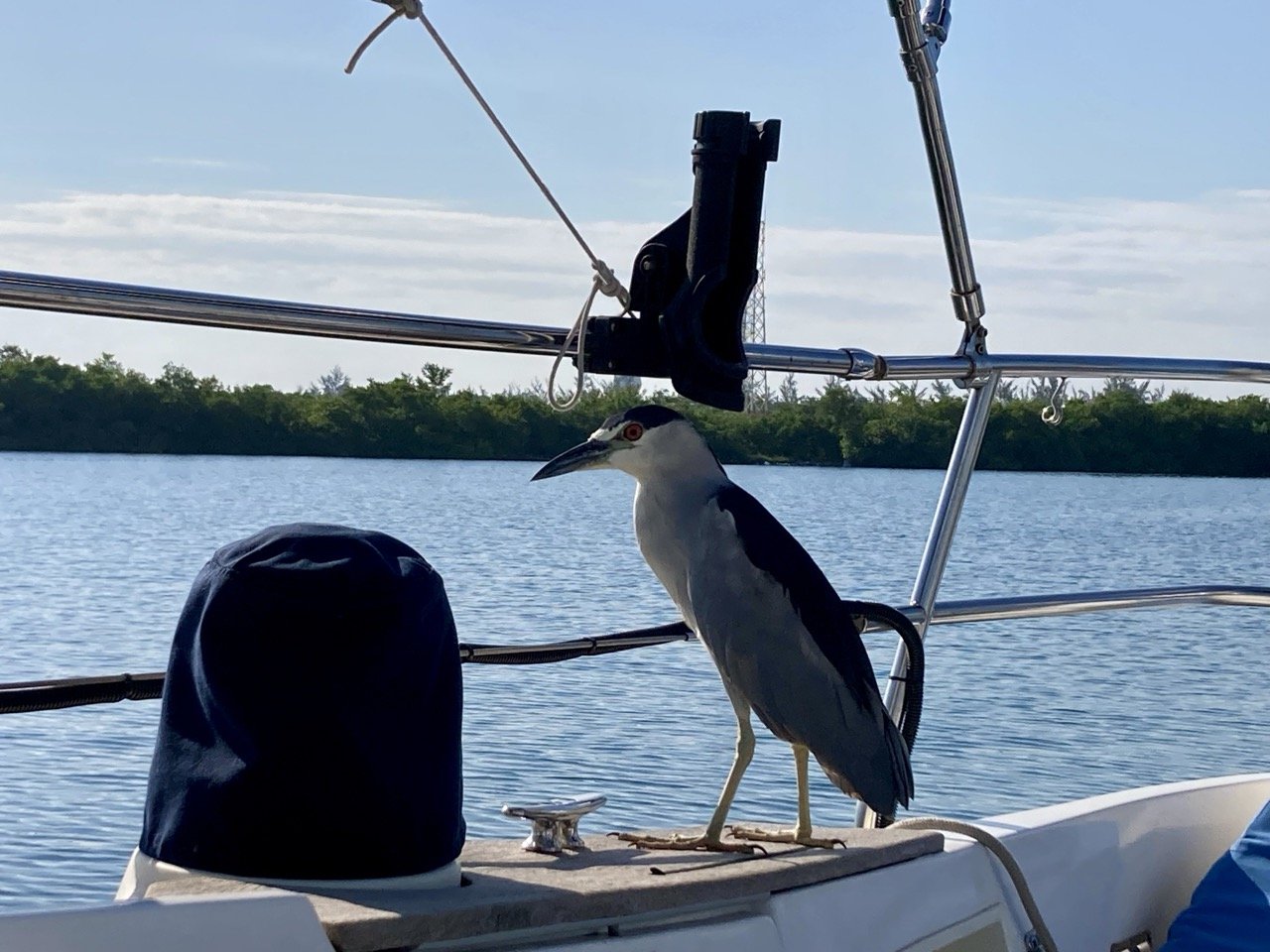
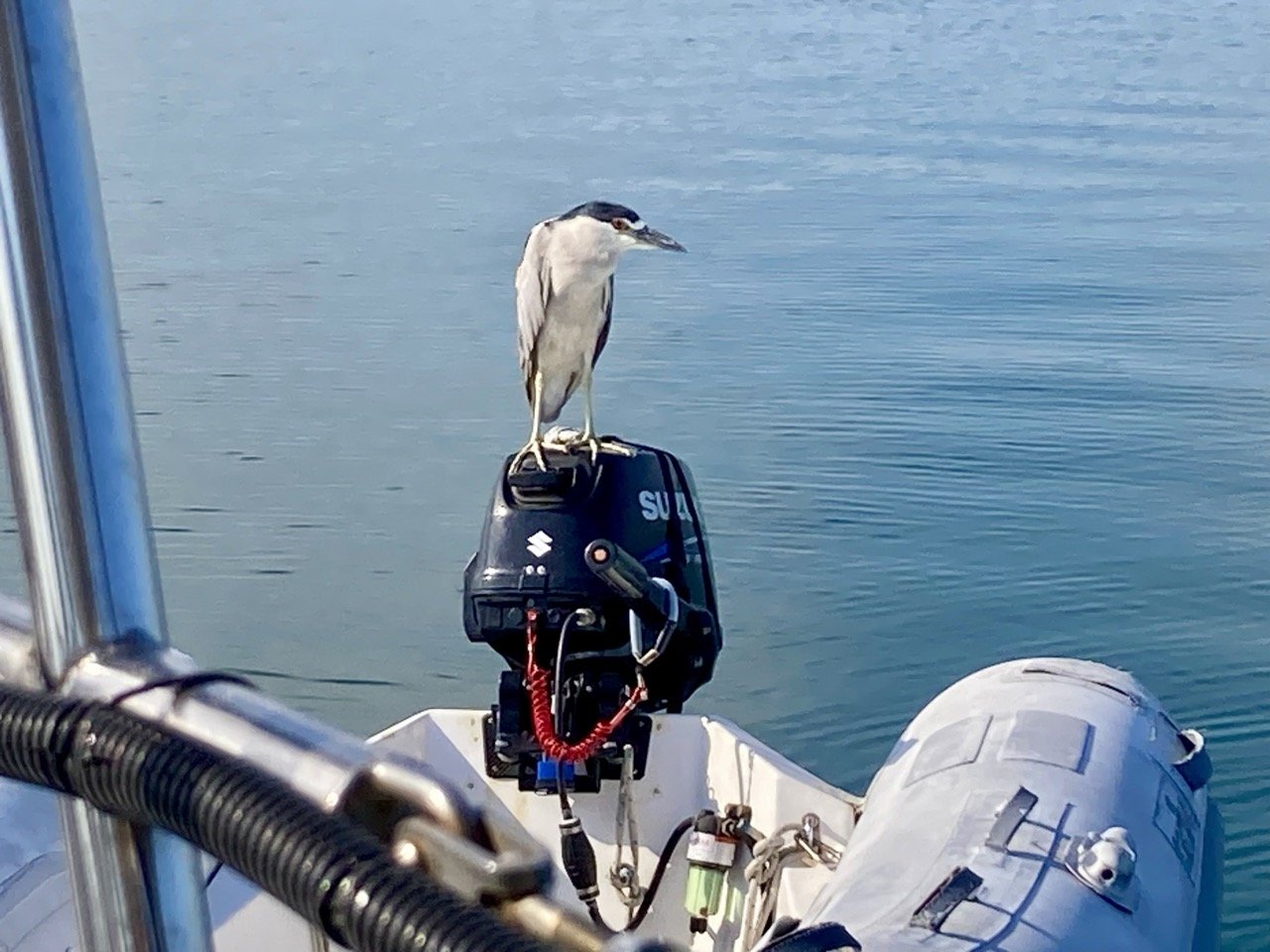
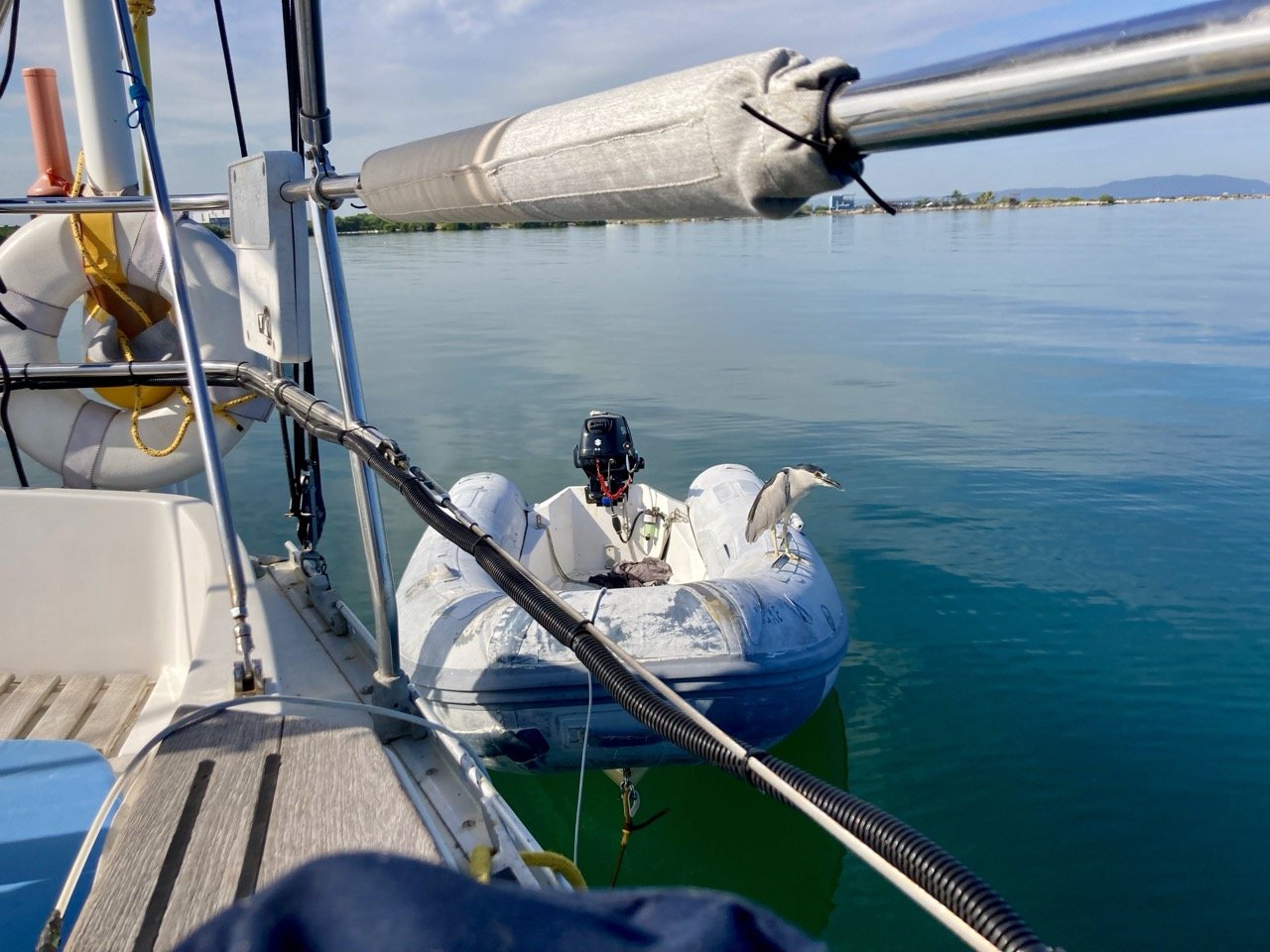
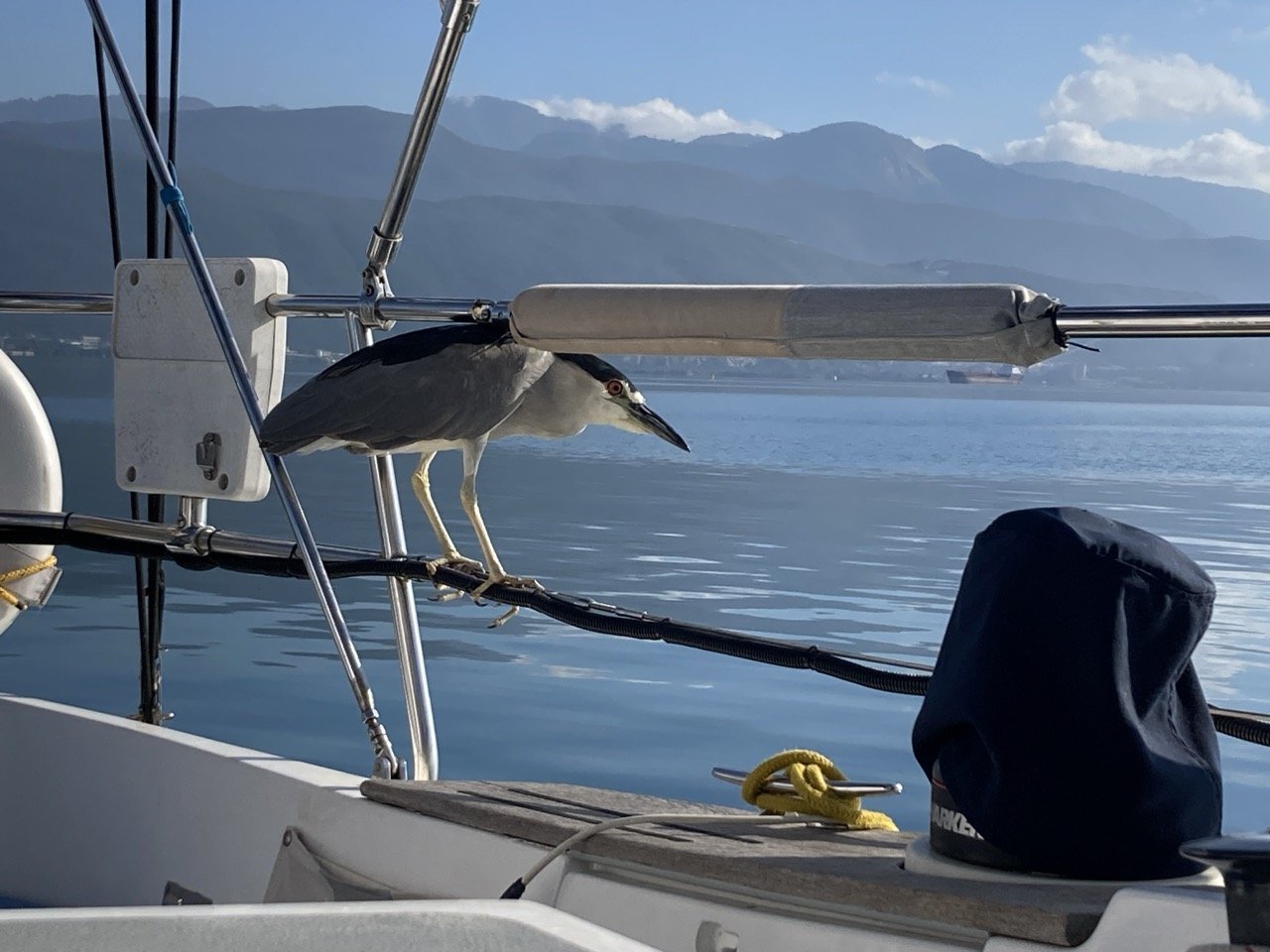
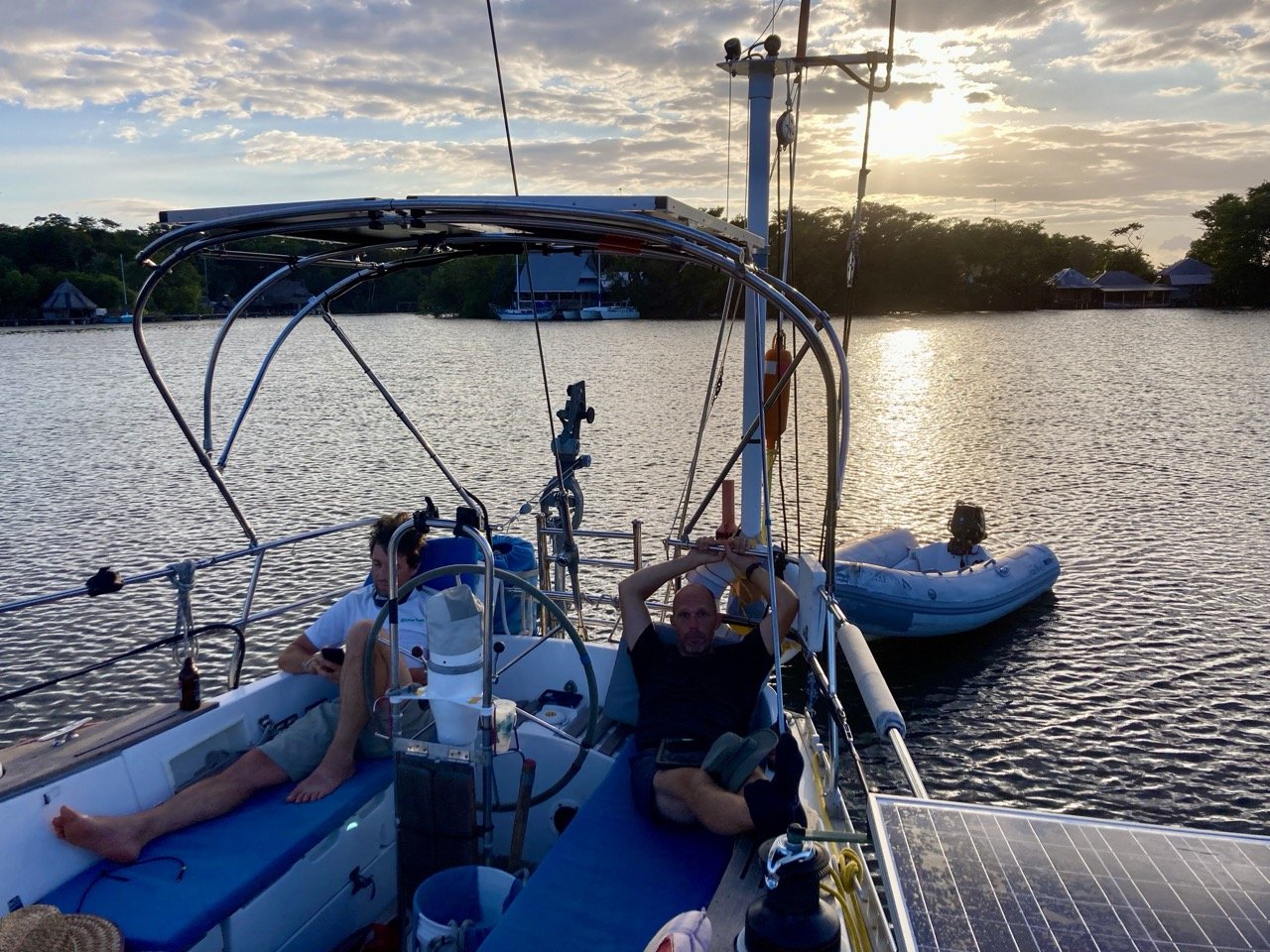
On a eu un squatteur sur le bateau. Un “Night Heron” qui trouvait notre position très pratique pour sa pêche quotidienne. Juché sur notre balcon avant (ou rail de fargue, ou patte d’oie, ou fillière, ou dinghy, ou horsbord), il avait une vue parfaite sur les petits poissons-lunch en contrebas. Malheureusement, ce qui monte doit redescendre, ce qui entre doit ressortir, rien ne se perd, rien ne se crée… donc il nous a vachement sali le pont.
We were lucky to run into old friends we hadn’t seen in years. They were on vacation with their family in a great hotel on the mountainside in northeast Kingston.
We also took full advantage of the Yacht Club, which gave us access to showers, a pool, and a dinghy dock for a mere $13.80 per day. Let’s say the cushioned chair in the shade by the pool became my workstation for 2 weeks 🙂 Life is good!
We had a squatter on the boat. A “Night Heron” who found our position very convenient for his daily fishing. Perched on our bow pulpit (or toe rail, or snubber, or stanchion, or dinghy, or outboard…), he had a perfect view of the little lunch fish below. Unfortunately, what goes up must come down, what goes in must come out, nothing is lost, nothing is created… so he made quite a mess on the deck.
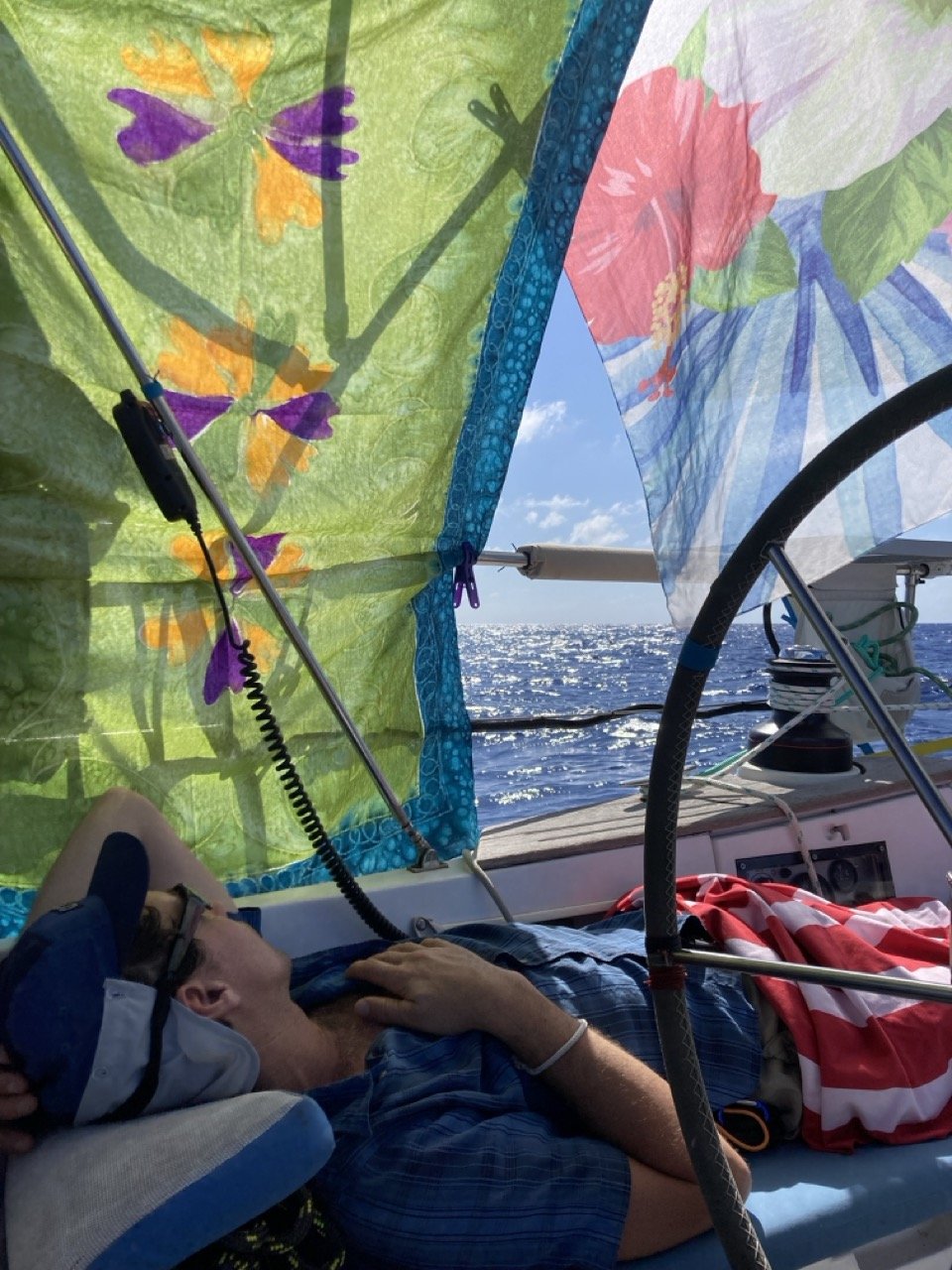
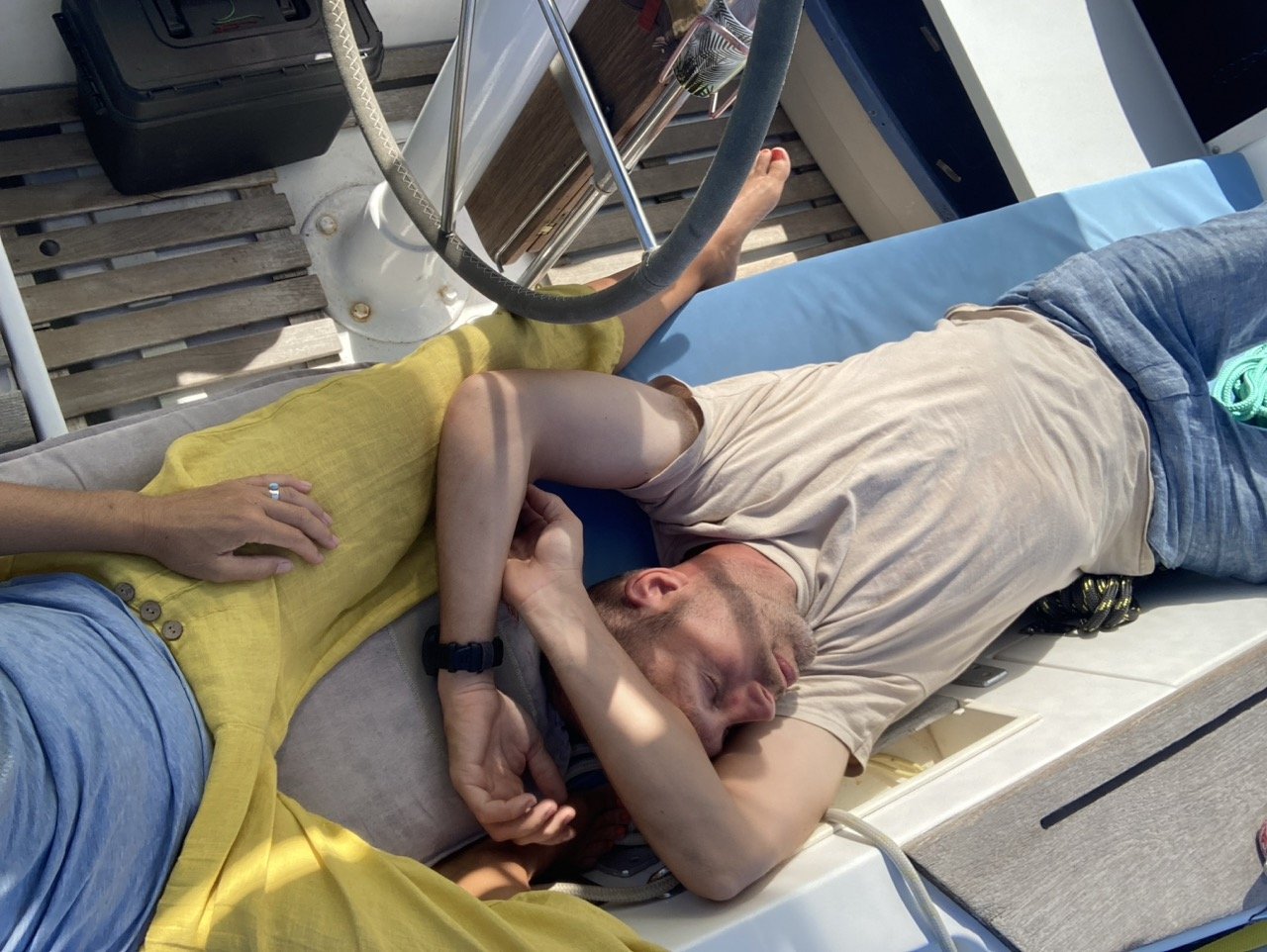
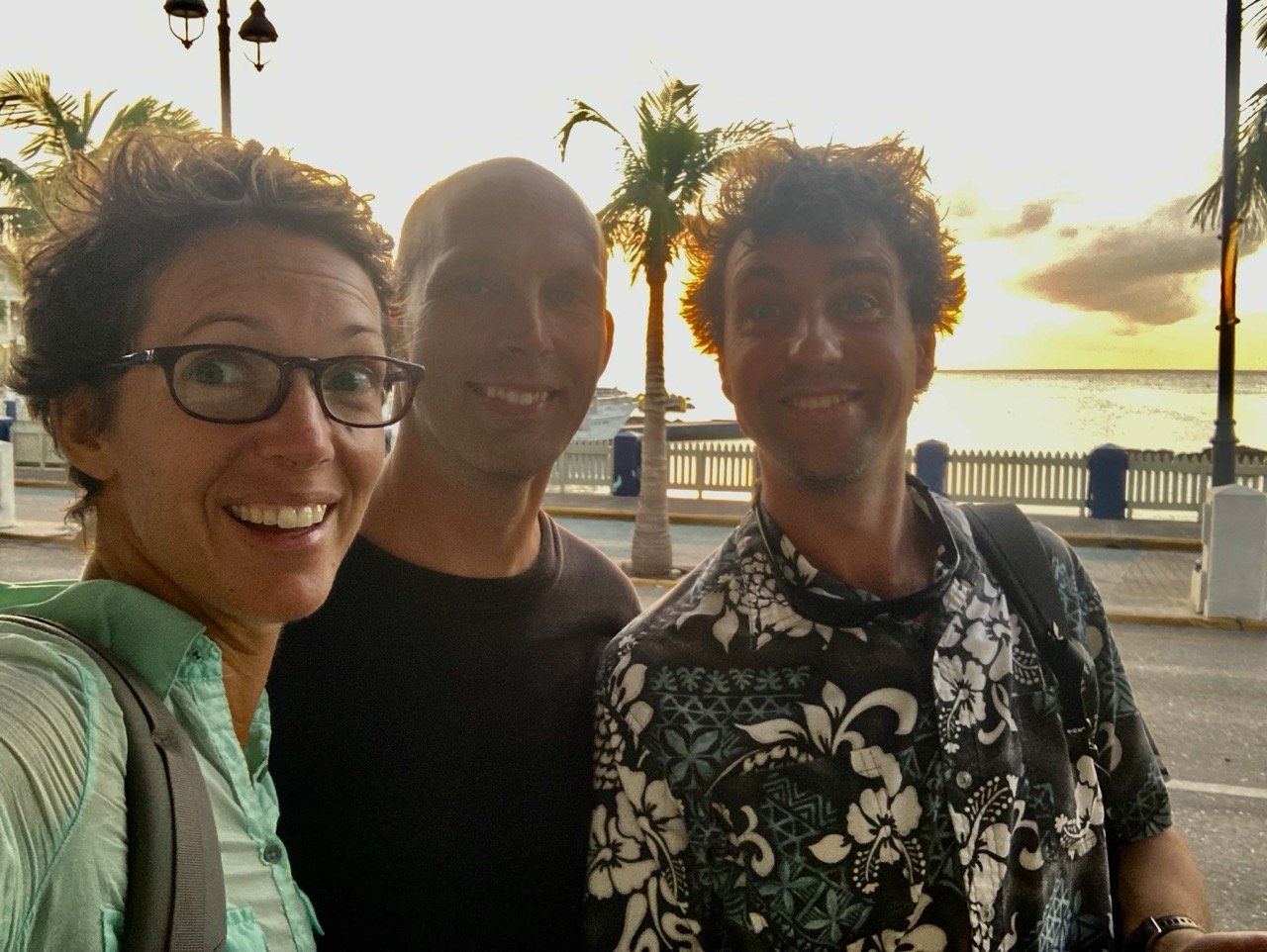
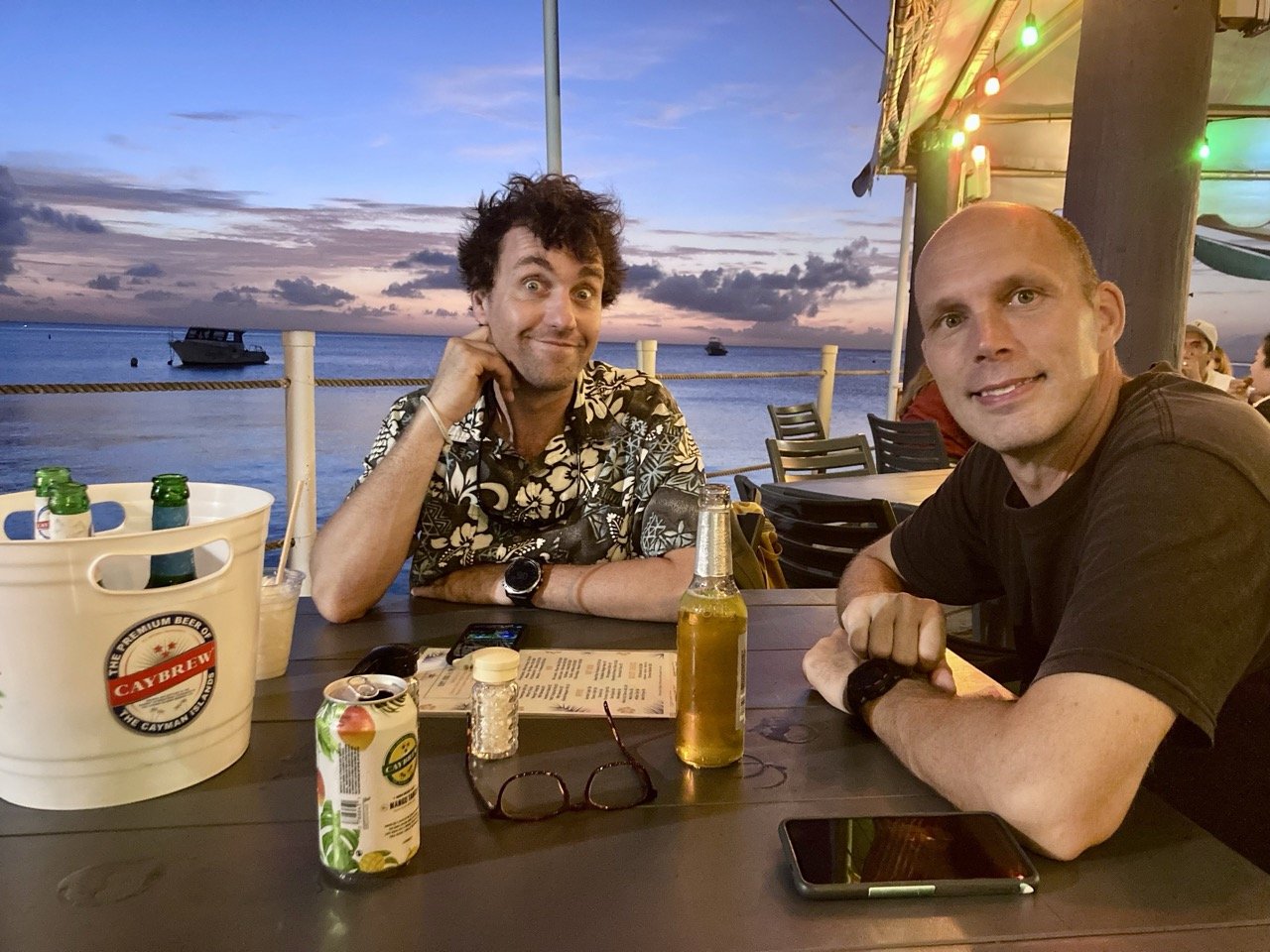
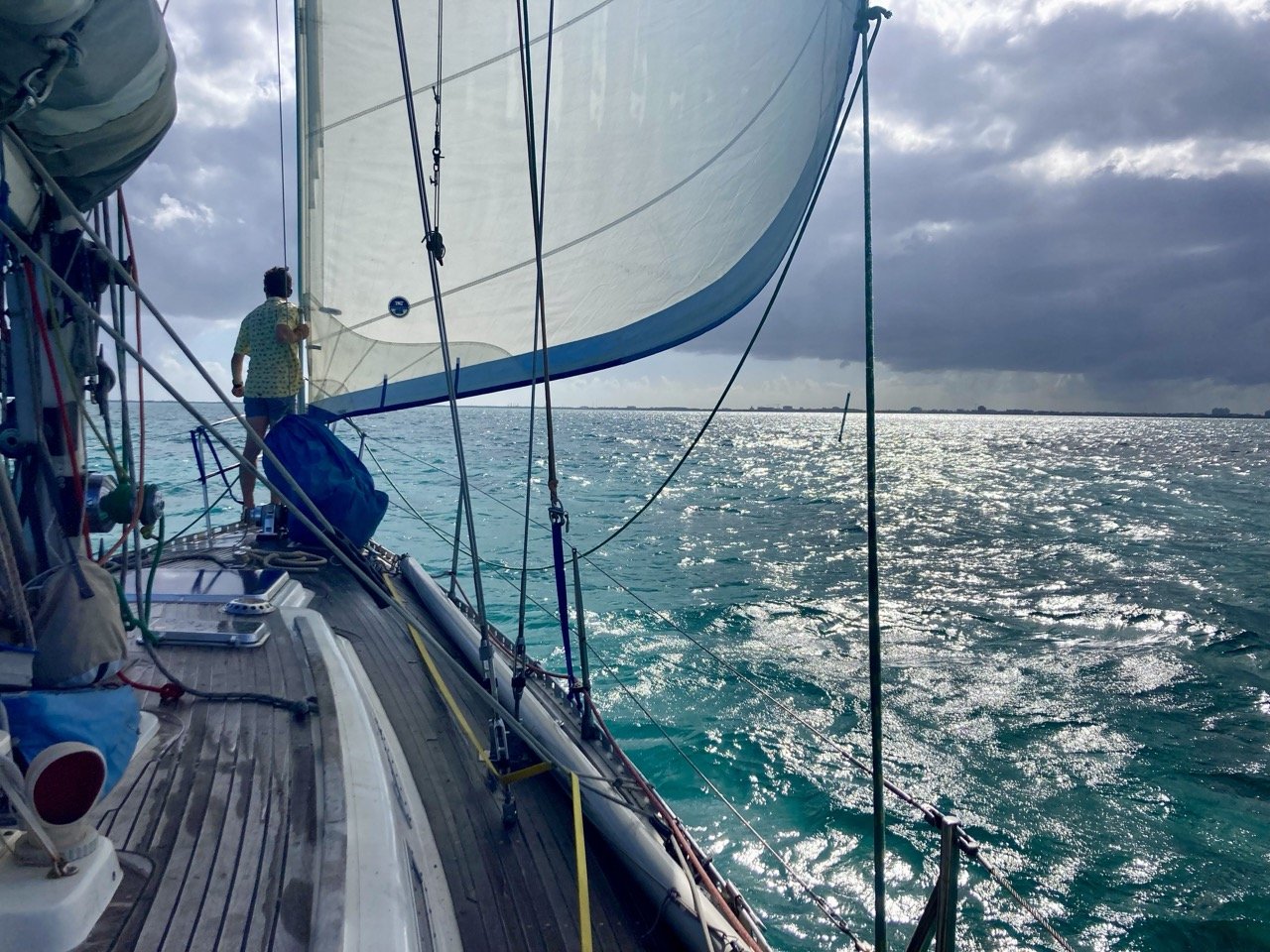
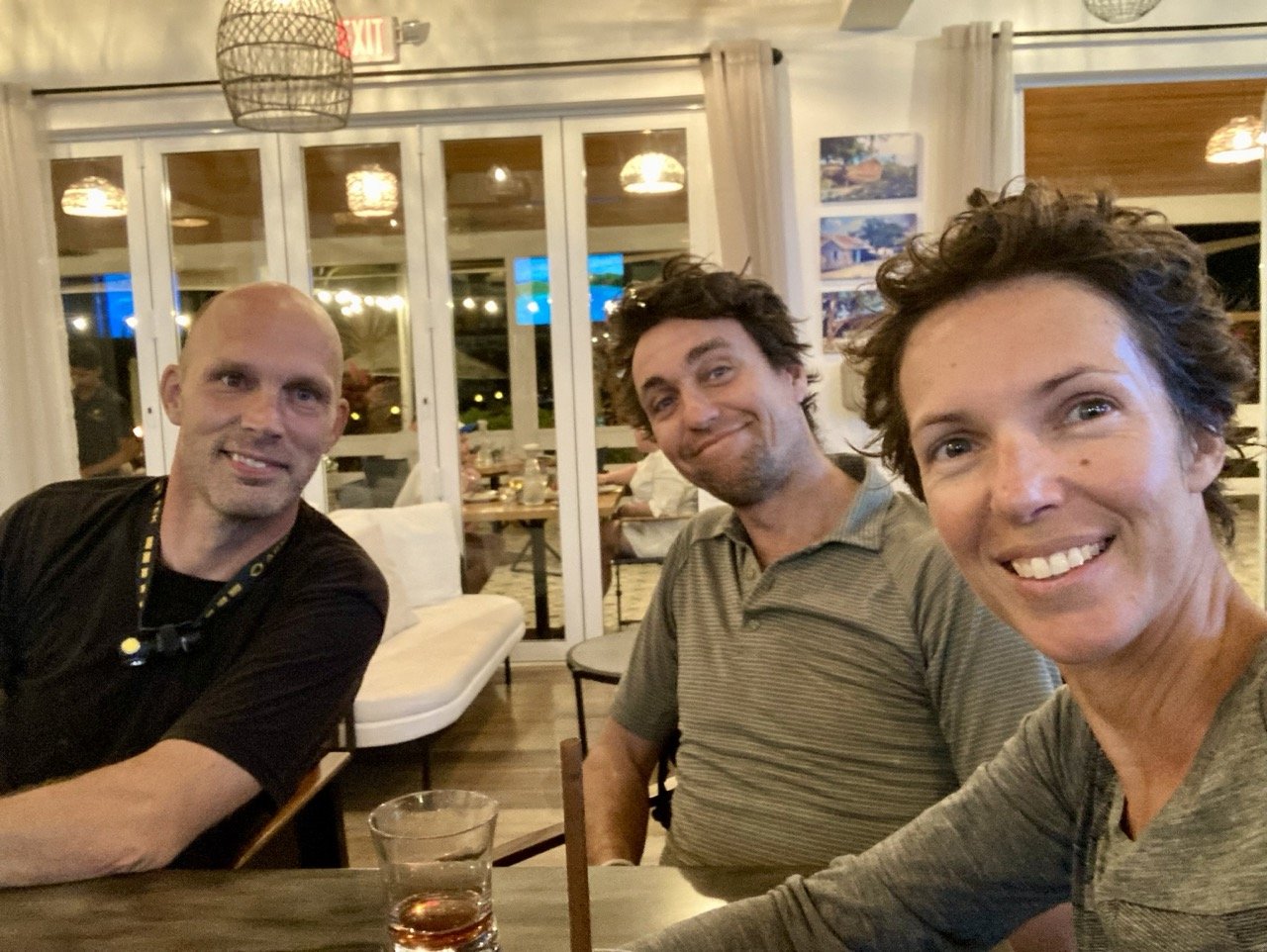
Et puis la vraie visite est arrivée! On était super contents de revoir notre bon ami Gaël! Il est arrivé plein d’énergie, comme d’habitude, alors on a fait une méga épicerie puis on est partis, direction les Iles Caïmans. Une traversée vraiment, mais vraiment smooth et facile. La plus facile de tout le voyage à date. Premièrement, parce qu’on était 3 à se séparer les quarts, ce qui veut dire pas mal plus de temps pour se reposer. Deuxièmement, parce que la météo était très clémente. On a fait pas mal de moteur sous le vent de la Jamaïque, puis on a eu un doux 10-15kt de vent NE dans 2-3 pieds de vague jusqu’à Caïman. Vraiment facile, pas de mal de mer, et un beau thon “black fin” pour se nourrir; miam!
And then the real visit arrived! We were super happy to see our good friend Gaël! He arrived full of energy, as usual, so we did a big grocery day and then set off, heading for the Cayman Islands. A really, really smooth and easy crossing. The easiest of the whole trip so far. Firstly, because there were three of us to share the watches, which means a lot more time to rest (twice as much!). Secondly, because the weather was very mild. We motored a lot downwind of Jamaica, then had a gentle 10-15kt NE wind in 2-3 feet of waves to Cayman. Really easy, no seasickness, and a nice “black fin” tuna to eat; yum!
Grand Cayman
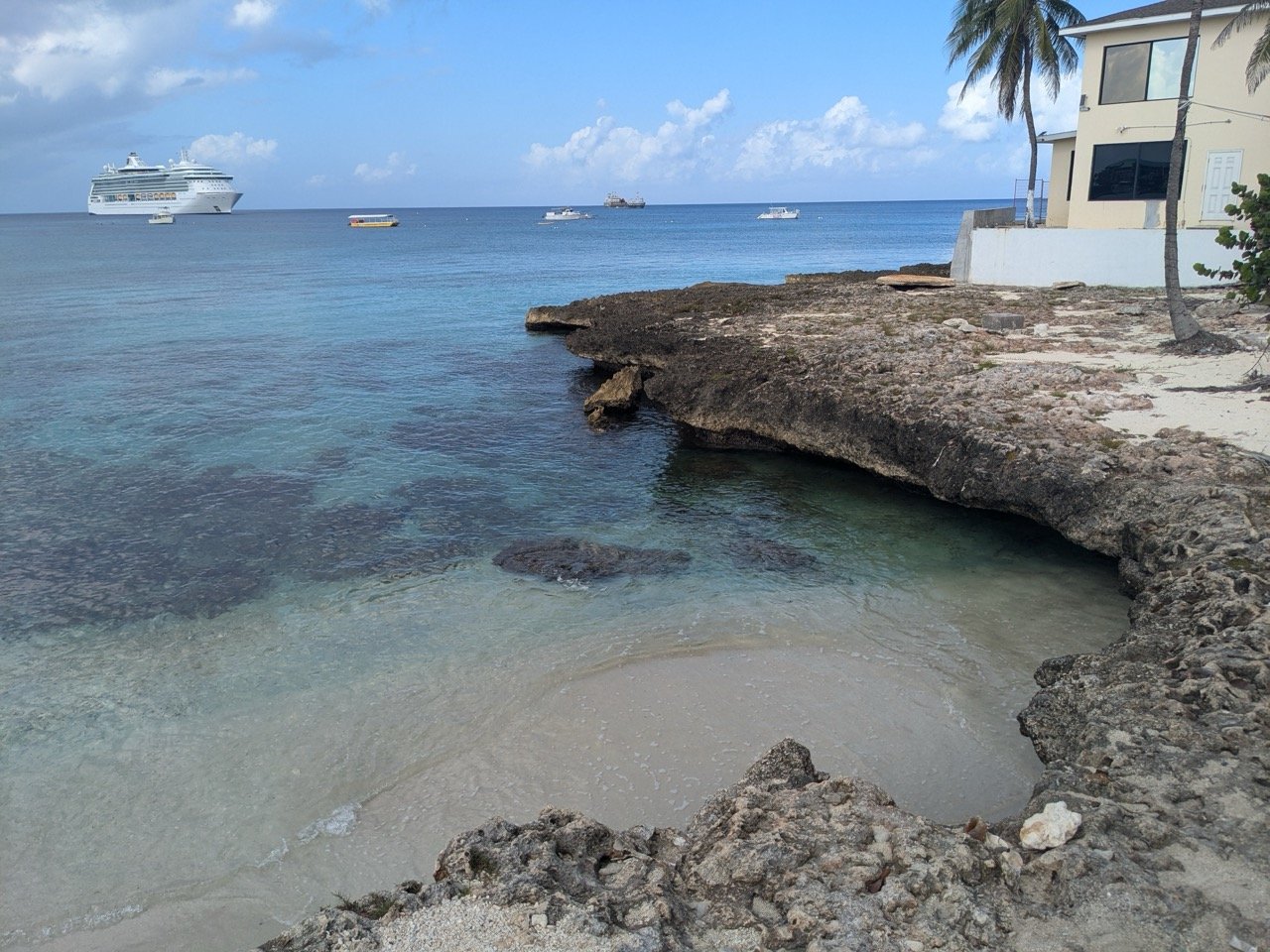
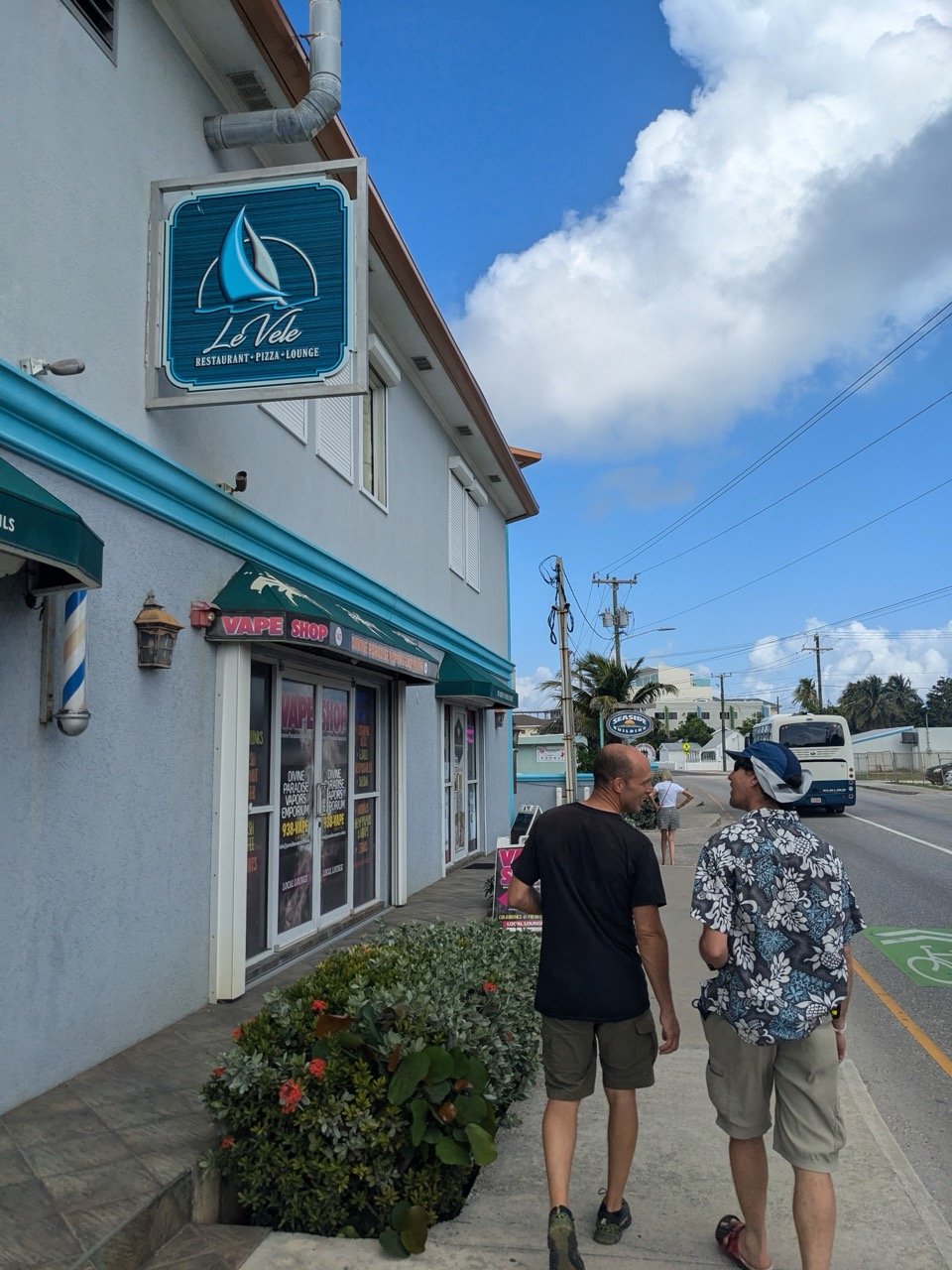
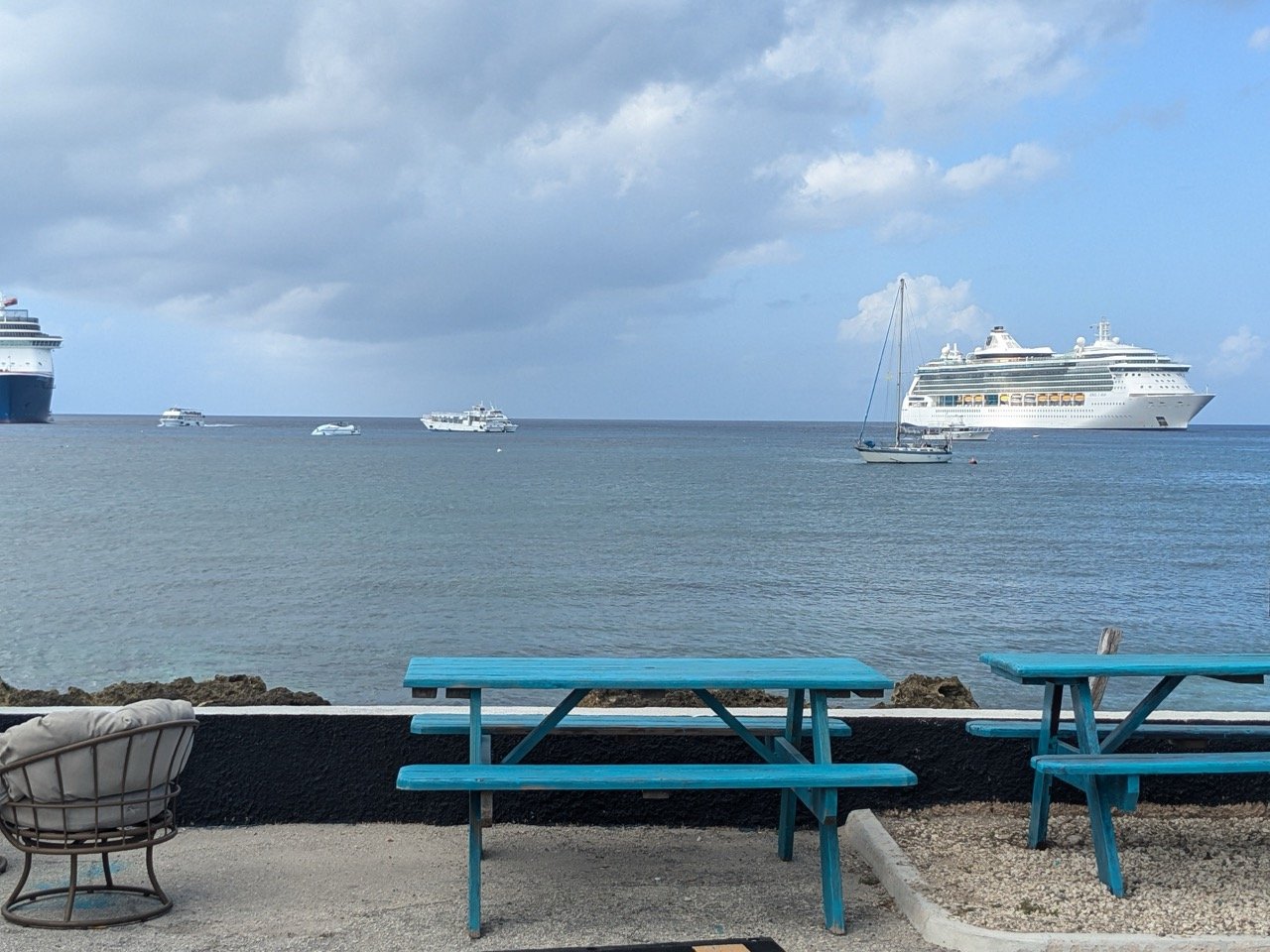
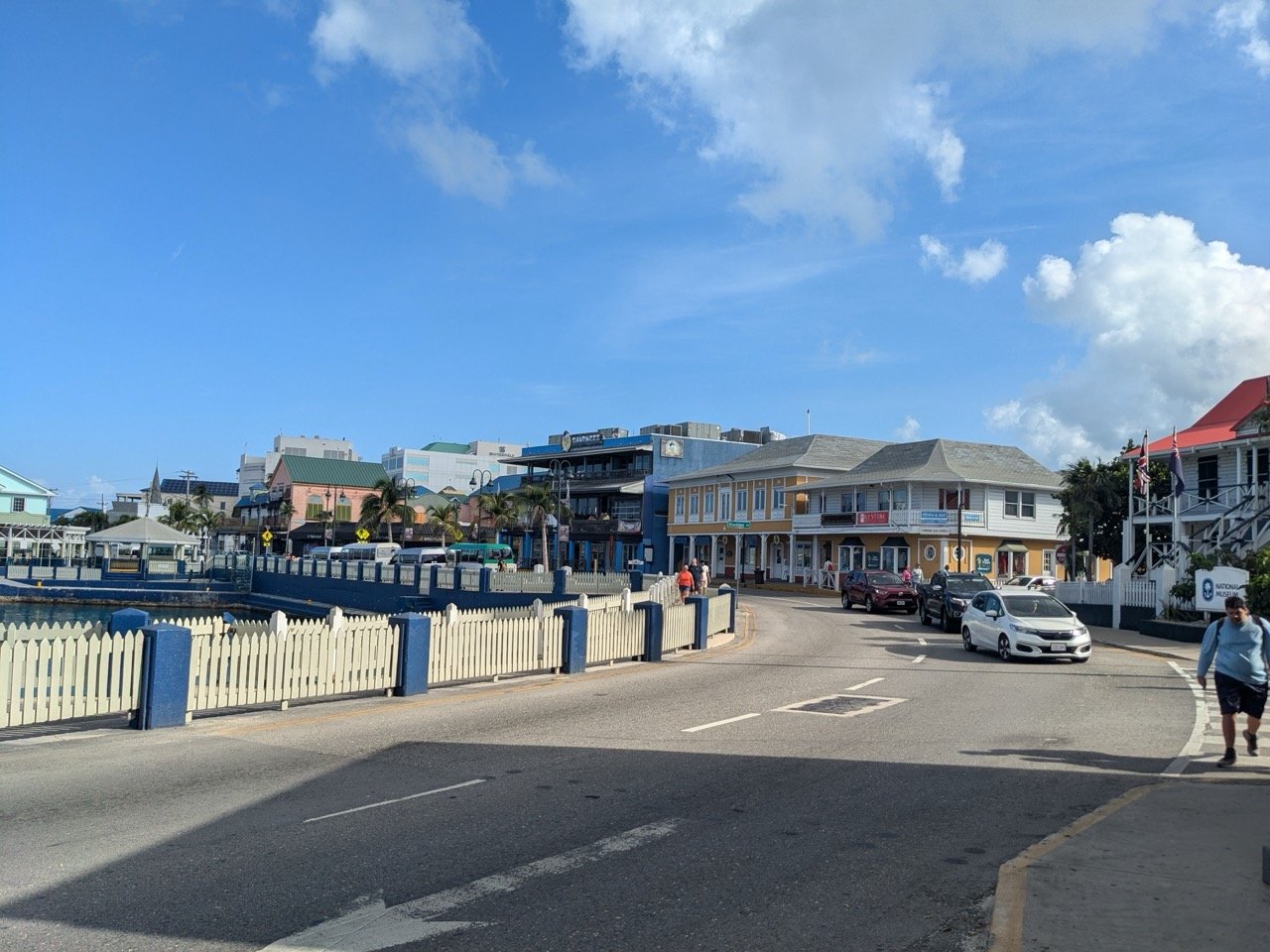
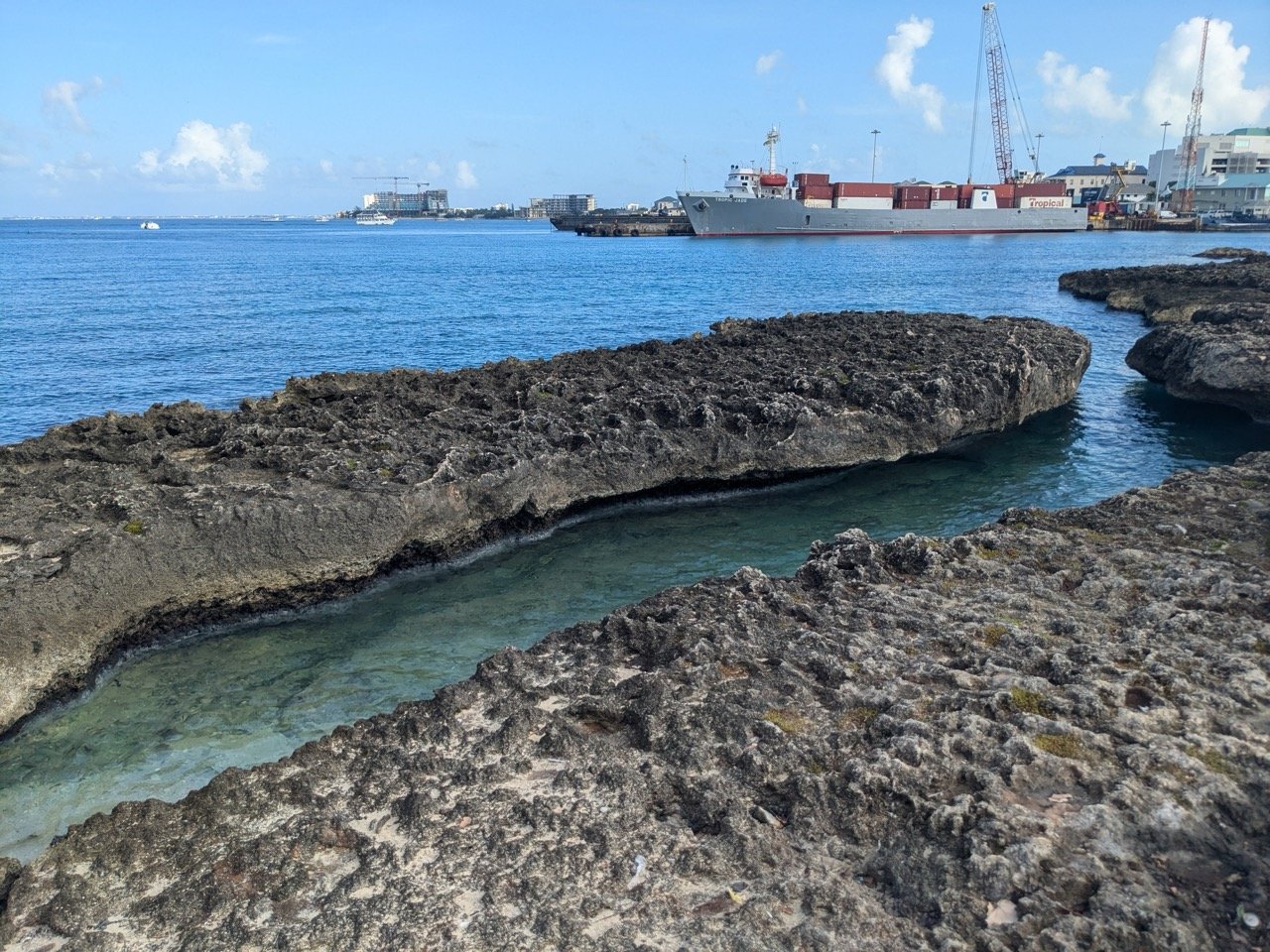
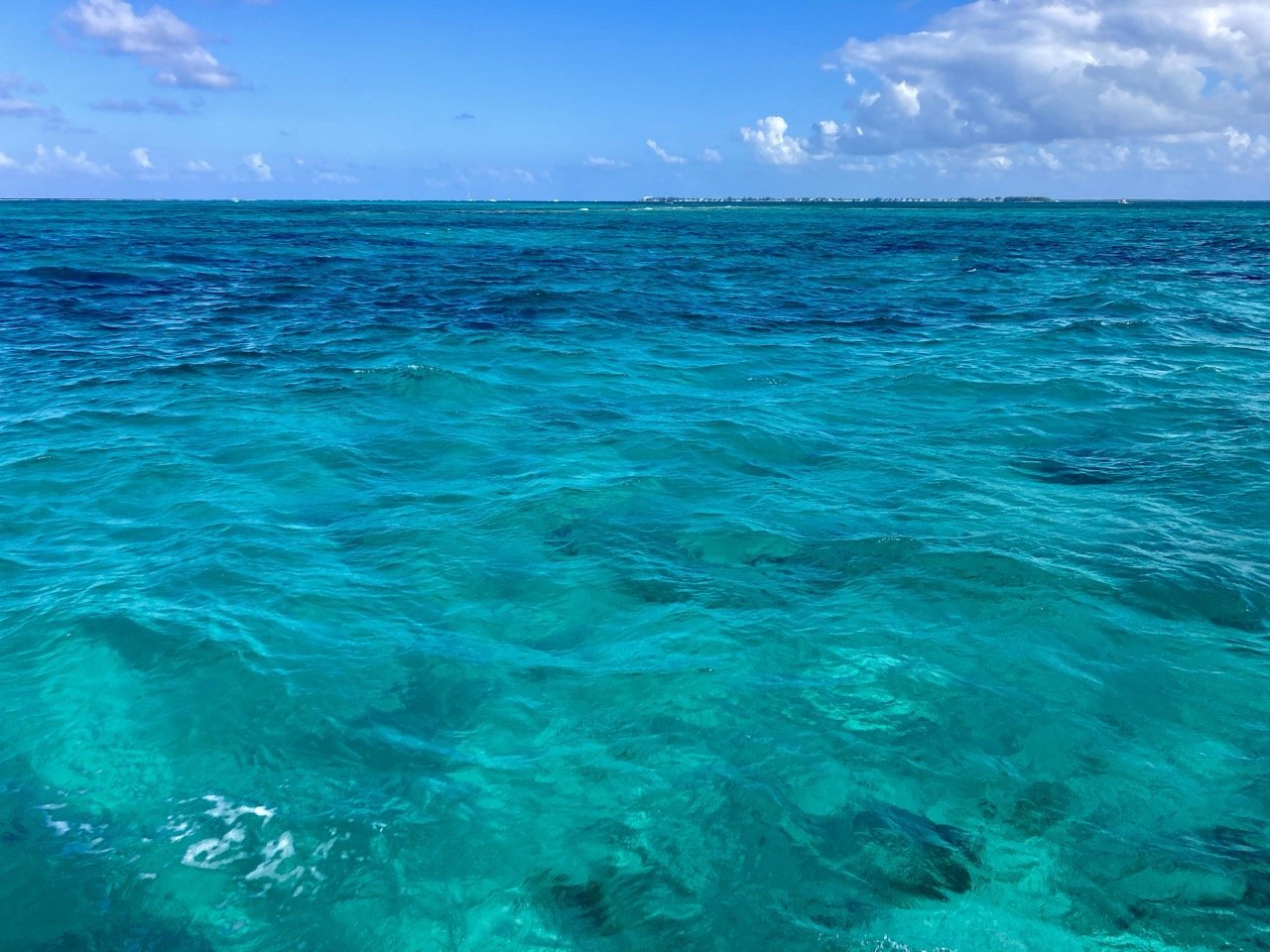
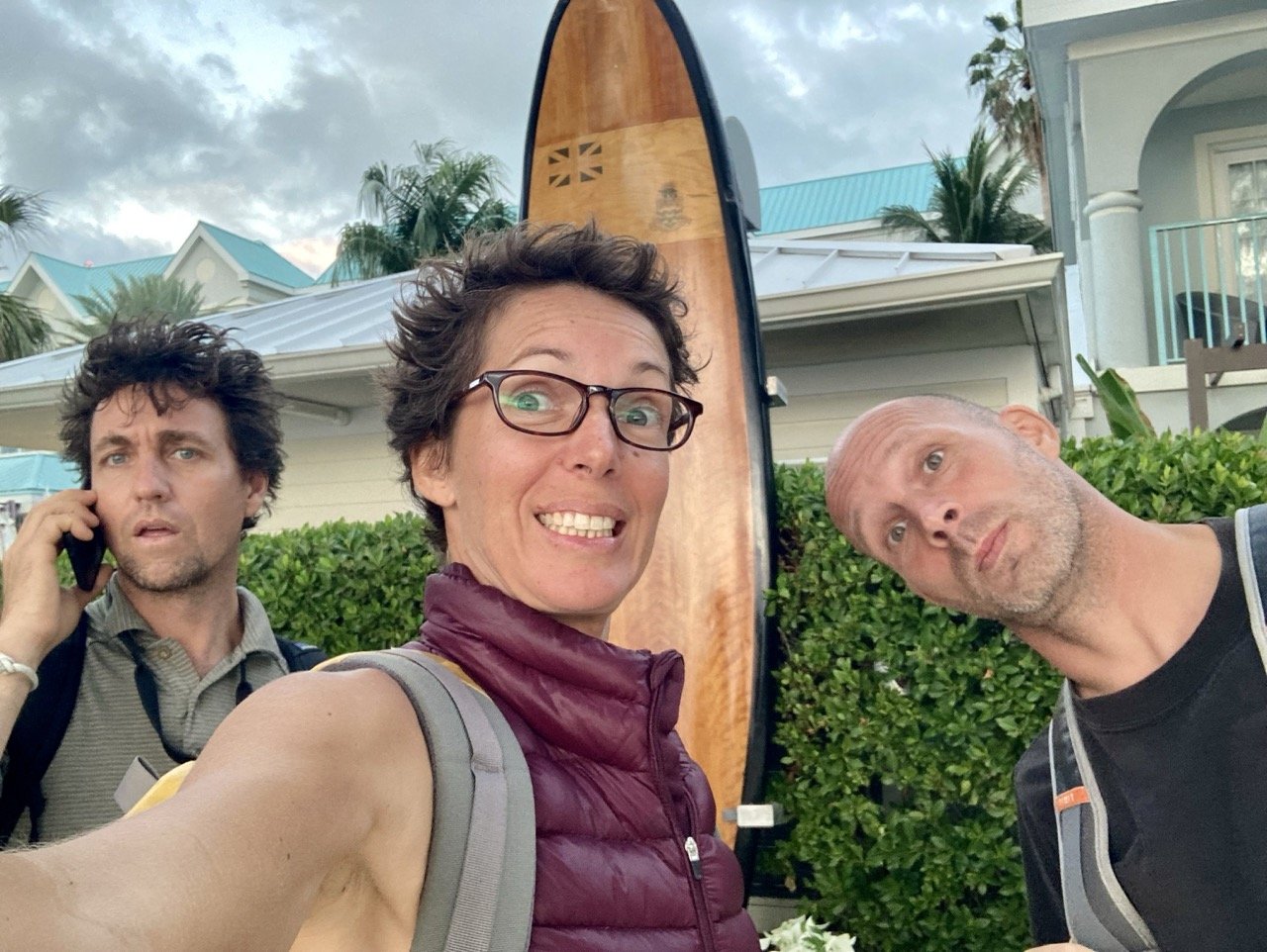
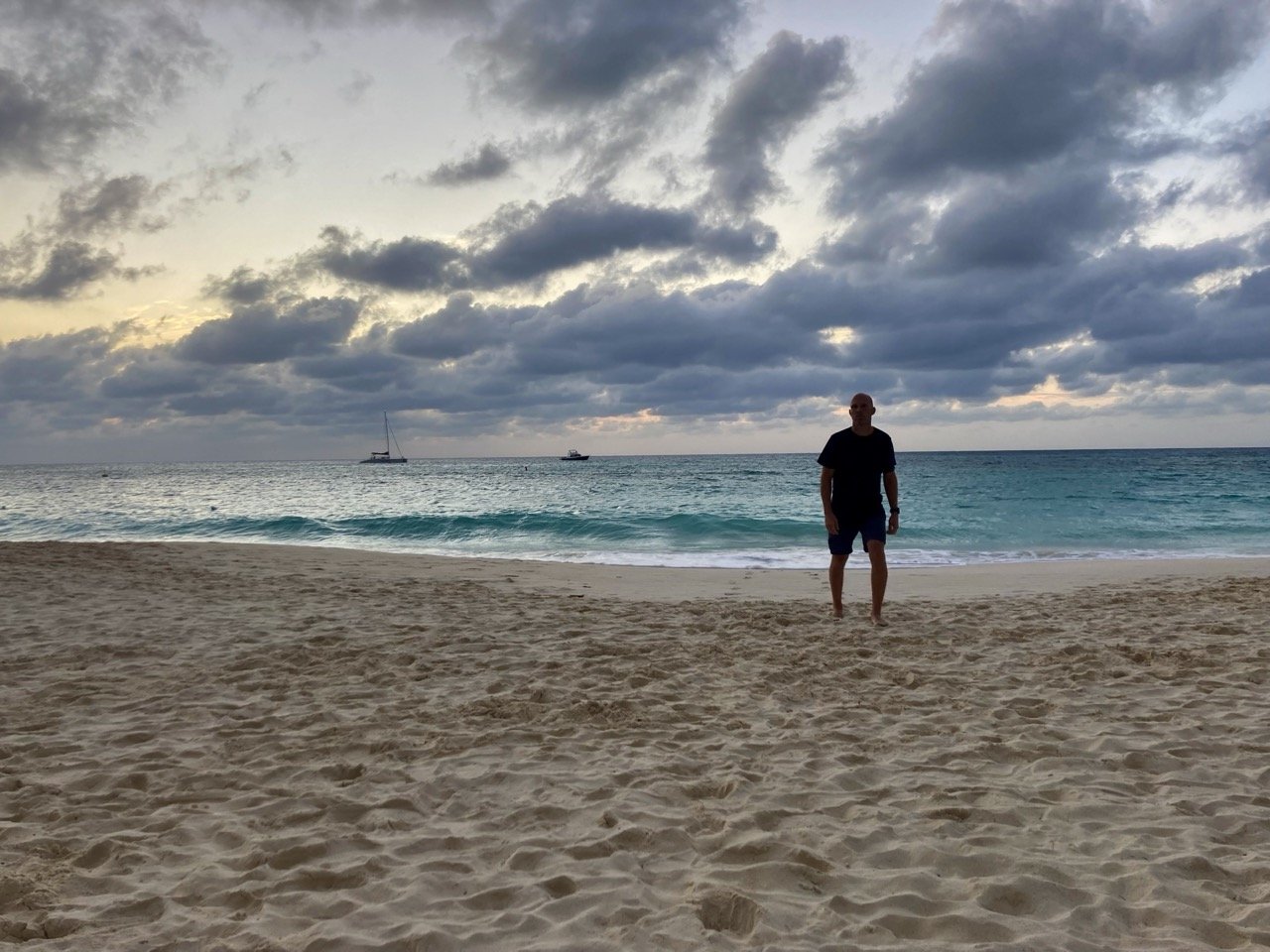
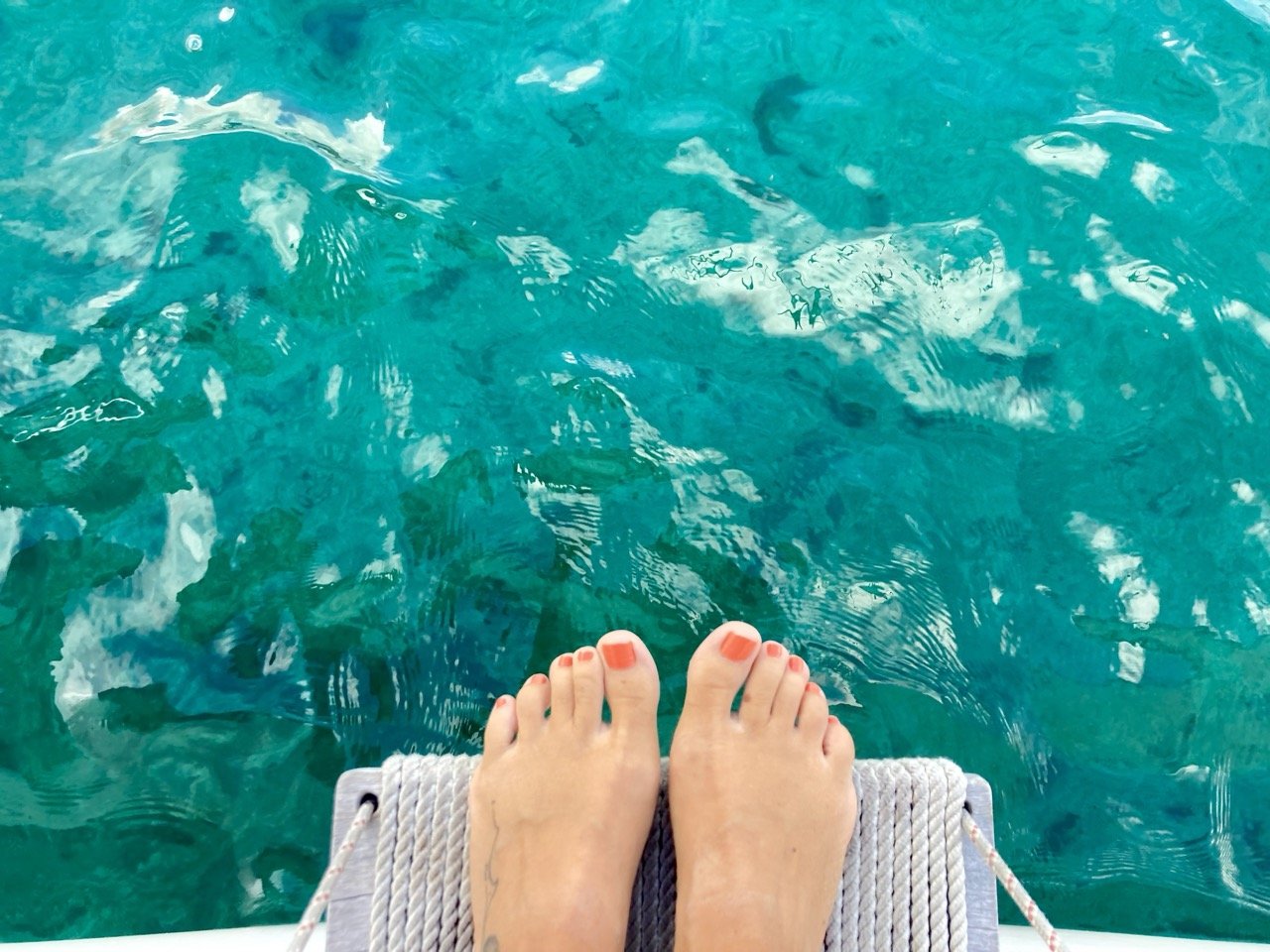
On est arrivé juste à temps à Grand Caïman (GeorgeTown) avant que le vent ne meure. Ce qui veut dire que l’eau était calme pour la plongée et le snorkeling! Bonne nouvelle puisque c’est un endroit vraiment parfait pour ça, avec des réserves marines protégées tout le tour de l’île, et des sites de plongée un peu partout! Rémy a fait une plongée d’initiation (parce qu’il n’avait pas plongé depuis le Cegep!) et Gaël a fait 3 plongées, dont une dans une épave, qu’on est allé voir en apnée dans les jours suivants. Même dans 60 pieds d’eau, on avait une super visibilité à partir de la surface. Ça faisait longtemps qu’on n’avait pas vu de l’eau claire comme ça. Vraiment impressionnant! Mais, désolé, pas de photo du navire militaire submergé, parce que la caméra sous-marine s’est brisée sous la pression. On sait maintenant que ça ne va pas à plus de 30pi sans étui de protection. 🙁
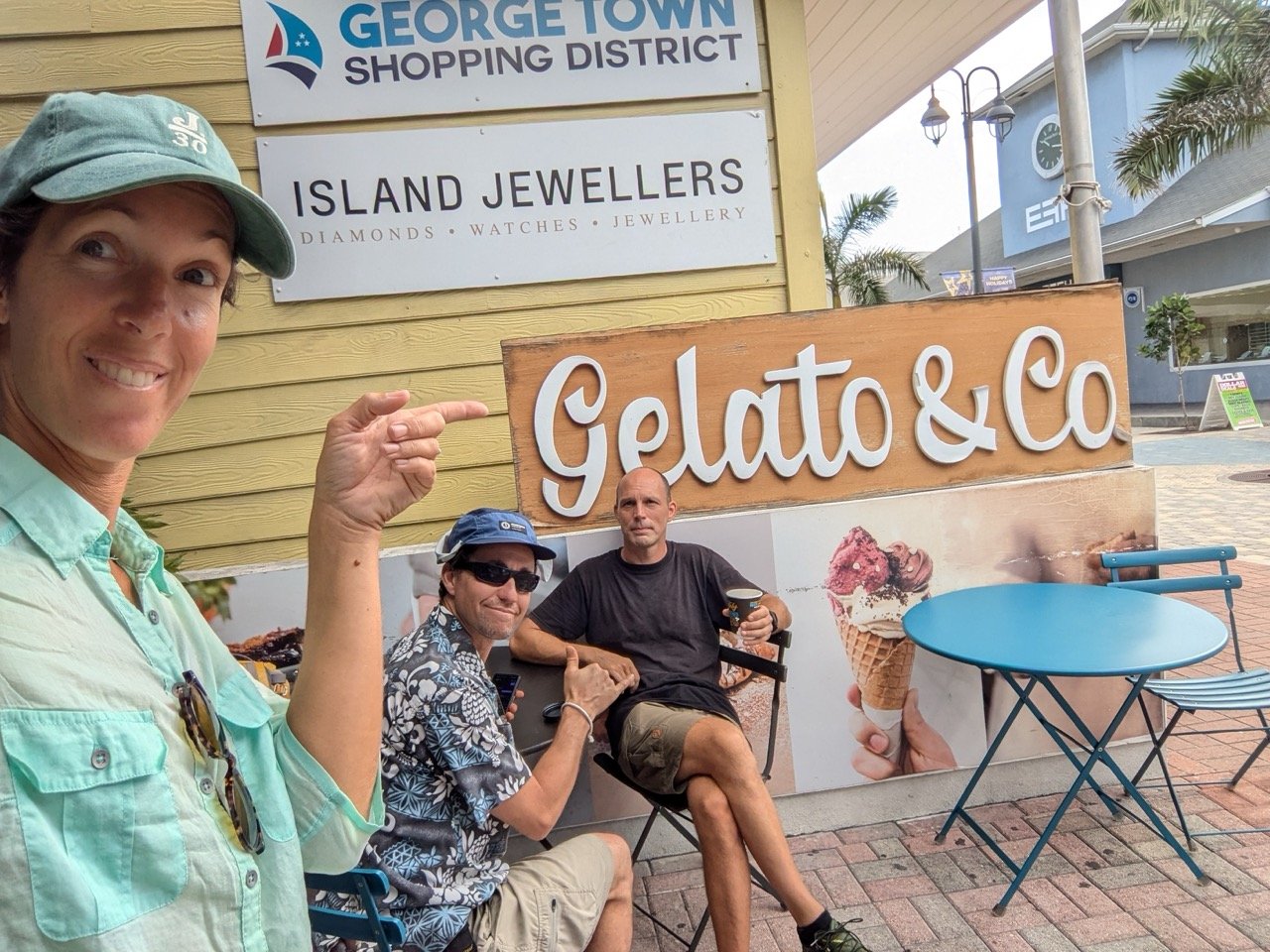
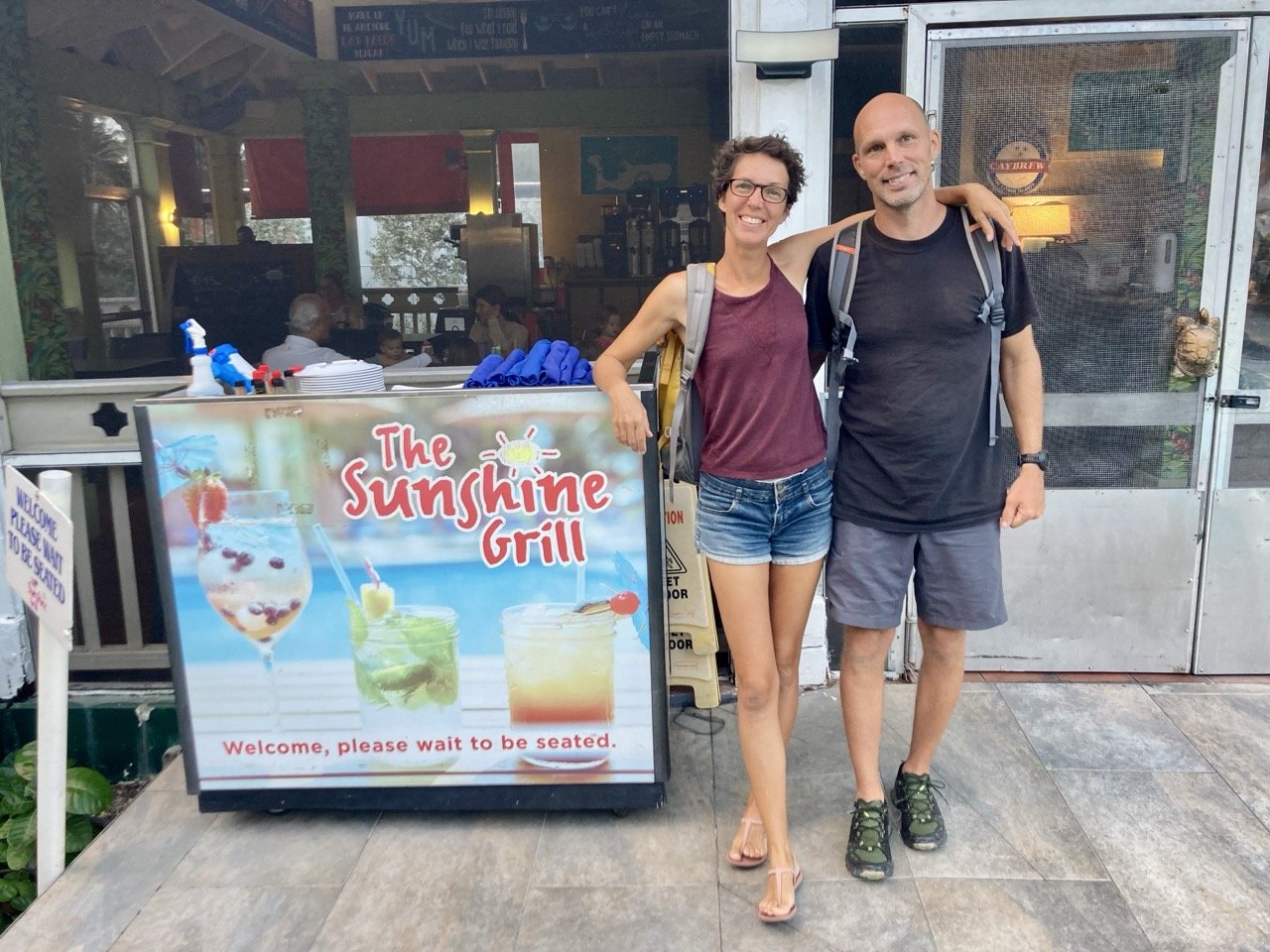
On a passé une petite semaine à GeorgeTown, et on a fini dans le petit lagon “Governors’ creek” pour se cacher d’un fort vent du nord qui passait. On a laissé passer le plus gros, en profitant des petits plaisirs locaux et d’un restaurant que Tony et Connie nous avaient recommandé, puis on est parti dès que ça s’est calmé. C’était calmé juste assez à notre goût pour profiter de conditions sportives (mais sécuritaires) pour avancer à vitesse grand V vers notre destination finale : le Guatemala.
We arrived just in time at Grand Cayman (George Town) before the wind died. Which means the water was calm for diving and snorkeling! Good news since it’s a really perfect place for that, with protected marine reserves all around the island, and dive sites everywhere! Remy did an initiation dive (because he hadn’t dived since college!) and Gaël did 3 dives, including one in a wreck, which we went to see snorkeling in the following days. Even in 60 feet of water, we had awesome visibility from the surface. It had been a long time since we’d seen water that clear. Really impressive! But, sorry, no photo of the submerged military vessel, because the underwater camera broke under the pressure. We now know that it doesn’t go deeper than 30 feet without a protective case. 🙁
We spent a little week in George Town, and ended up in the small lagoon “Governors’ creek” to hide from a strong north wind that was passing. We let the worst of it pass, enjoying the local pleasures and a restaurant that Tony and Connie had recommended, then we left as soon as it calmed down. It had calmed down just enough for us to enjoy sporty (but safe) conditions to sail at high speed towards our final destination: Guatemala.
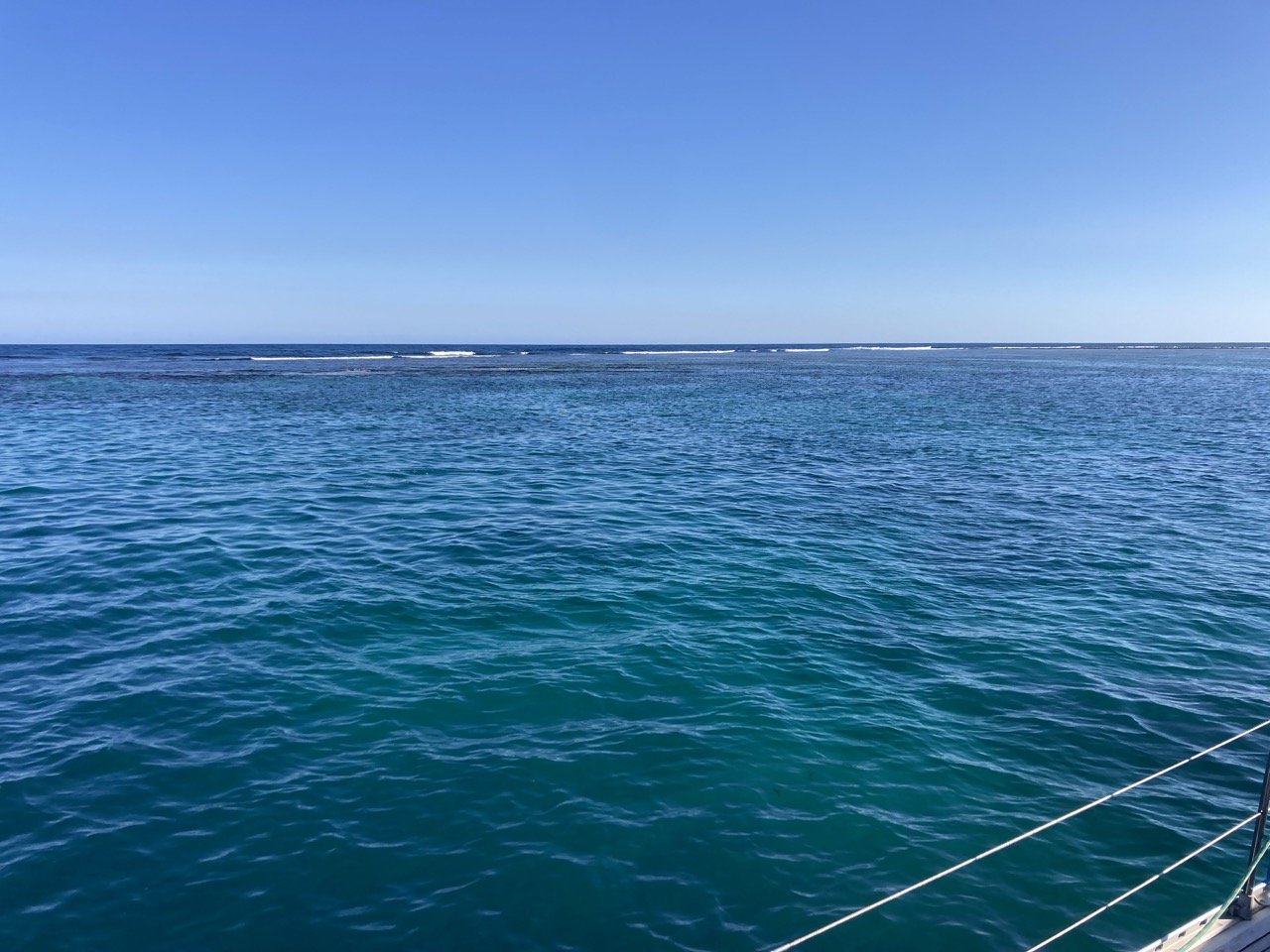
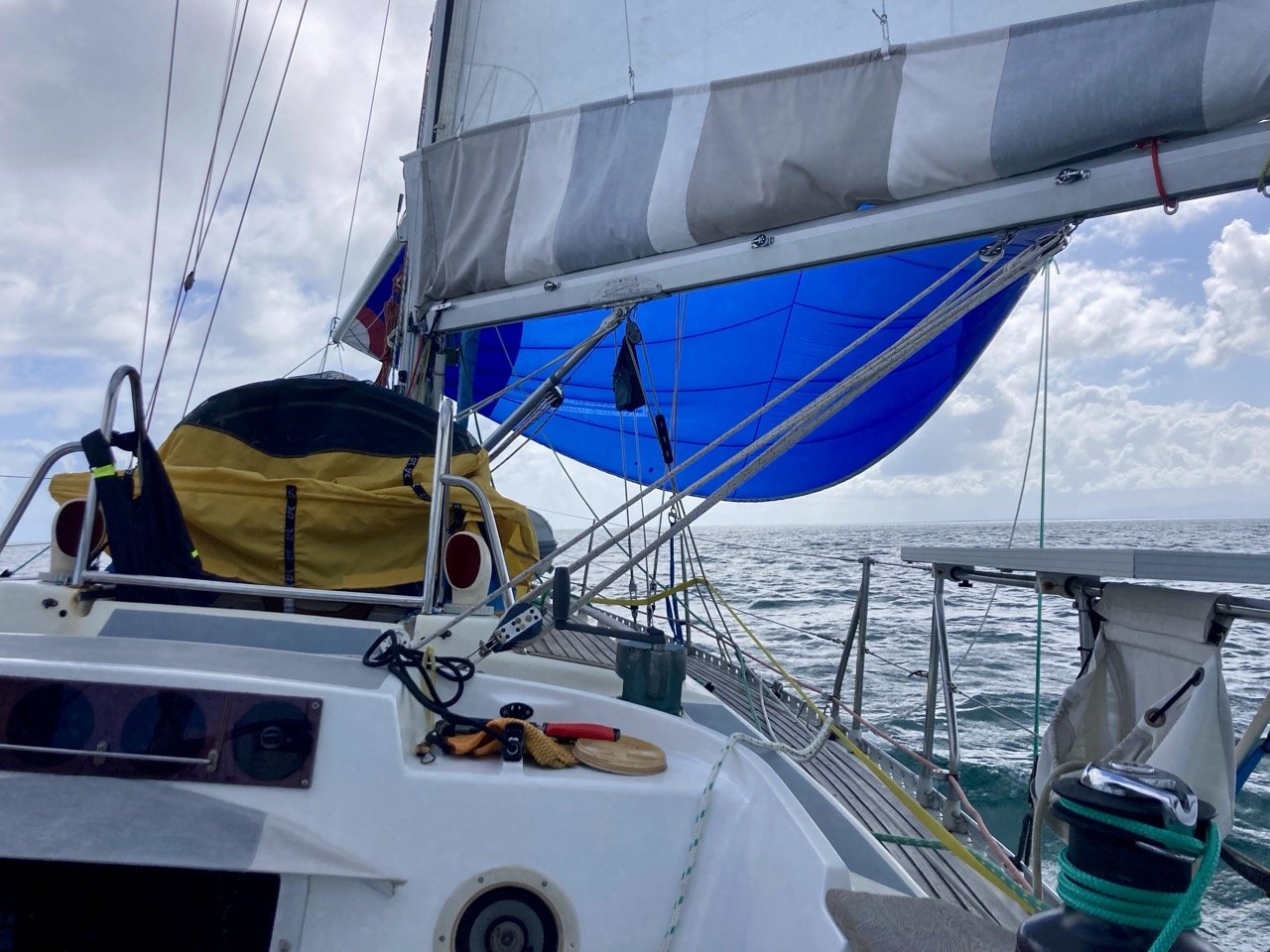
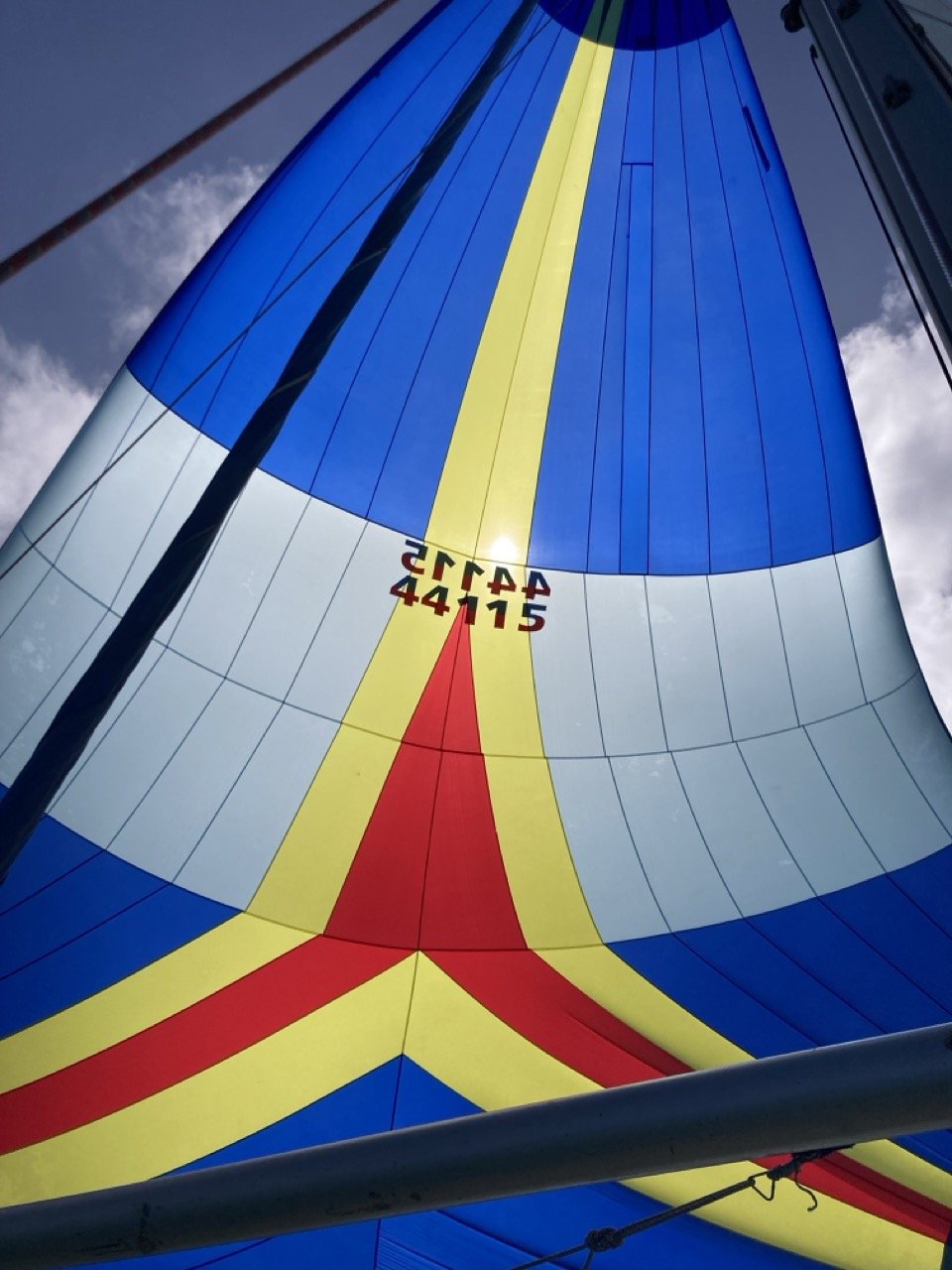
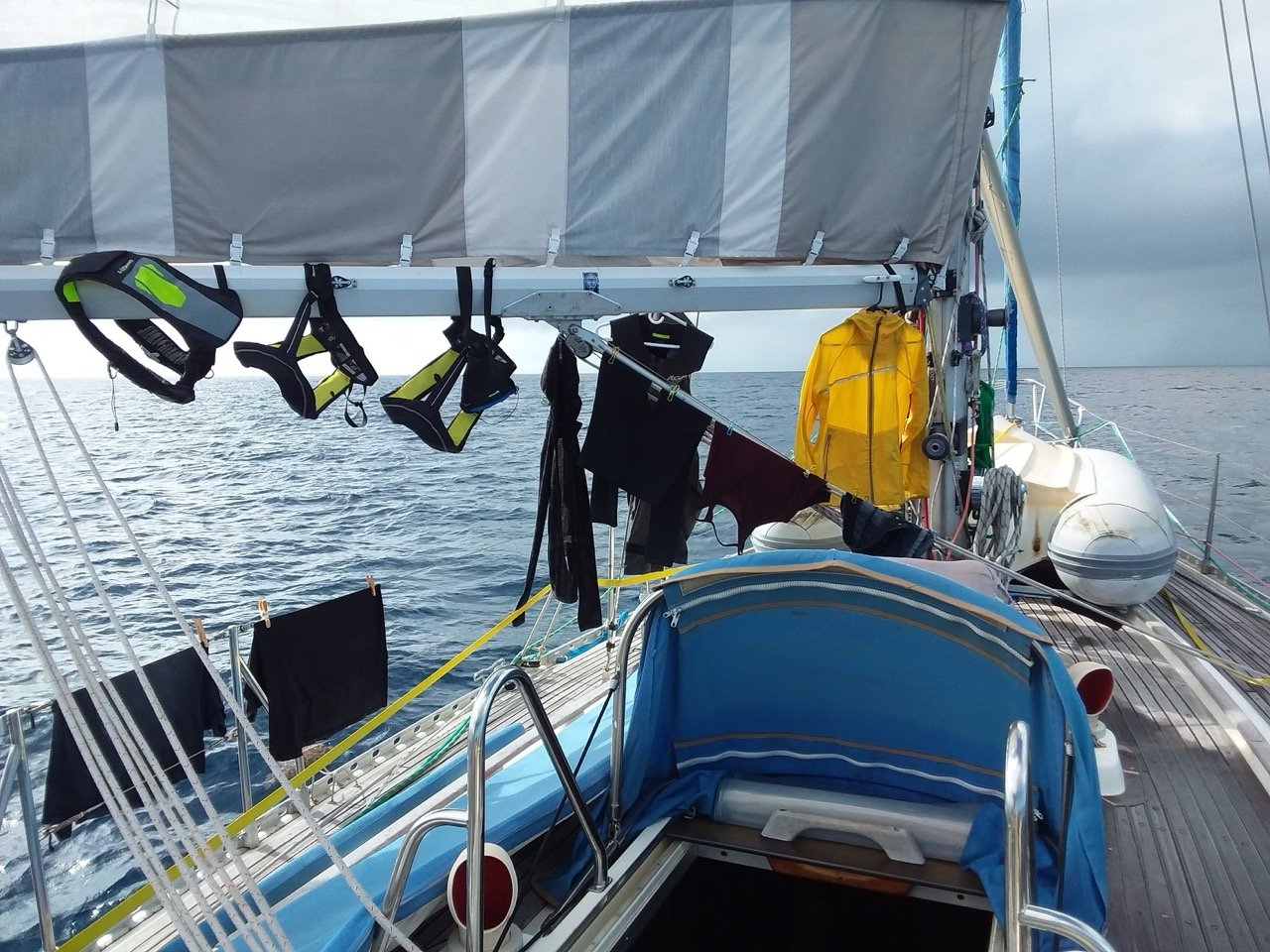
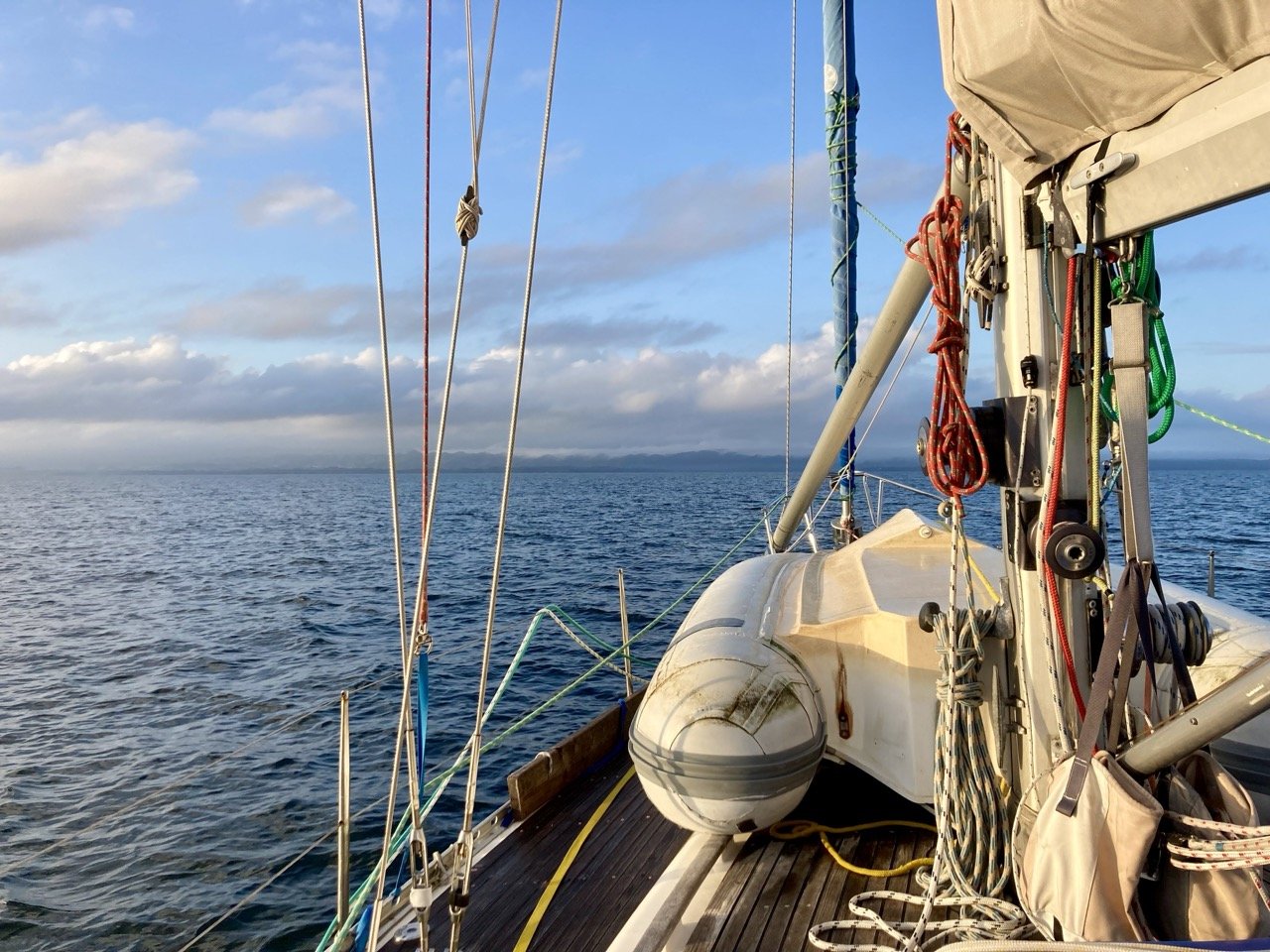
Cette traversée-là a été plus exigeante, à cause de la météo (20-25kt, 6-8pi de vagues au début), mais beaucoup plus rapide que prévu. Après environ 65h on est entré derrière la barrière de corail du Bélize, donc on a fait les dernières 24 heures de la traversée sur mer plate. Quel bon plan! Mon genre de voile 😉 Par contre, sous spi au travers sur mer plate, ça avance sur un moyen temps. Et quand les gars décident de mettre une ligne à l’eau en même temps, c’est là que ça peut être dur sur le matériel. Je vous raconte:
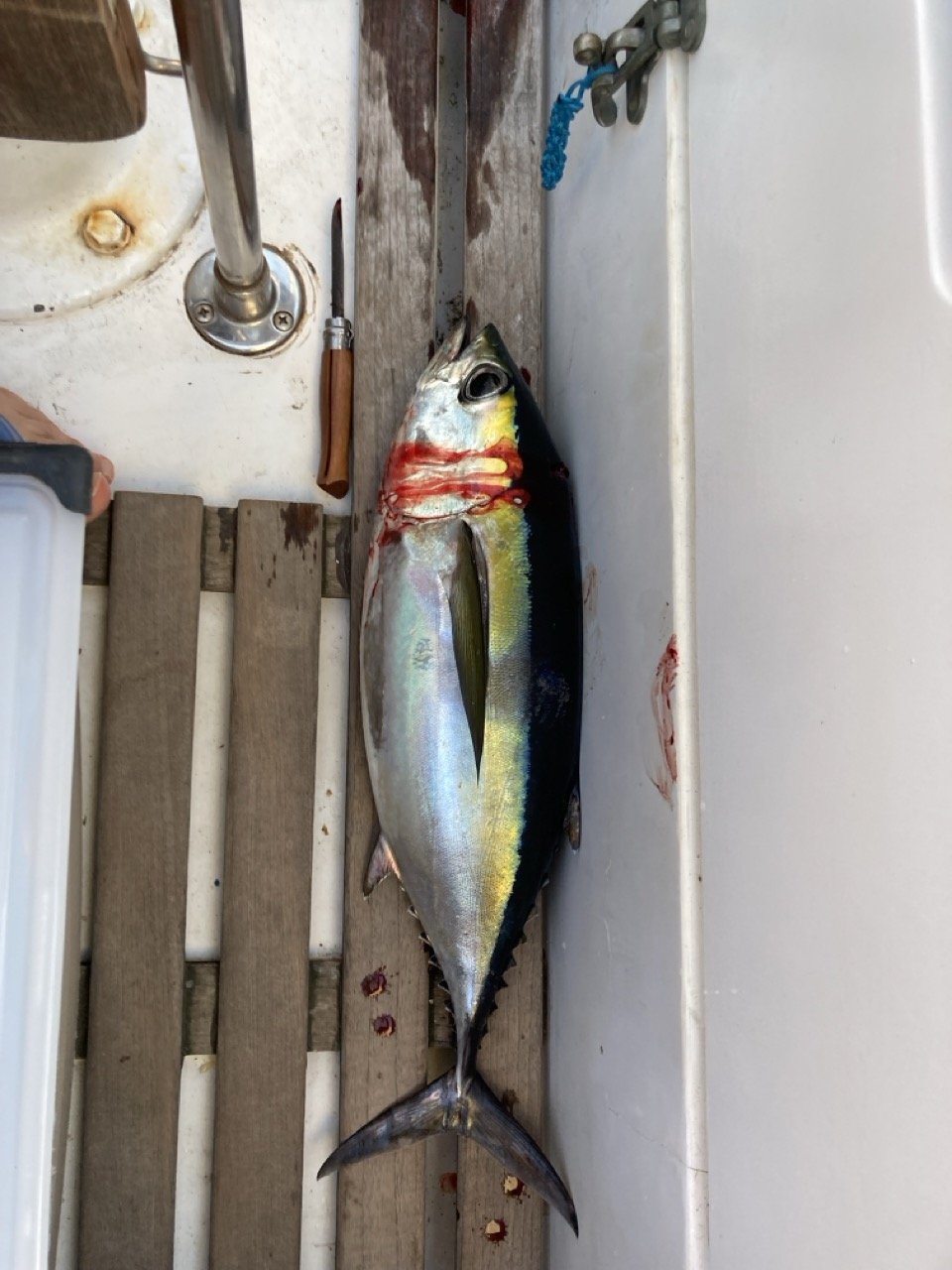
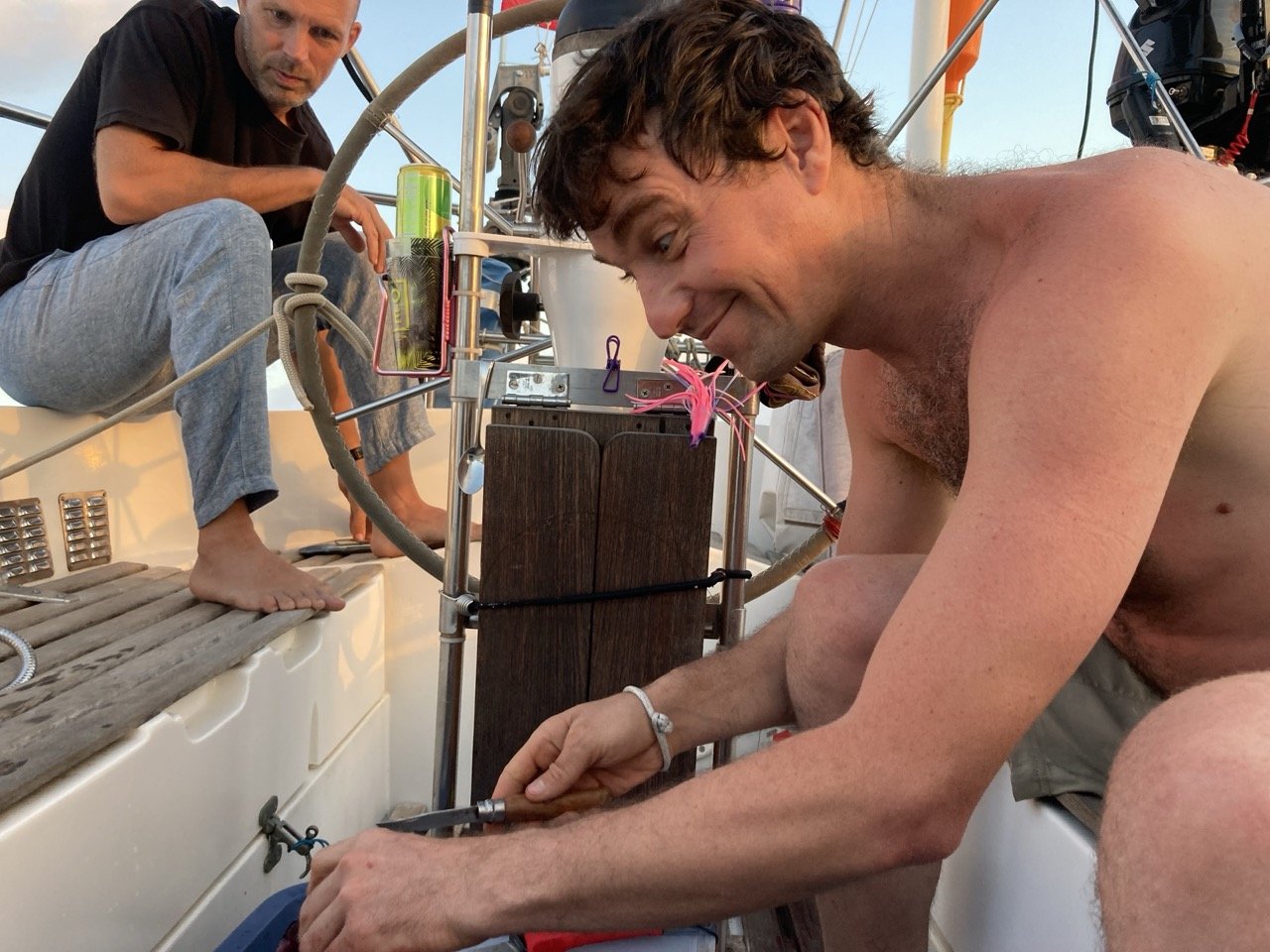
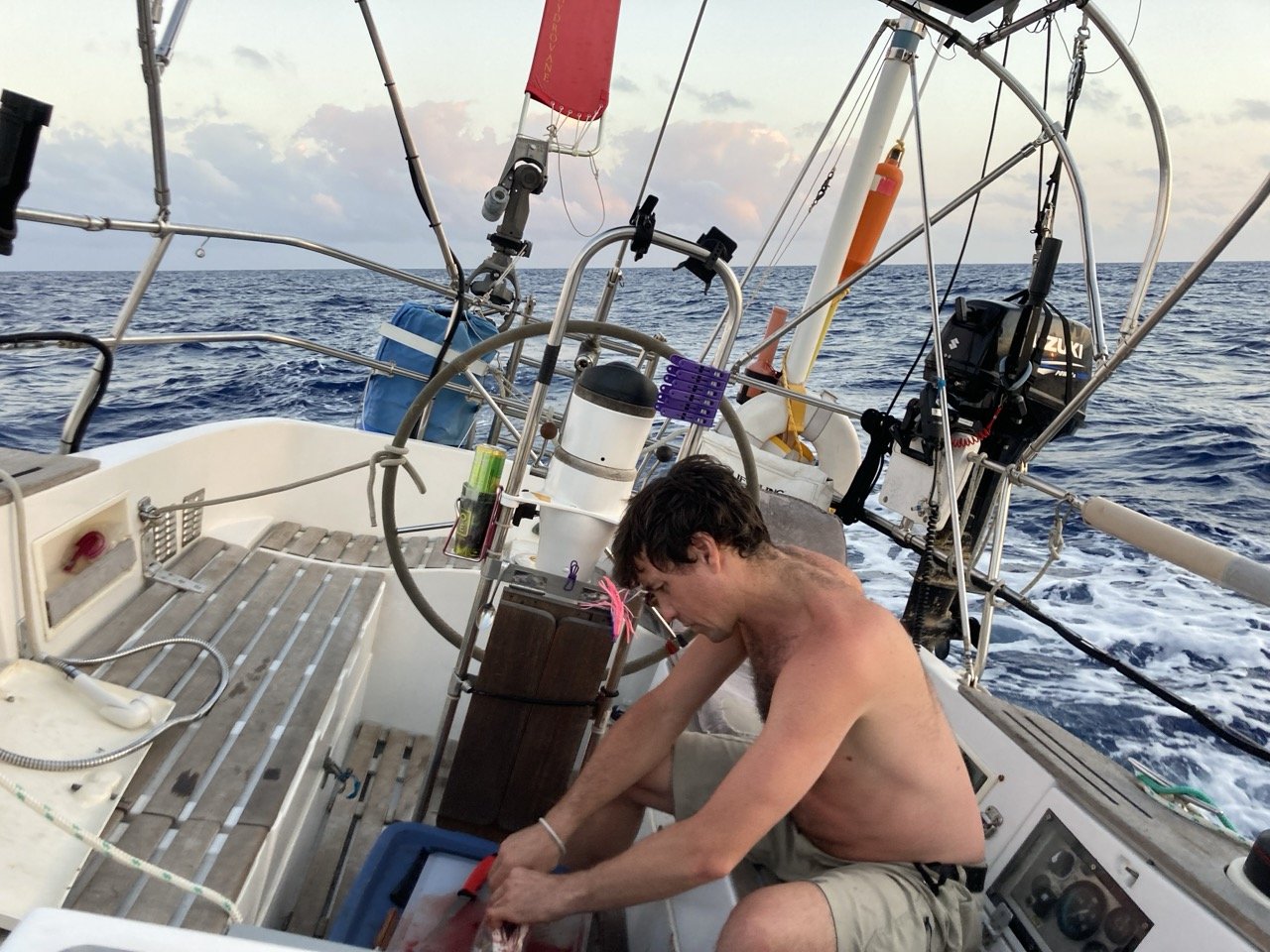
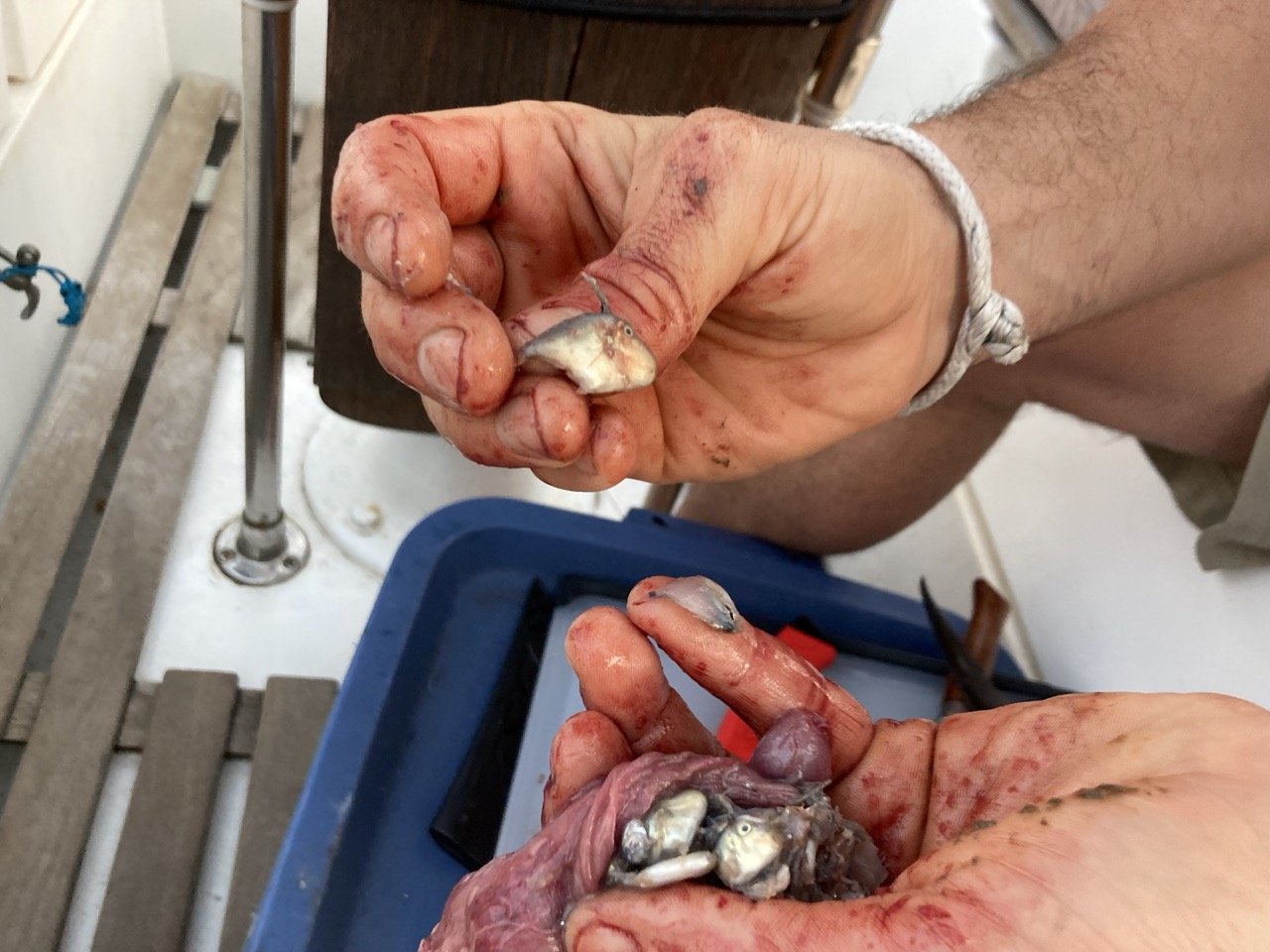
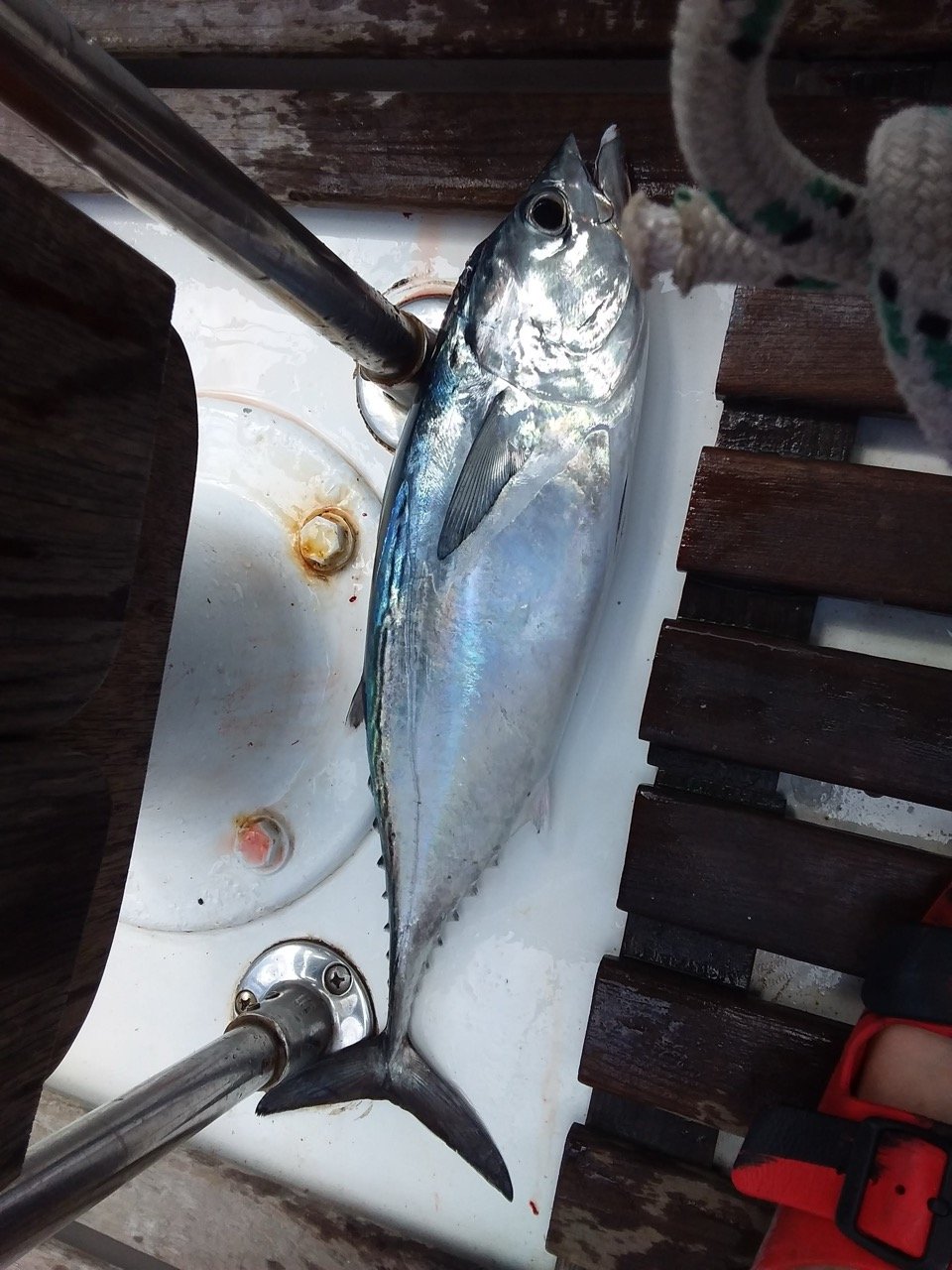
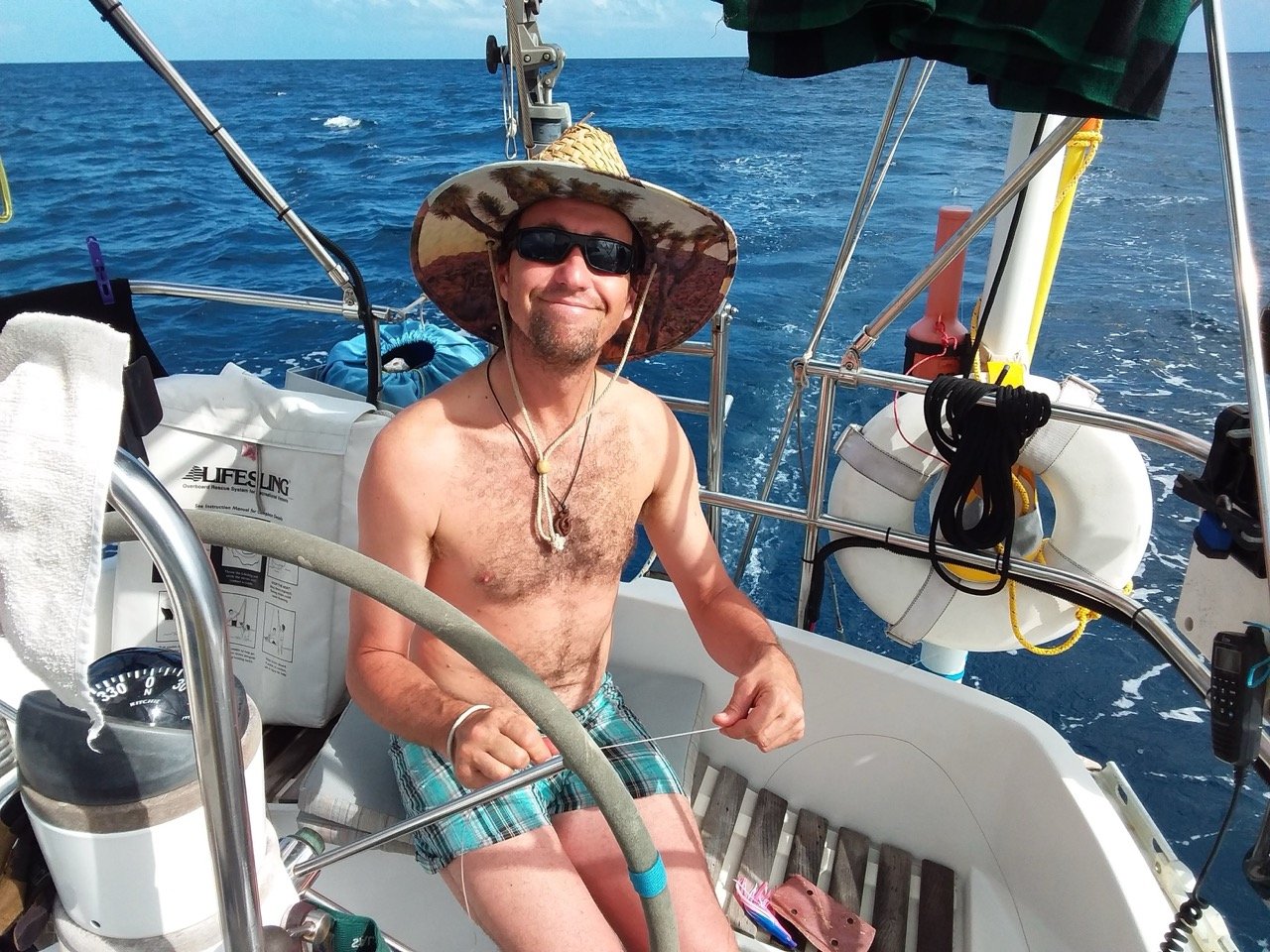
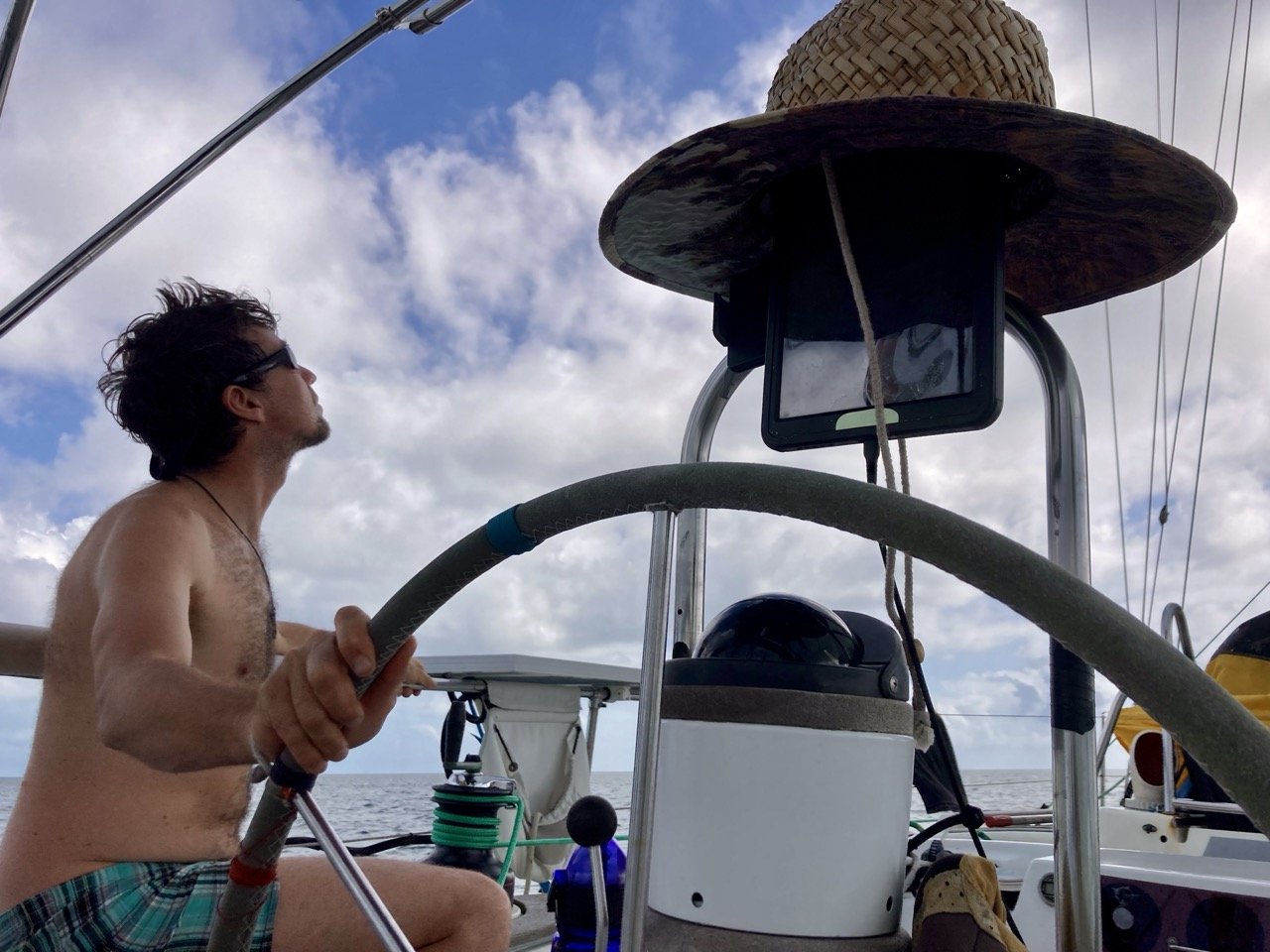
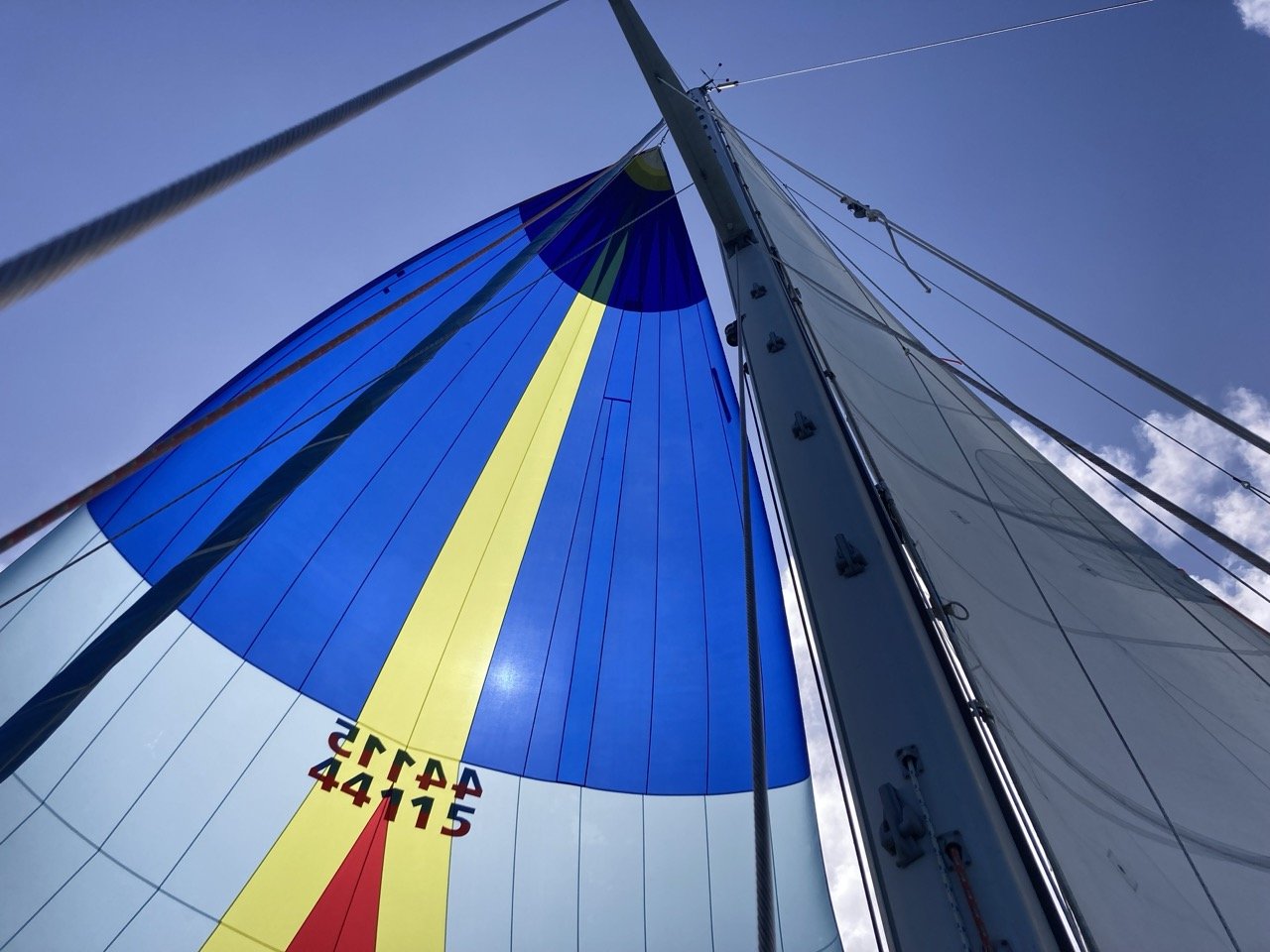
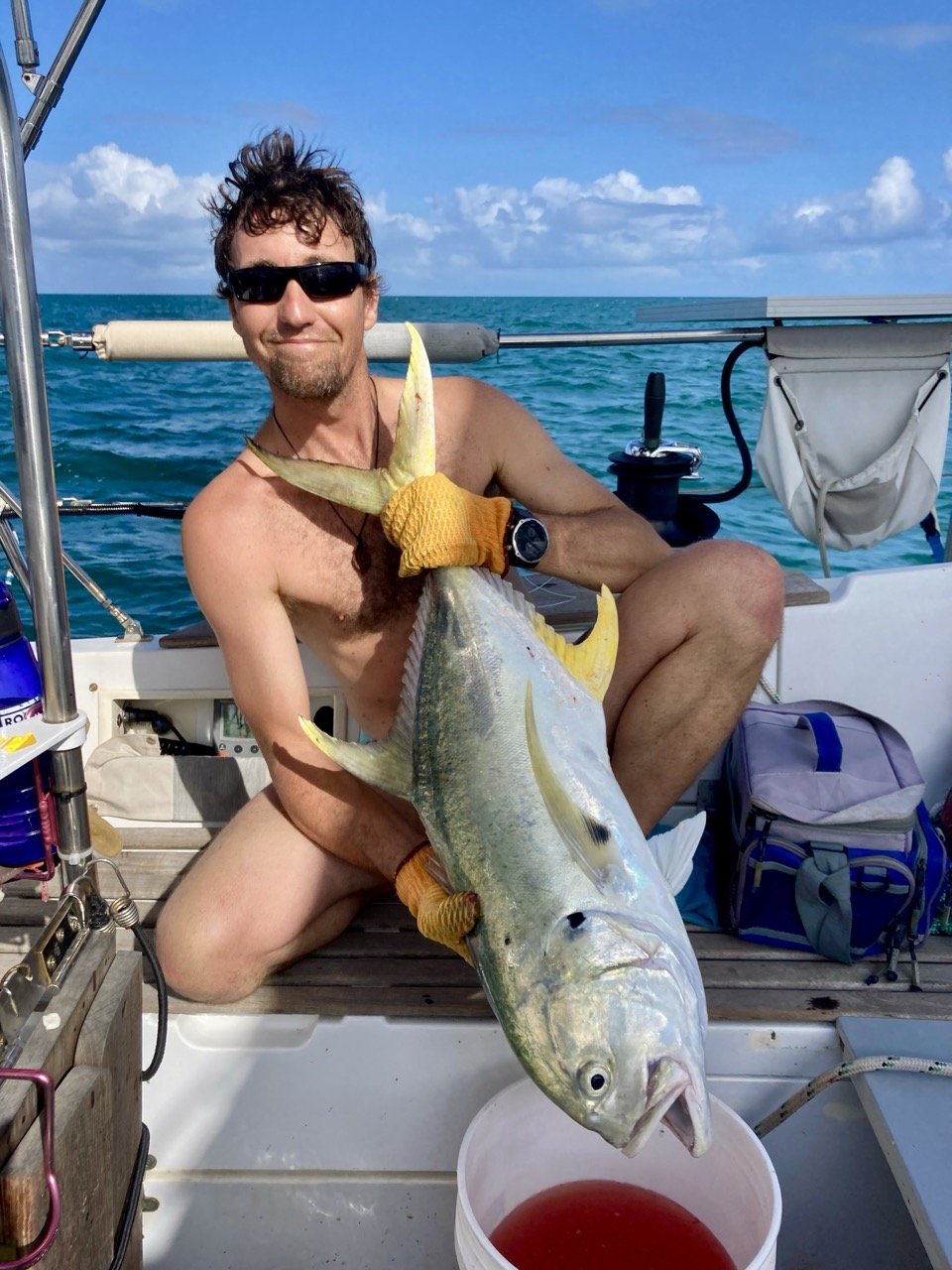
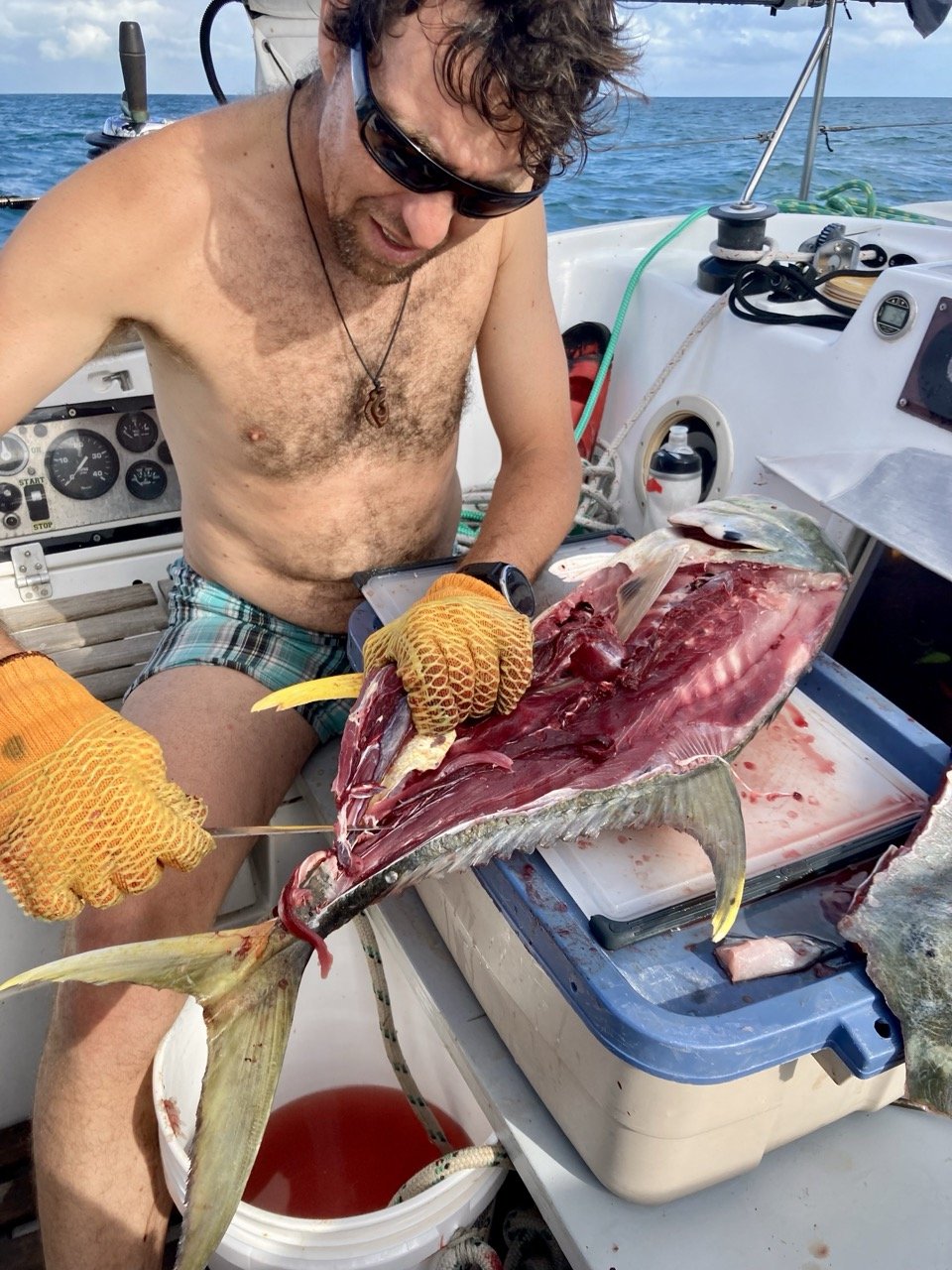
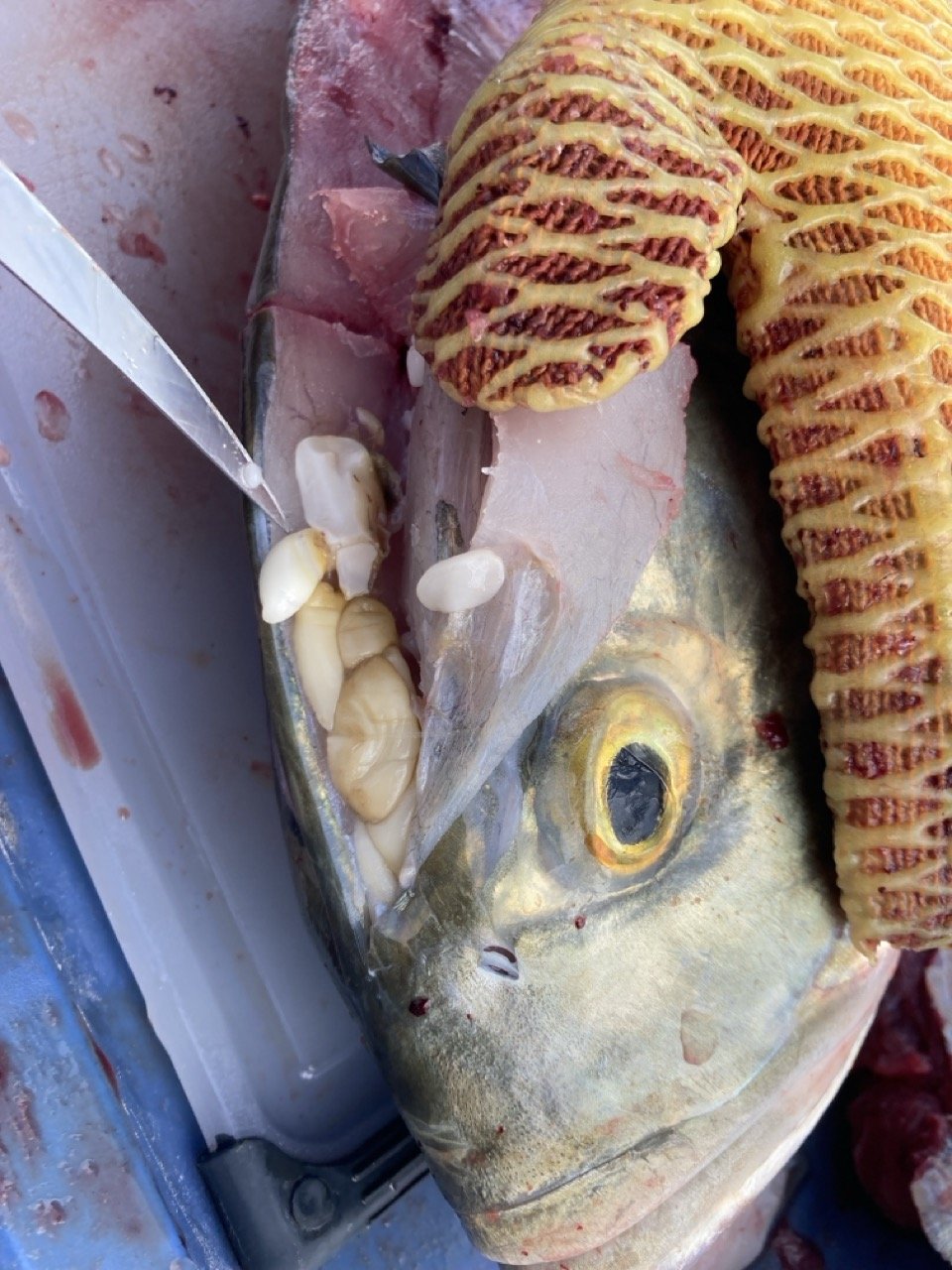
On roulait 8 noeuds quand ça a mordu! J’étais à la barre (parce que pas question d’être au pilote sous spi!), Rémy dormait, et Gaël venait de rentrer à l’intérieur pour prendre une bouchée. La canne à pêche se déroulait tellement vite (ZZZZZZZZZZZZZZZ!!!!) que je n’arrivais pas à attraper la manivelle du moulinet d’une main (Sous spi, je ne pouvais pas lâcher la barre du bateau que je tenais de l’autre). J’ai eu beau crier « POISSON, POISSON, POISSON!!!! » comme d’habitude, mais avant que Gaël sorte pour m’aider, la canne était arrivée au bout de son fil, et le machin qui tient la canne sur les filières s’est brisé en deux sous le choc. La canne a revolé vers l’arrière en un clin d’œil. Merde, je pensais qu’on venait de tout perdre… (Rémy n’allait pas être content!) Mais en me retournant, pensant voir le tout couler au fond, et en imaginant déjà tristement un énorme poisson qui allait devoir vivre le reste de sa vie attaché par un hameçon: au bout de 400pi de fil ancré par une canne à pêche prise au fond dans une patate de corail – qu’est-ce que je vois? La canne à pêche flotte au-dessus de l’eau, comme si elle s’était transformée en balais magique dans Harry Potter. Hein??? Gaël est sorti, on s’est regardés, on a regardé la canne, on s’est frotté les yeux… et on ne rêvait pas; dans son vol plané, le fil de la canne à pêche s’était clippé dans le mousqueton de la longe de Rémy qui était accrochée sur le bimini (pour sécher au soleil)!!! Bon, vous allez tous penser que c’est une histoire de pêche tout ça, mais c’est vrai, je vous jure! Et on a des photos du poisson comme preuve! Mais vous vous imaginez que la suite était un peu intense quand même. On a abbatu, pour ralentir le bateau, on a récupéré la canne à bord, et on a bien attaché le fil sur un taquet, parce qu’il fallait absolument affaler le spi avant de ramener le poisson, sinon on allait 1- avoir beaucoup de misière à le ramener à la main (sans canne à pêche fonctionnelle, le moulinet a brisé) à cette vitesse-là, même abattu et 2- s’échouer sur la côte du Bélize avant la fin de l’exercice parce qu’on n’avait pas tant de place que ça pour abattre! Conclusion, on affale le spi et on gère le poisson après. Une fois le spi dans son sac, Gaël a mis les gros gants de pêche (une chance qu’on avait ça!) et petit à petit, il a réussi à remonter le kilomètre de ligne et le gros poisson! Voici la carangue crevalle (crevalle jack – bien identifié par le petit livre vintage que mon oncle André nous a offert au début du voyage! Merci André ;-).
Bon, c’est bien l’fun tout ça, mais la navigation achève. On a continué au génois le reste de la journée et toute la nuit, pour arriver à l’embouchure du Rio Dulce (Livingston) pile à l’heure pour passer le haut fond à marée haute. Avec notre faible tirant d’eau (4.5pi avec la dérive relevée) on aurait presque pu passer à marée basse, mais le capitaine aurait eu beaucoup trop de nouveaux cheveux blancs. On a suivi la trace suggéré par Navionics pour passer, et on a eu un minimum de 1.5pi sous la quille, dans une marée de 1.3 pieds.
This crossing was more demanding due to the weather (20-25kt, 6-8ft waves at the start), but much faster than expected. After about 65 hours, we entered behind the Belize barrier reef, so we did the last 24 hours of the crossing on flat seas. What a great plan! My kind of sailing 😉 However, under spinnaker on a beam reach on flat seas, it becomes a speedy ride. And when the guys decide to put a line in the water at the same time, that’s when it can be hard on the gear. Let me tell you:
We were doing 8 knots when it bit! I was at the helm, Rémy was sleeping, and Gaël had just gone inside to grab a bite. The fishing rod was unwinding so fast (ZZZZZZZZZZZZZZZ!!!!) that I couldn’t grab the reel handle with one hand (under spinnaker, I couldn’t let go of the boat’s helm that I was holding with the other). I shouted “FISH, FISH, FISH!!!!” as usual, but before Gaël came out to help, the rod had reached the end of its line, and the rod holder on the railing broke in two from the shock. The rod flew backward in a split second. Damn, I thought we had lost everything… (Rémy wasn’t going to be happy!) But as I turned around, thinking I would see everything sink to the bottom, and already sadly imagining a huge fish that would have to live the rest of its life attached by a hook: at the end of 400 feet of line anchored by a fishing rod stuck at the bottom in a coral head – what do I see? The fishing rod floating above the water, as if it had turned into a magic broom in Harry Potter. Huh??? Gaël came out, we looked at each other, looked at the rod, rubbed our eyes… and we weren’t dreaming; in its flight, the fishing line had clipped into the carabiner of Rémy’s lanyard, which was hanging on the bimini (to dry in the sun)!!! Well, you’re all going to think this is just a fishing story, but it’s true, I swear! And we have photos of the fish as proof! But you can imagine that the rest was still pretty intense. We bore away to slow the boat, recovered the rod on board, and secured the line to a cleat, because we absolutely had to lower the spinnaker before bringing in the fish, otherwise we would have 1- had a lot of trouble bringing it in by hand (without a functional fishing rod, the reel was broken) at that speed, even bearing away and 2- run aground on the coast of Belize before the end of the exercise because we didn’t have that much room to bear away! Conclusion, we lowered the spinnaker and dealt with the fish afterward. Once the spinnaker was in its bag, Gaël put on the big fishing gloves (lucky we had those!) and little by little, he managed to pull in the kilometer of line and the big fish! Here is the crevalle jack (well identified by the little vintage book that my uncle André gave us at the beginning of the trip! Thanks André ;-)).
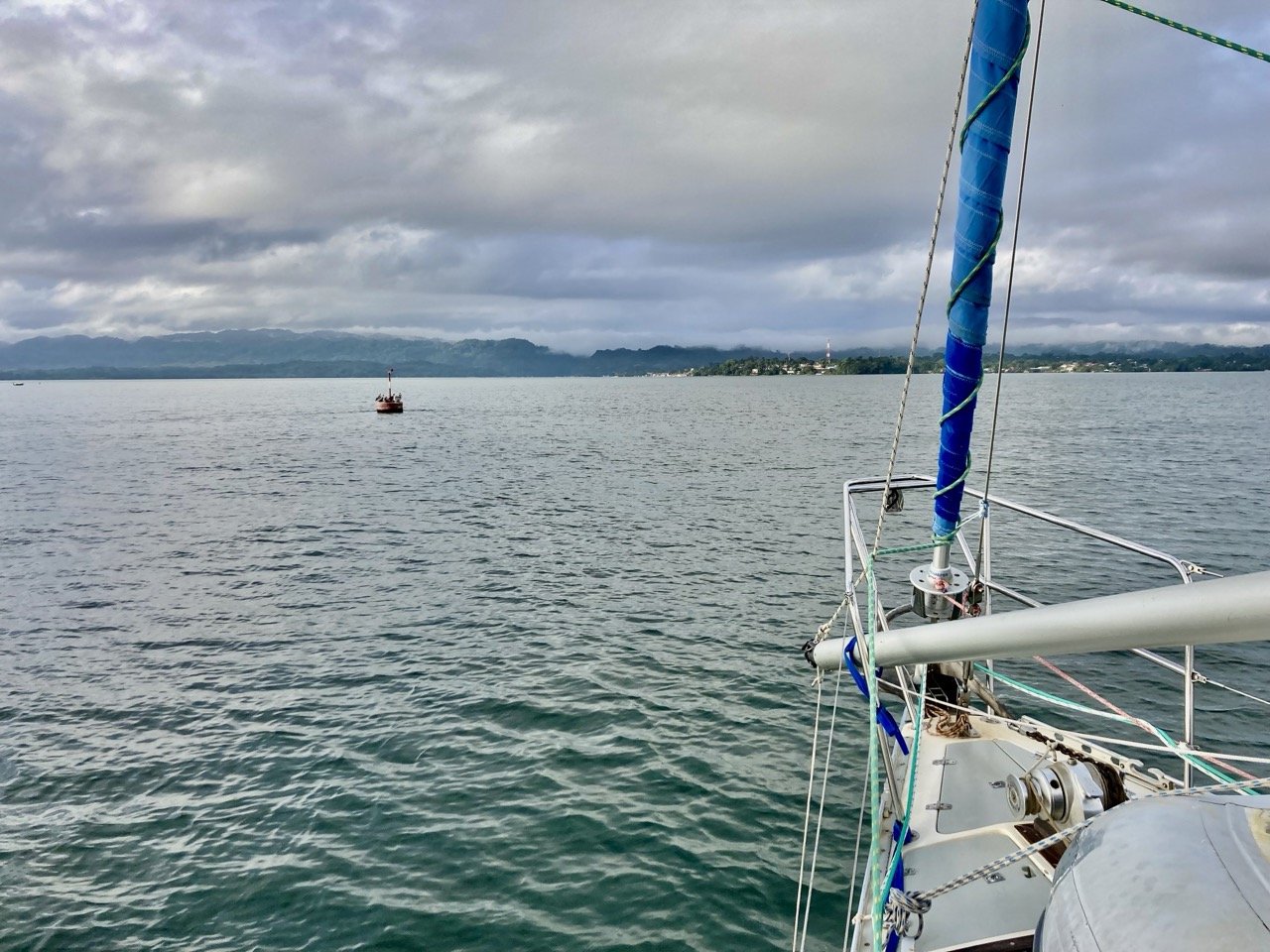
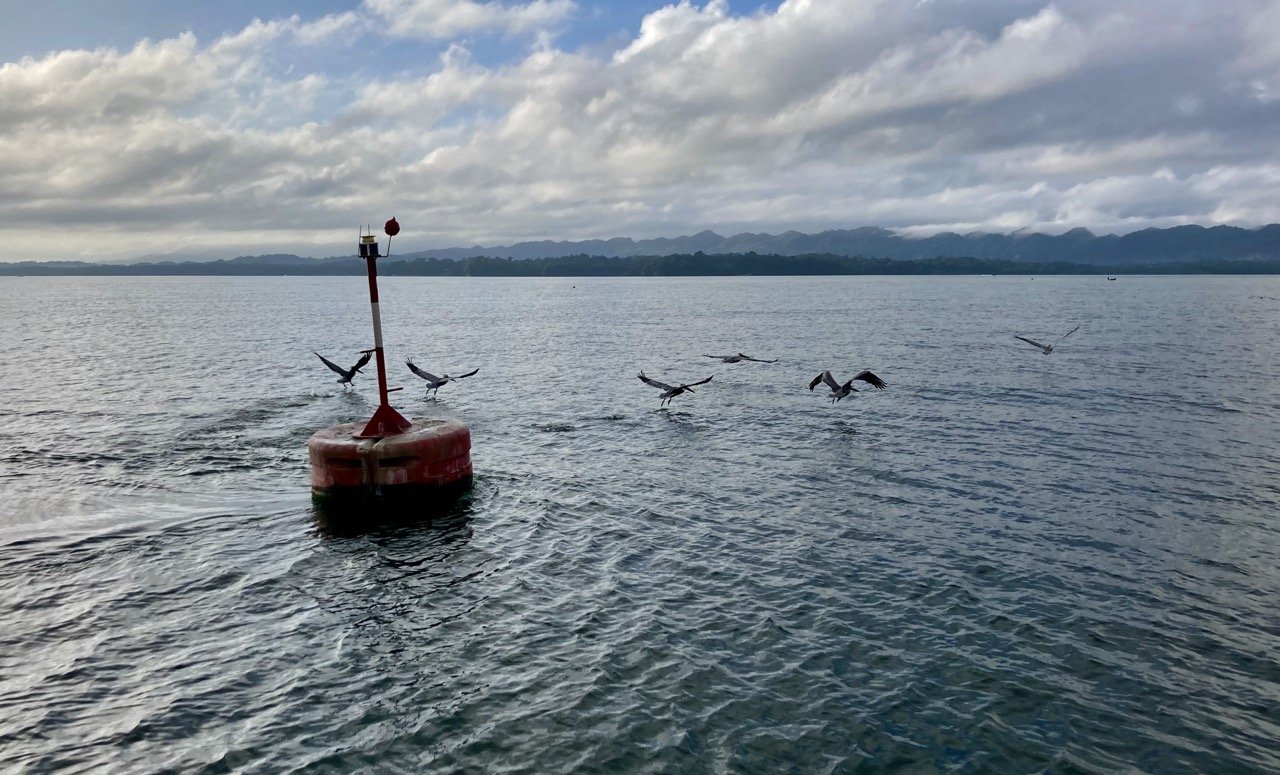
Well, all that’s fun, but the sailing is coming to an end. We continued under genoa for the rest of the day and all night to arrive at the mouth of the Rio Dulce (Livingston) right on time to pass the shallow spot at high tide. With our shallow draft (4.5 feet with the centerboard raised), we could have almost passed at low tide, but the captain would have had a lot more gray hairs. We followed the track suggested by Navionics to pass, and we had a minimum of 1.5 feet under the keel, on a 1.3-foot tide.
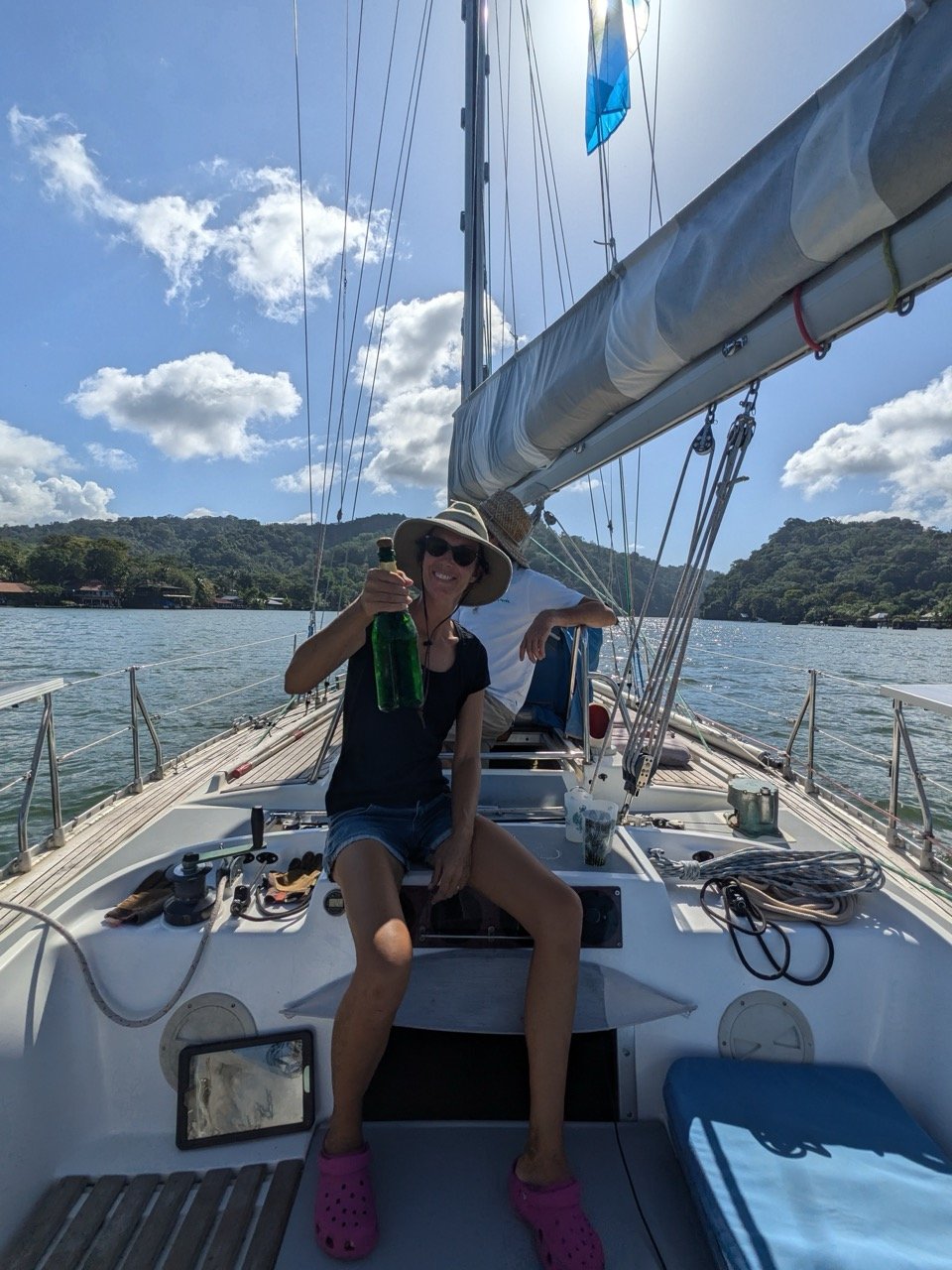
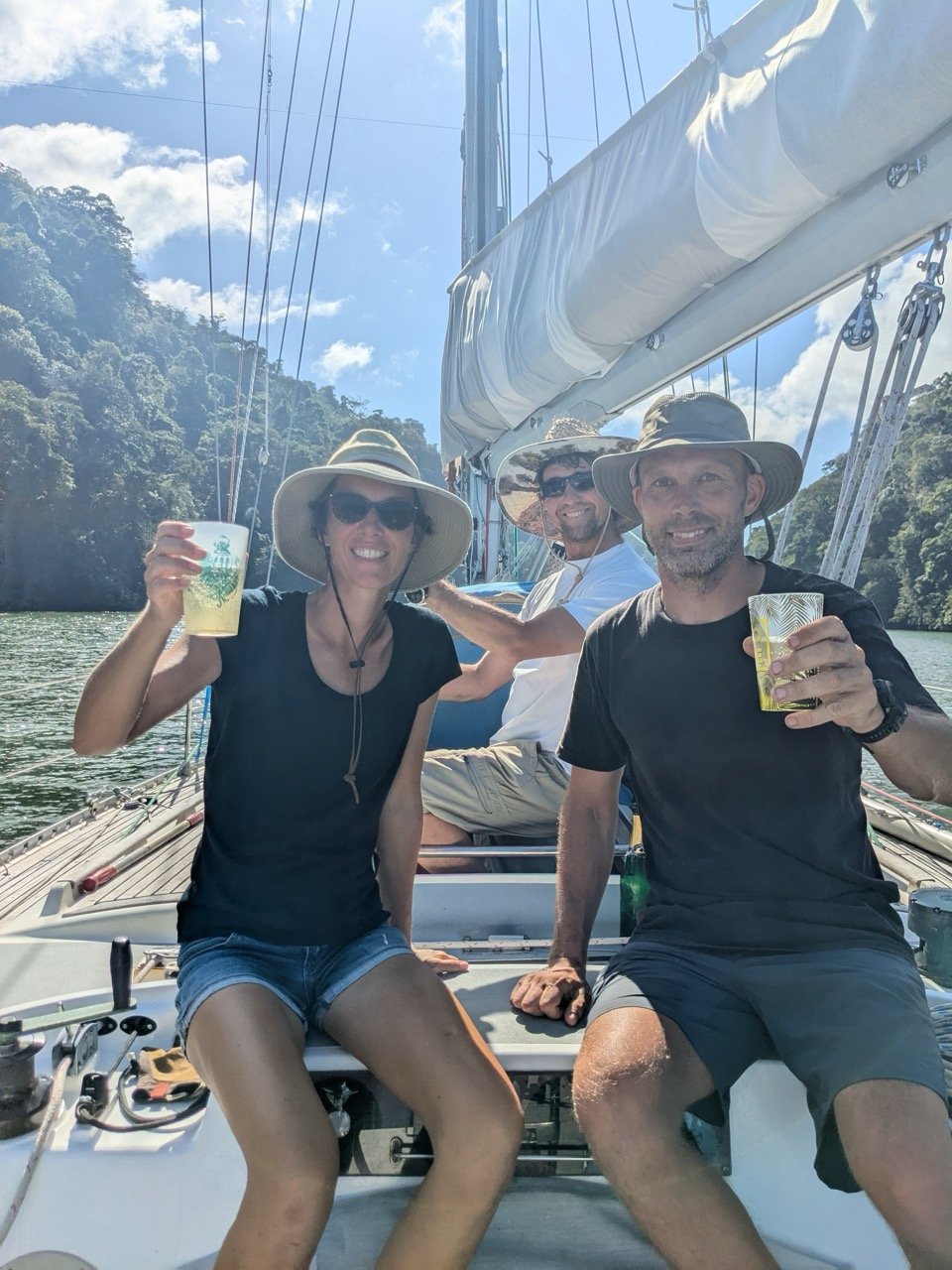
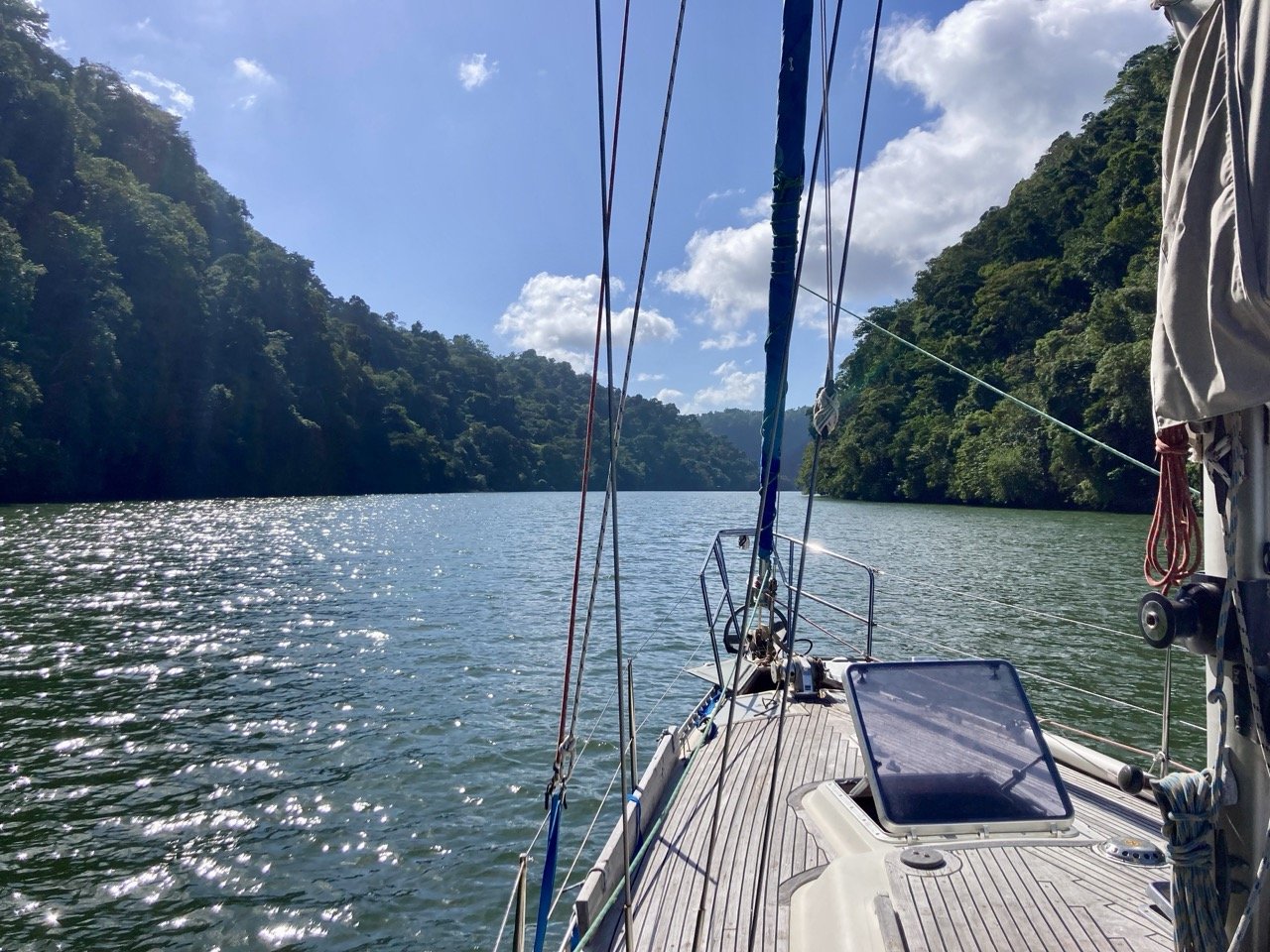
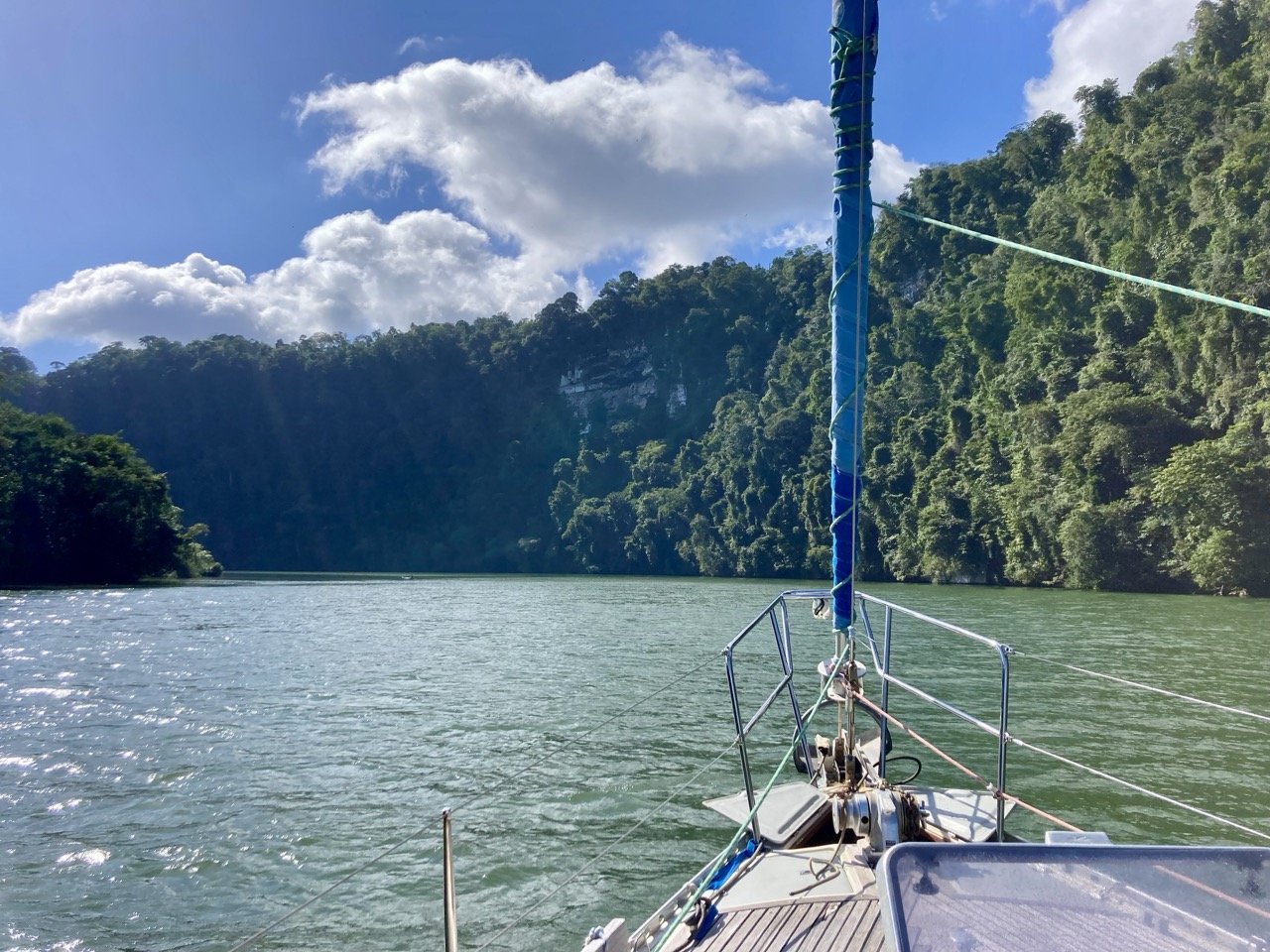
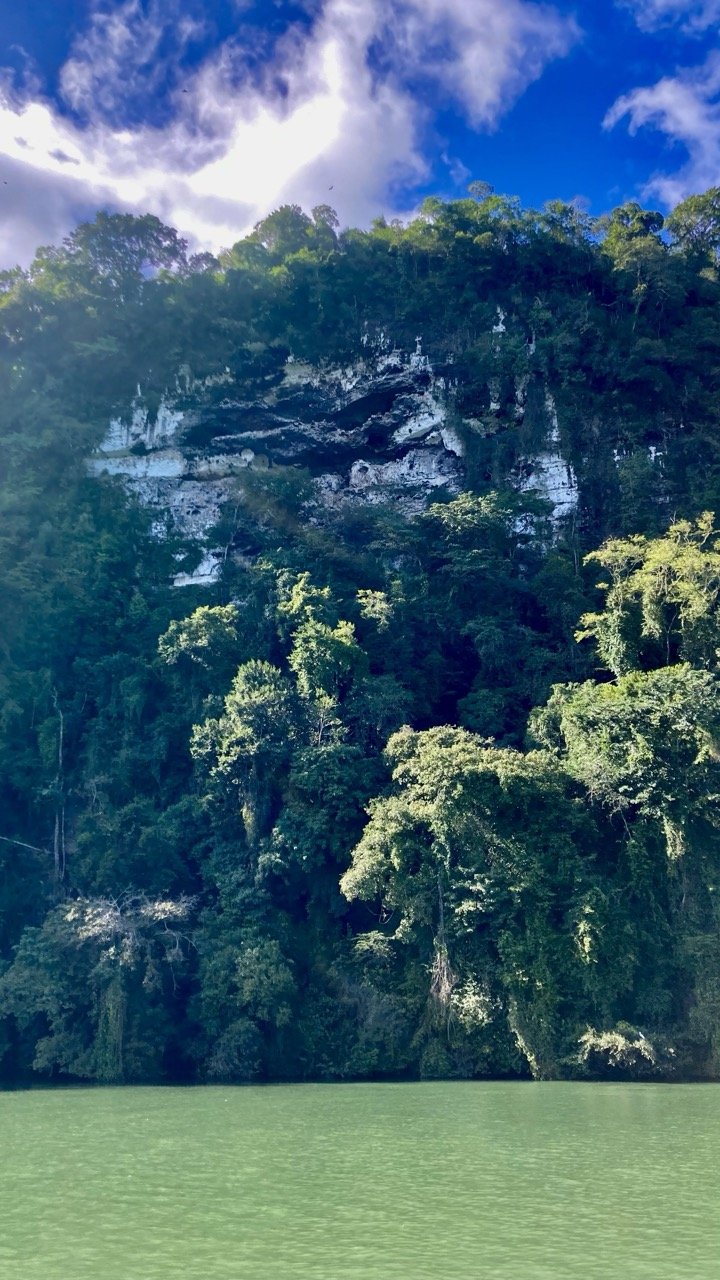
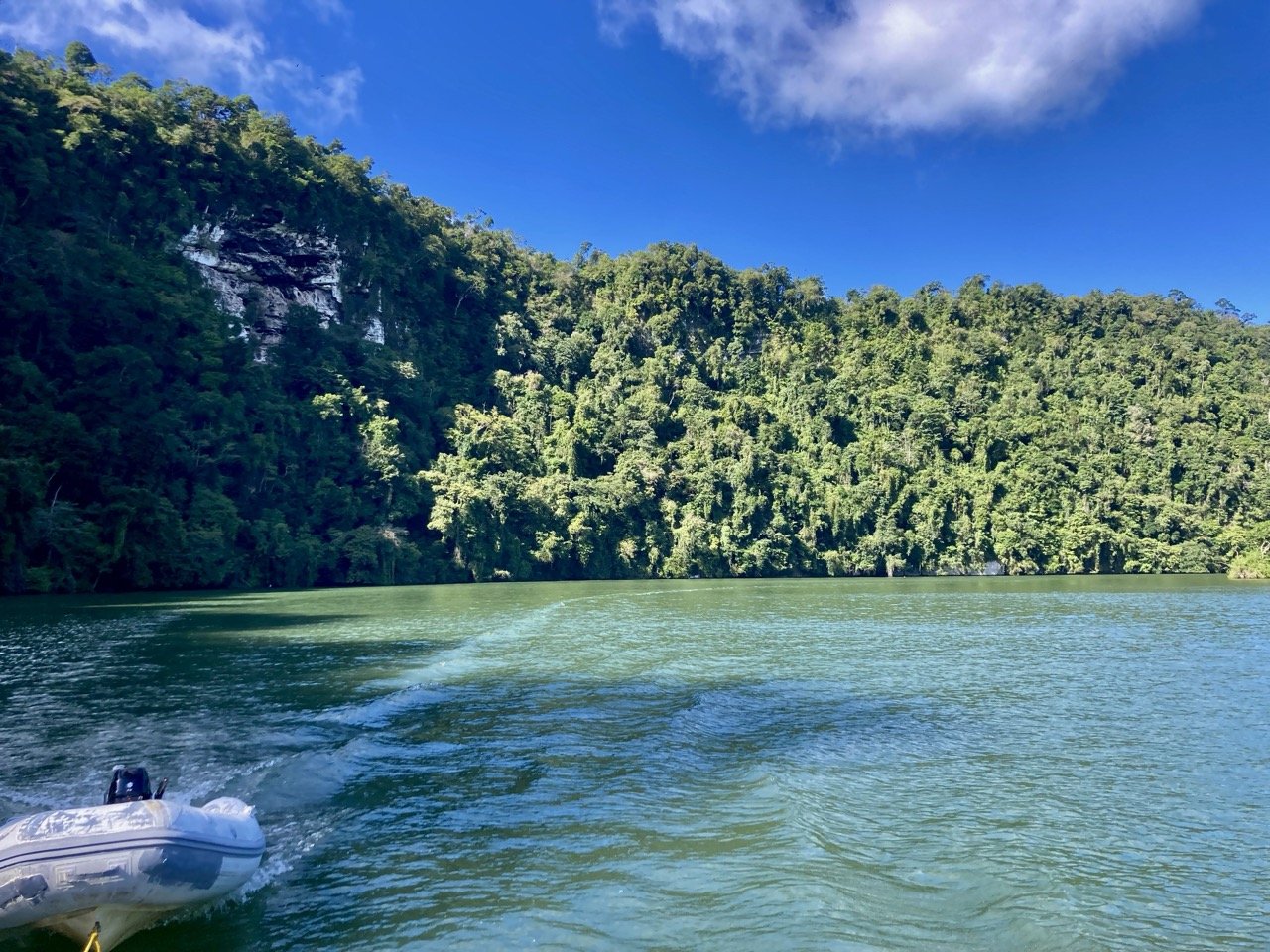
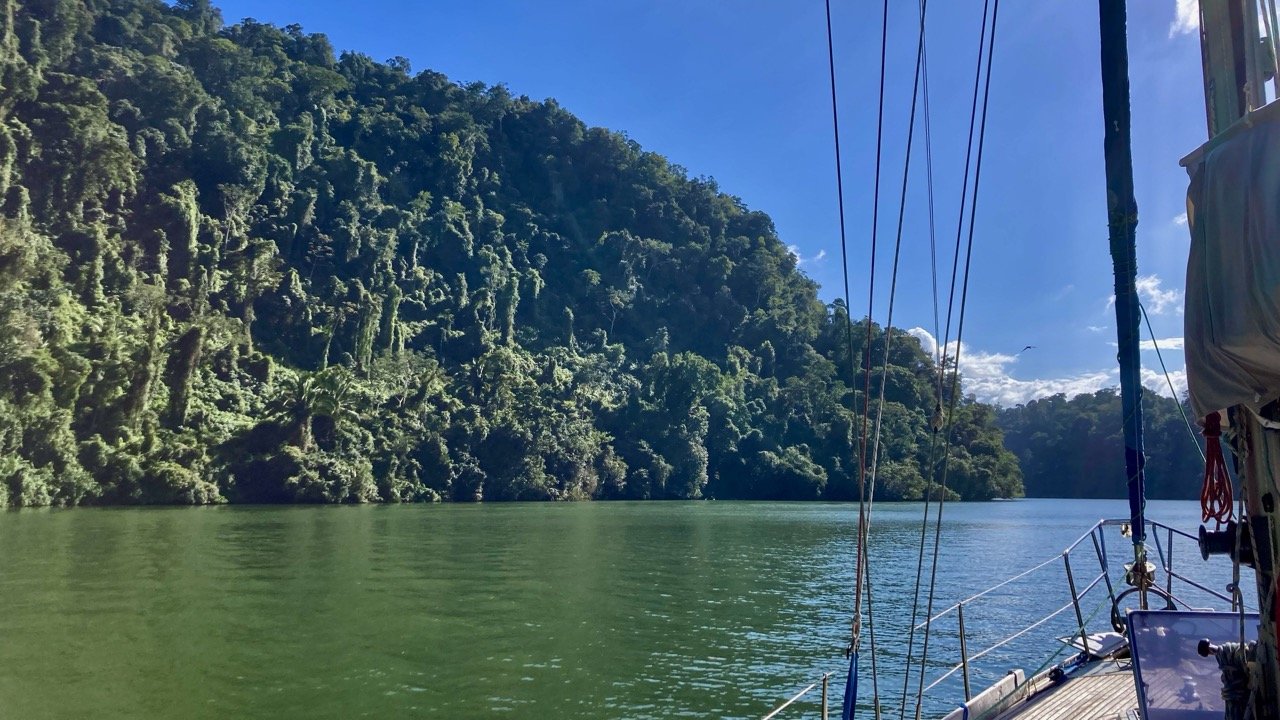
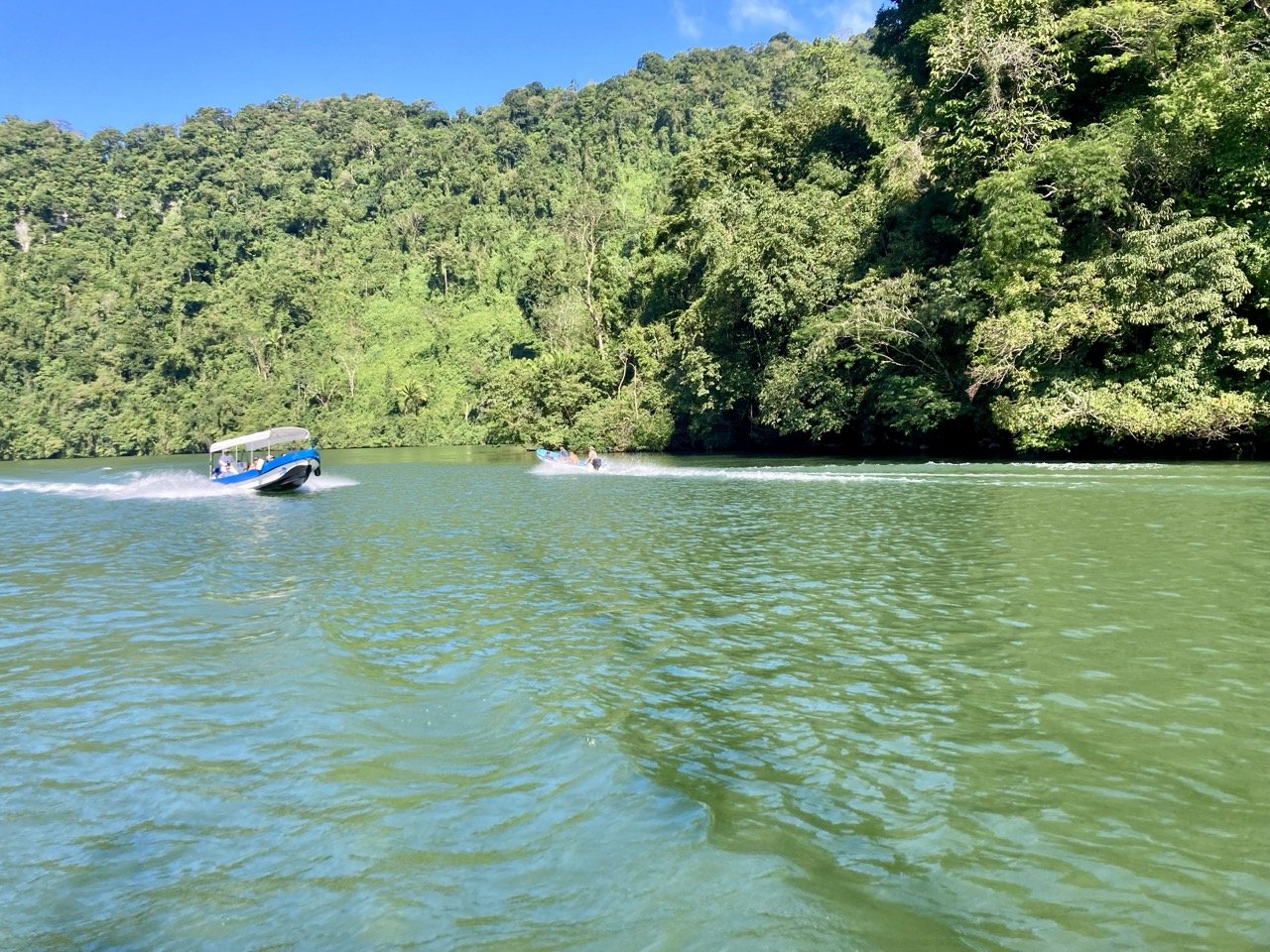
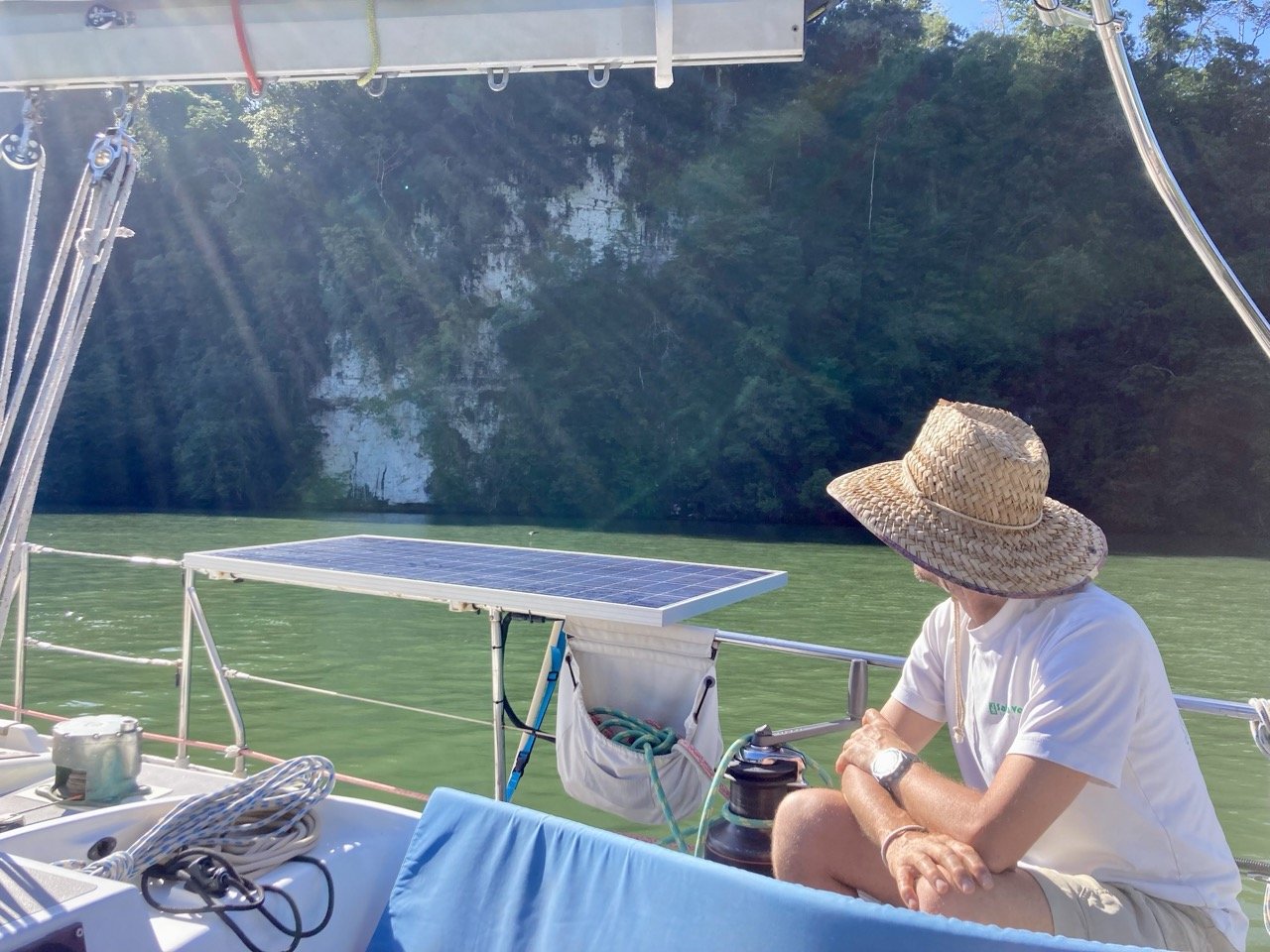
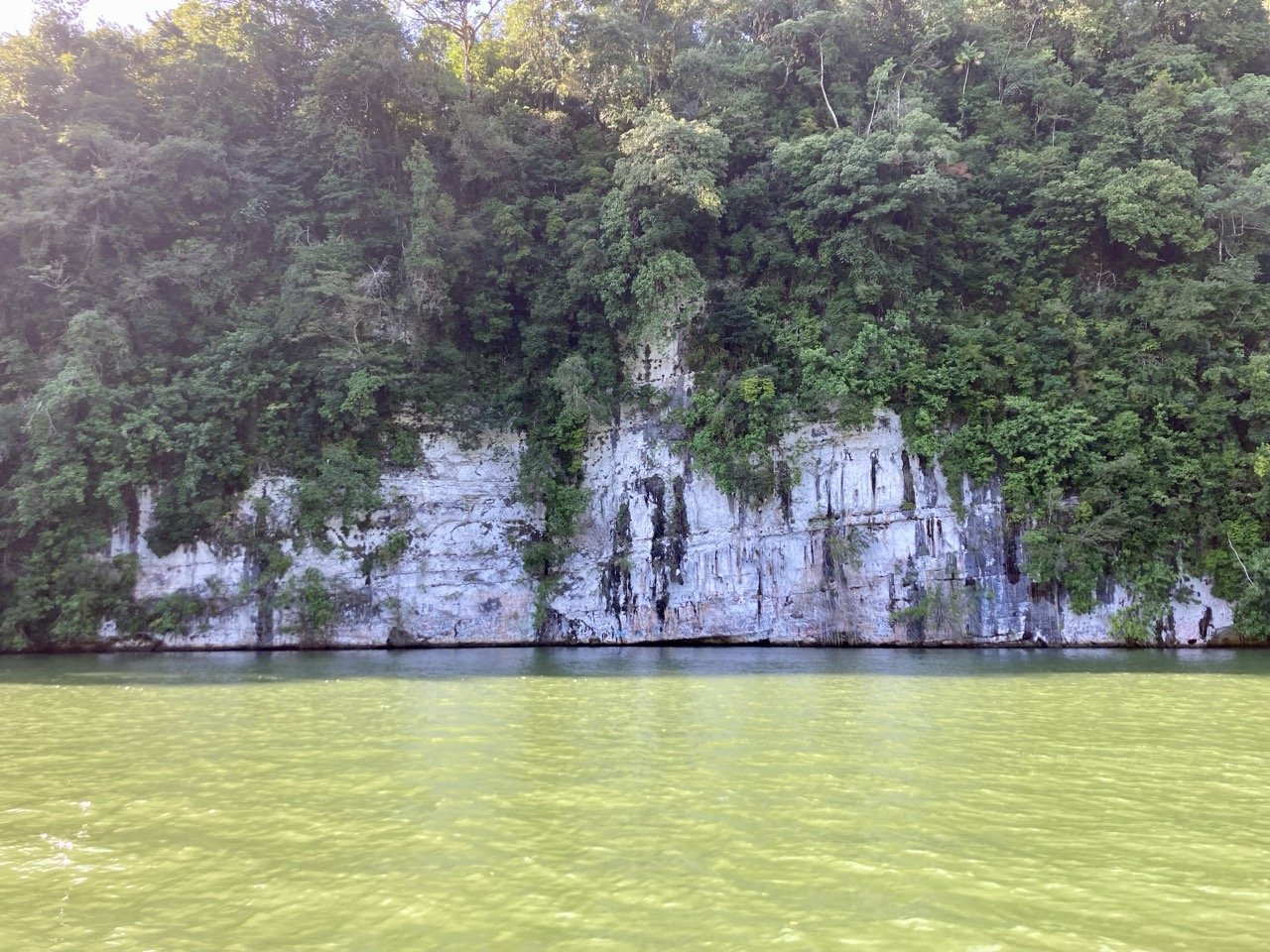
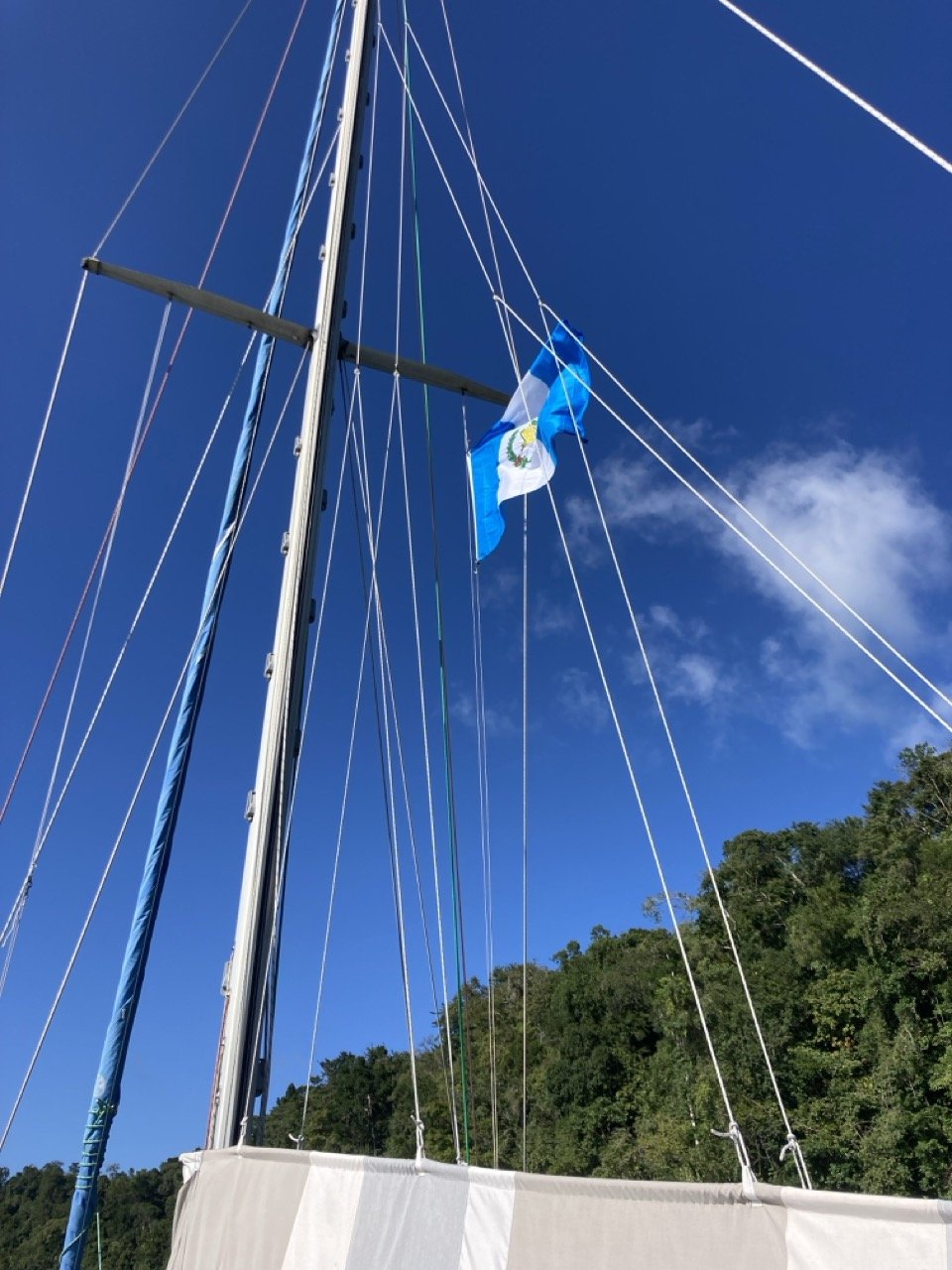
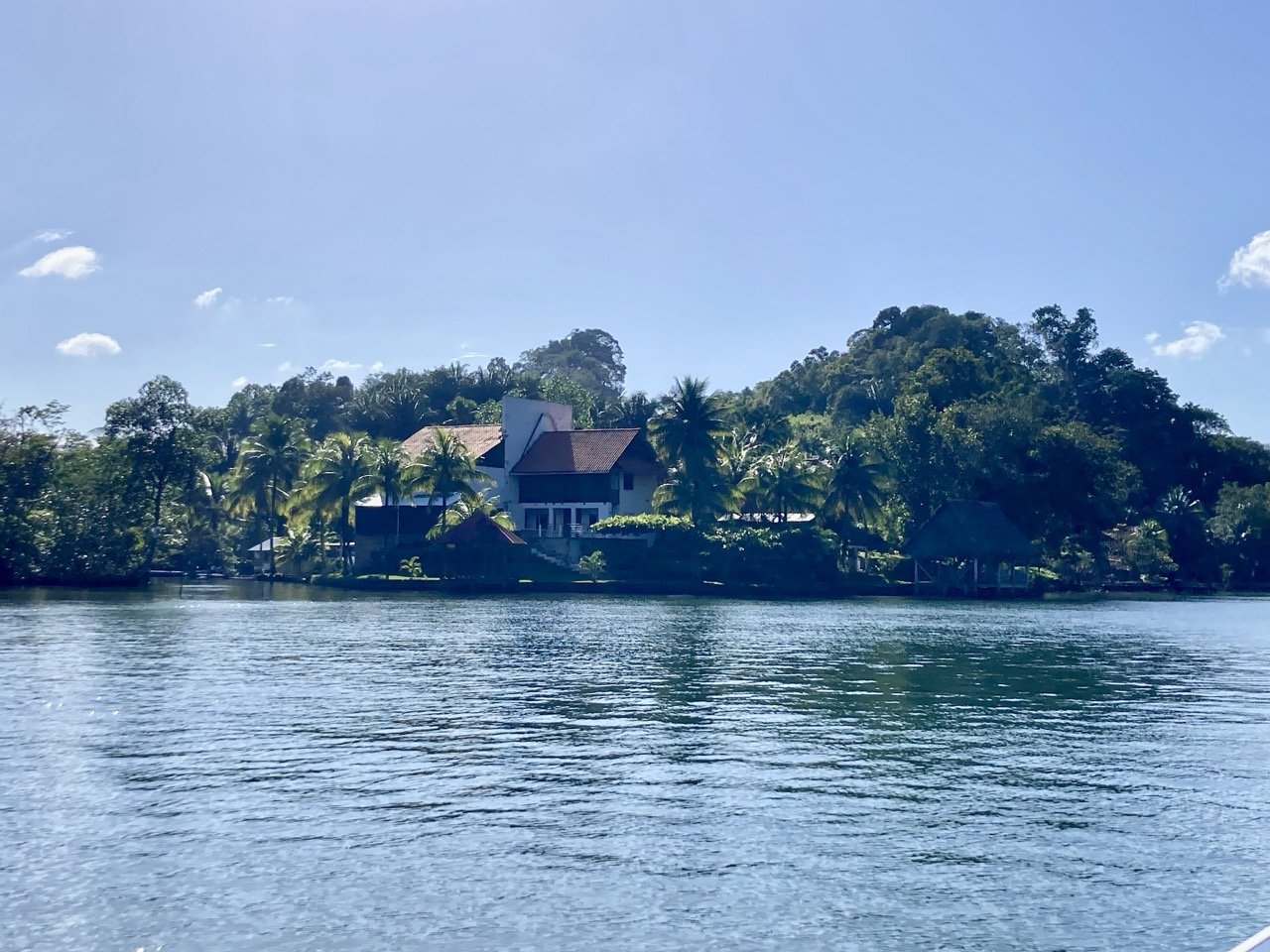
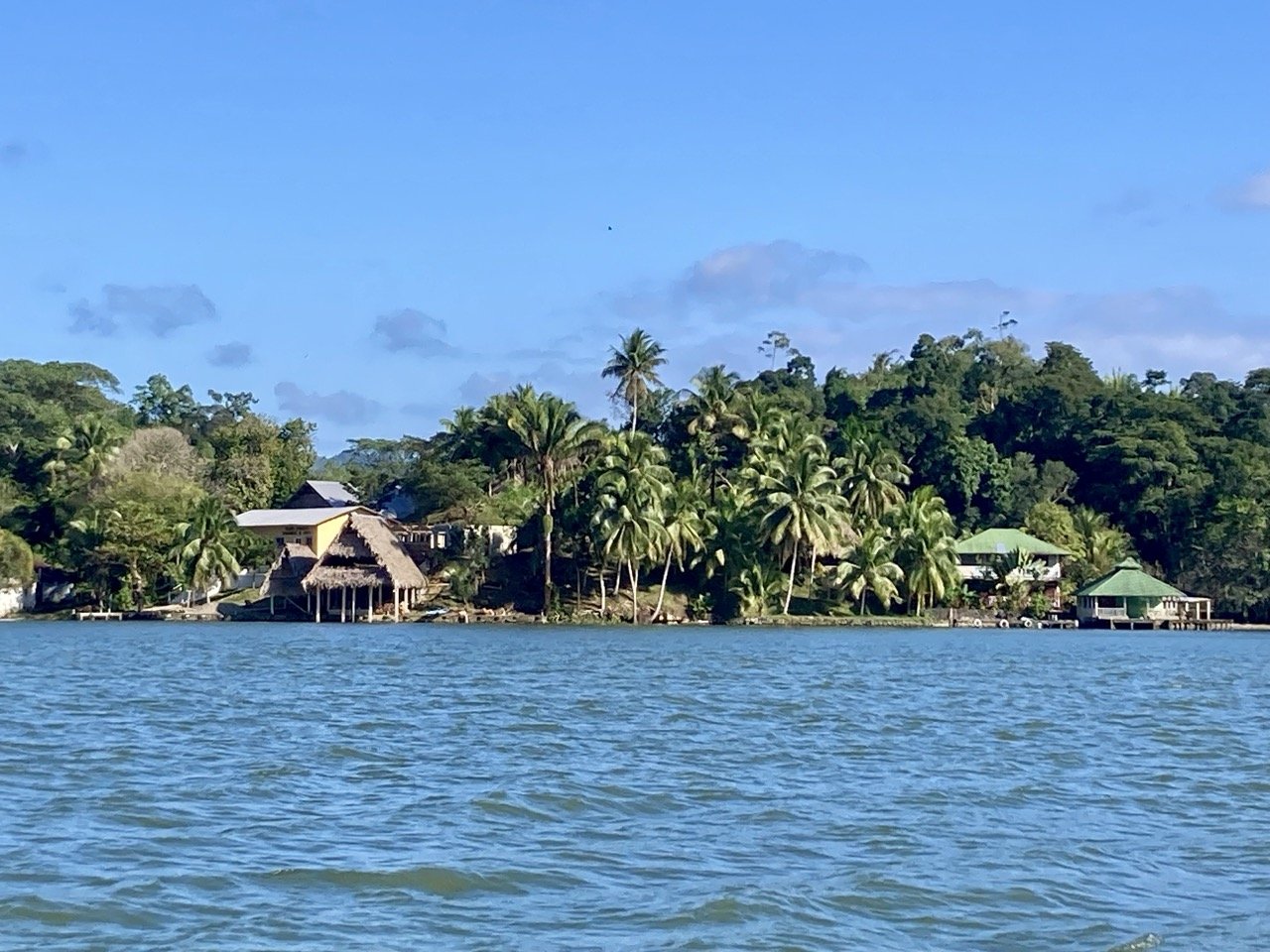
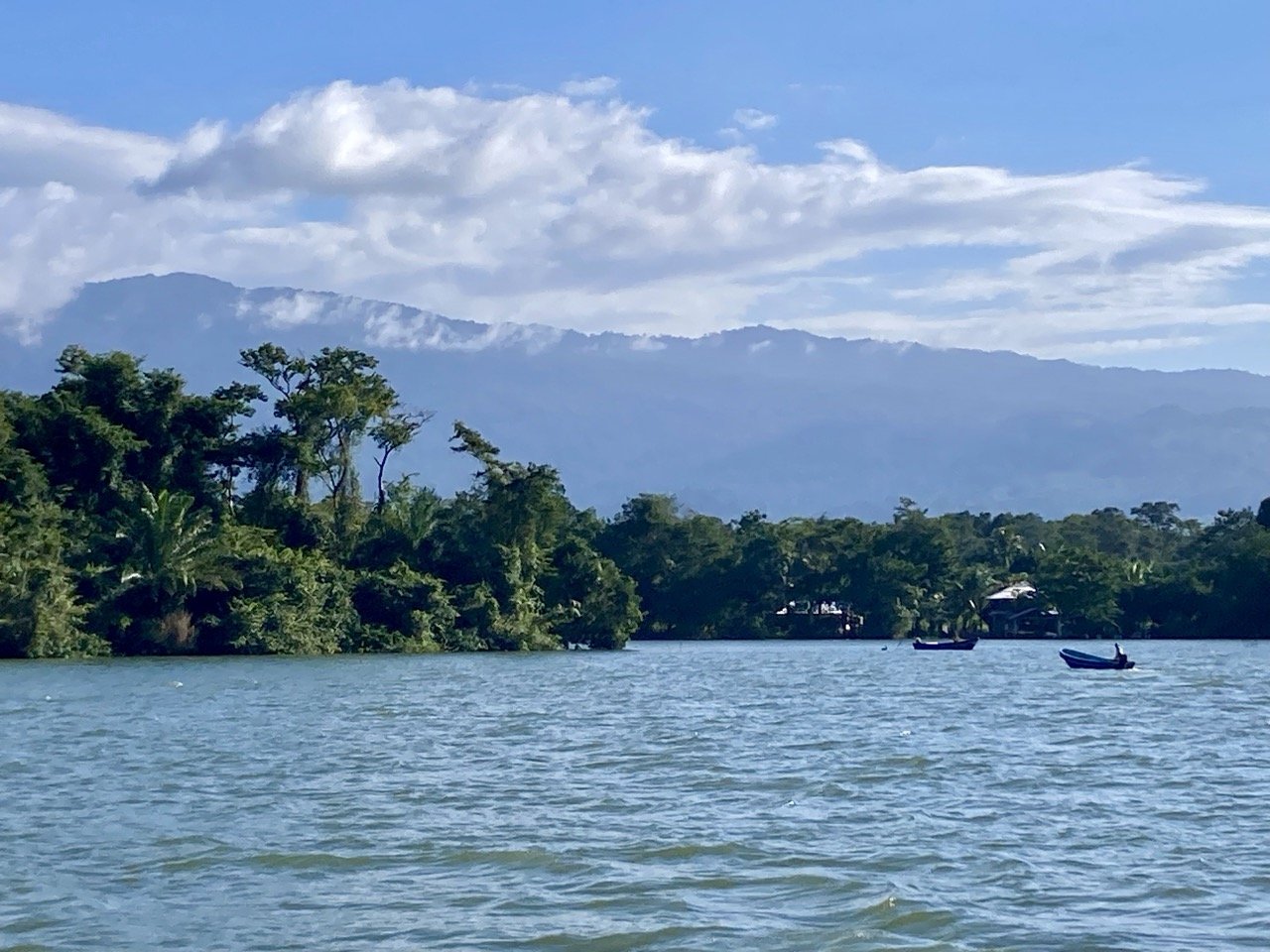
L’arrivée à Livingston s’est donc super bien passée, on a été accueilli par Raul, que tout le monde recommande pour simplifier la paperasse d’entrée. Je comprends l’unanimité, c’était du super service! Douanes payées (ça a beau être un pays économique, le permis d’entrée en voilier ça ce n’est pas si cheap : 400$ pour les premiers 3 mois, et 500$ pour l’extension de 9 mois) on a continué notre chemin et navigué le fleuve qui relie la mer des Caraïbes et le Golfete, c’est comme un petit canyon, avec plein d’oiseaux dans les montagnes, magnifique.
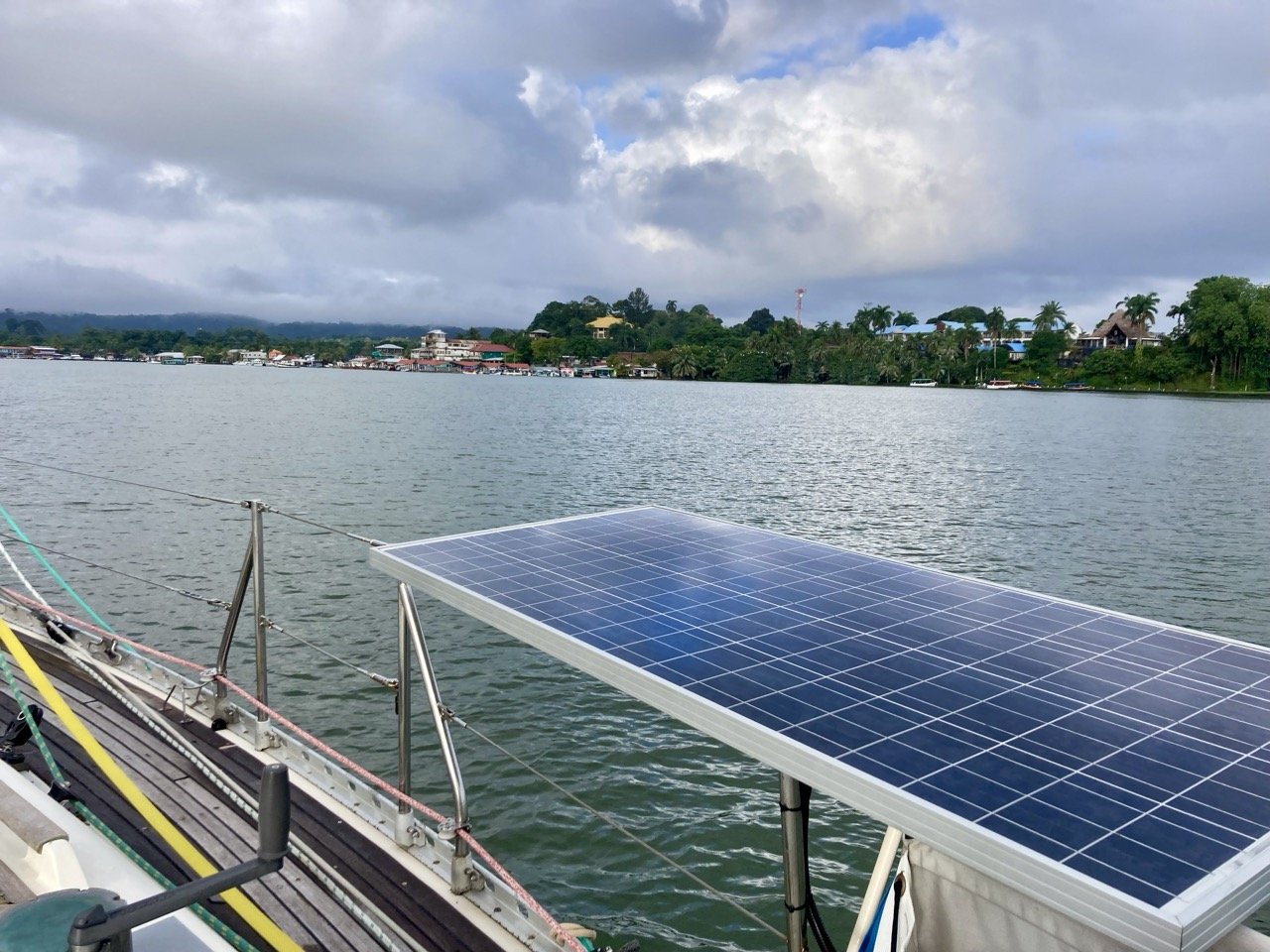
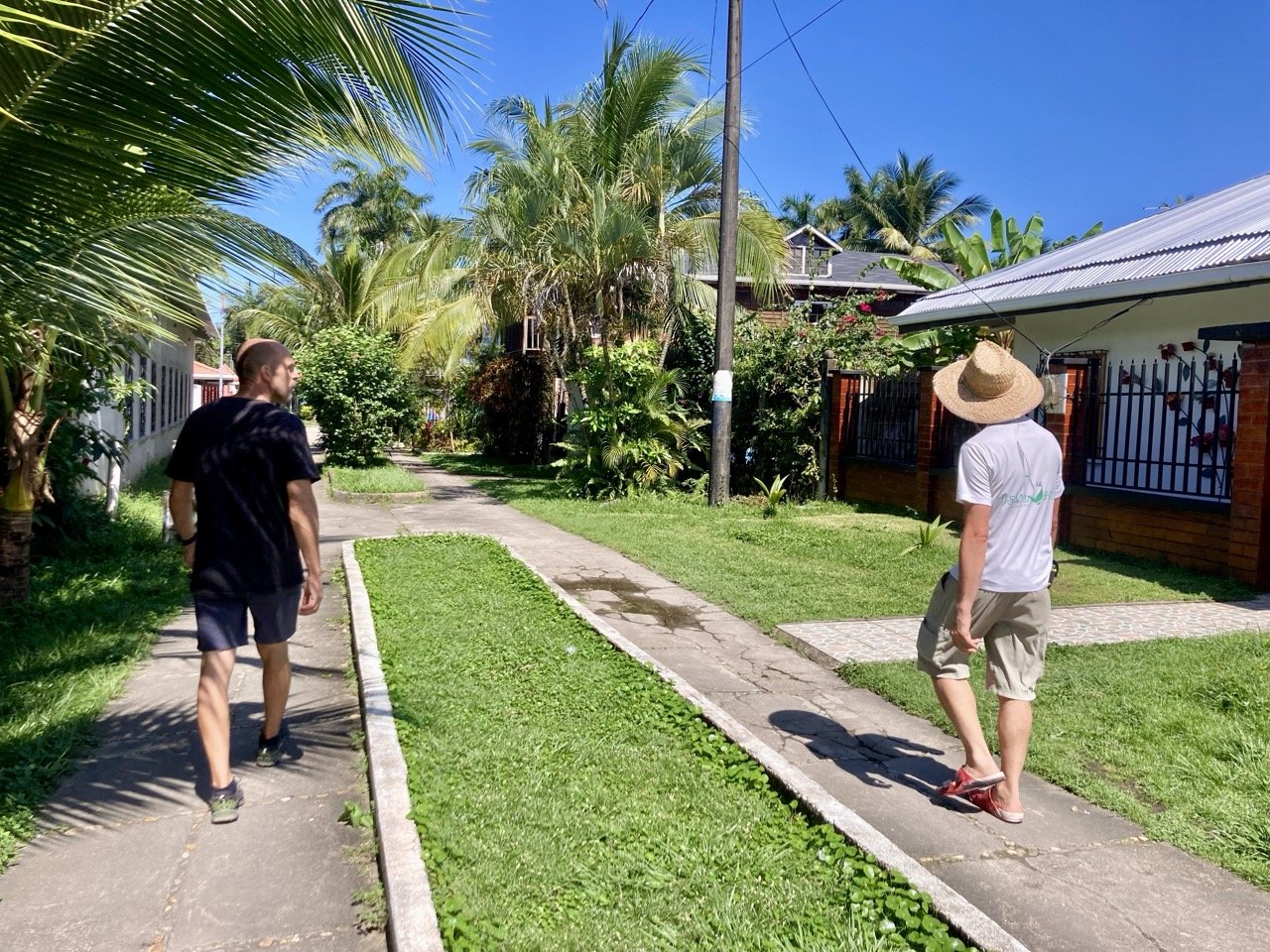
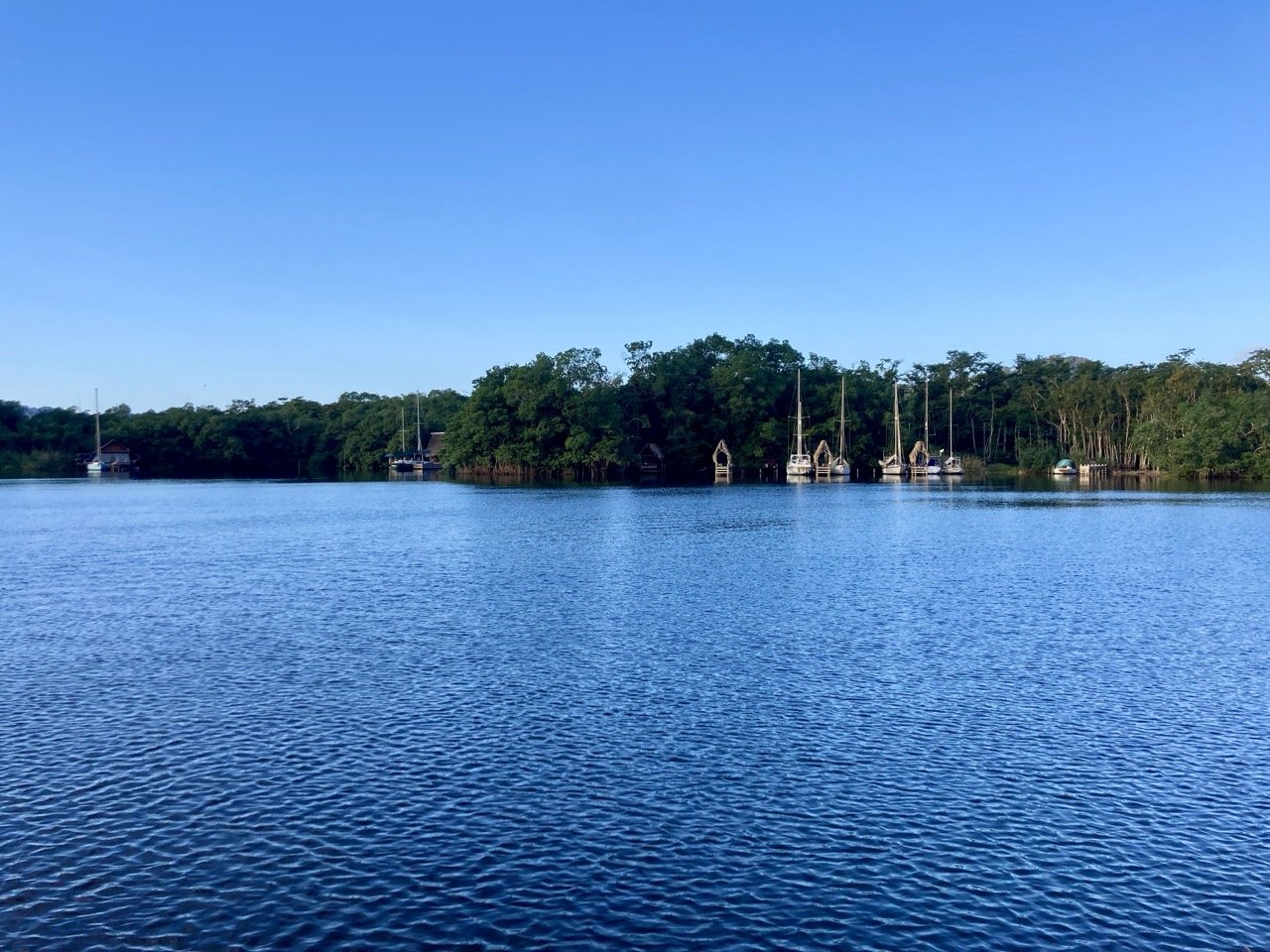
Puis, au bout de ce fleuve, au tout début du Golfete, on est arrêté à Cayo Quemado, le petit village où on passera la majeure partie des prochaines semaines, parce que c’est là que Gaël a loué une petite cabane (le Nidito d’Anabelle et Anibal). On est maintenant en eau douce, super protégé, entouré de mangrove et de jungle… C’est le dépaysement et on aime bien ça!
Mais, comme dit le proverbe; « On n’est pas venus icitte pour cueillir des fraises! » On a du teck à arracher! On se donne donc rendez-vous dans le prochain post, avec des histoires de travaux.
The arrival in Livingston went very well, we were welcomed by Raul, whom everyone recommends to simplify the entry paperwork. I understand the unanimity, it was great service! Customs paid (it may be an economical country, but the entry permit for a sailboat isn’t so cheap: $400 for the first 3 months, and $500 for the 9-month extension), we continued on our way and sailed the river that connects the Caribbean Sea and the Golfete, it’s like a small canyon, with lots of birds in the mountains, magnificent.
Then, at the end of this river, at the very beginning of the Golfete, we stopped at Cayo Quemado, the small village where we will spend most of the next few weeks, because that’s where Gaël rented a small cabin (the Nidito of Anabelle and Anibal). We are now in fresh water, well protected, surrounded by mangroves and jungle… It’s a change of scenery and we like it!
But, as the saying goes; “We didn’t come here to pick strawberries!” We have teak to rip out! So, we’ll see you in the next post, with boat work stories.


















This Post Has 9 Comments
Suis tellement contente de recevoir de vos nouvelles, de voir vos photos, de lire vos aventures, pis de voir vos belles faces (comme disait ma grand-mère…hihi) et je suis pas encore partie, ça s’en vient mais de voir vos photos sur le Rio Dulce… j’ai hâte!!!! Hasta pronto los amigos!!!! Besos XXXX
On a hâte de te voir Aline!!! Vient-en vite!
Toujours un plaisir de vous lire. Je vois que même en Jamaïque, Rémy a résisté à l’envie de se faire des « dreads ». Bonne chance dans vos travaux et bon séjour au Guatemala les Sagittaires!
Toujours aussi intéressant de te lire. Bon travaux! Salutations à Gaël
Great stories, great pictures and lots of drama…keep up the good work we’re enjoying it. All the best for the work ahead. It’s better than being knee deep in snow in Canada and reading the depressing Canadian news.
Tony, thanks for reminding us about the snow and the bad news. We’ll think of this next time we sweat in a tyvek suit while grinding fiberglass in pretzel position in the anchor locker 😉
Merci pour le partage !
Merci de partager vos aventures, c’est très apprécié et agréable à regarder.
On en apprend à tout âge: c’est sûrement exigeant et inconfortable mais j’ai trouvé très drôle que Magalie appelle ça”la position Pretzel” :-).
Malgré mes bancs de neige de plus de 4 pi. de hauteur, je ne changerais pas ma pelle pour votre grinder.
Bonne chance dans vos travaux et soyez vigilants pour ne pas revenir au Québec en Pretzels trop cuits par la chaleur, car je vous aime xxx et je préfère revoir mon fils pas trop rôti 😉
Ça semble être un bel endroit pour arracher du teck. Profitez en bien! J’ai hâte de lire la suite. Bons travaux.